322 Prompts for Historical Cozy Mystery Sagas Review: A Smarter Way to Build AI-Assisted Fiction Series With Continuity
Discover how 322 Prompts for Historical Cozy Mystery Sagas helps writers build 9-book cozy mystery series with AI, canon continuity, KDP outlines, and cover prompts.
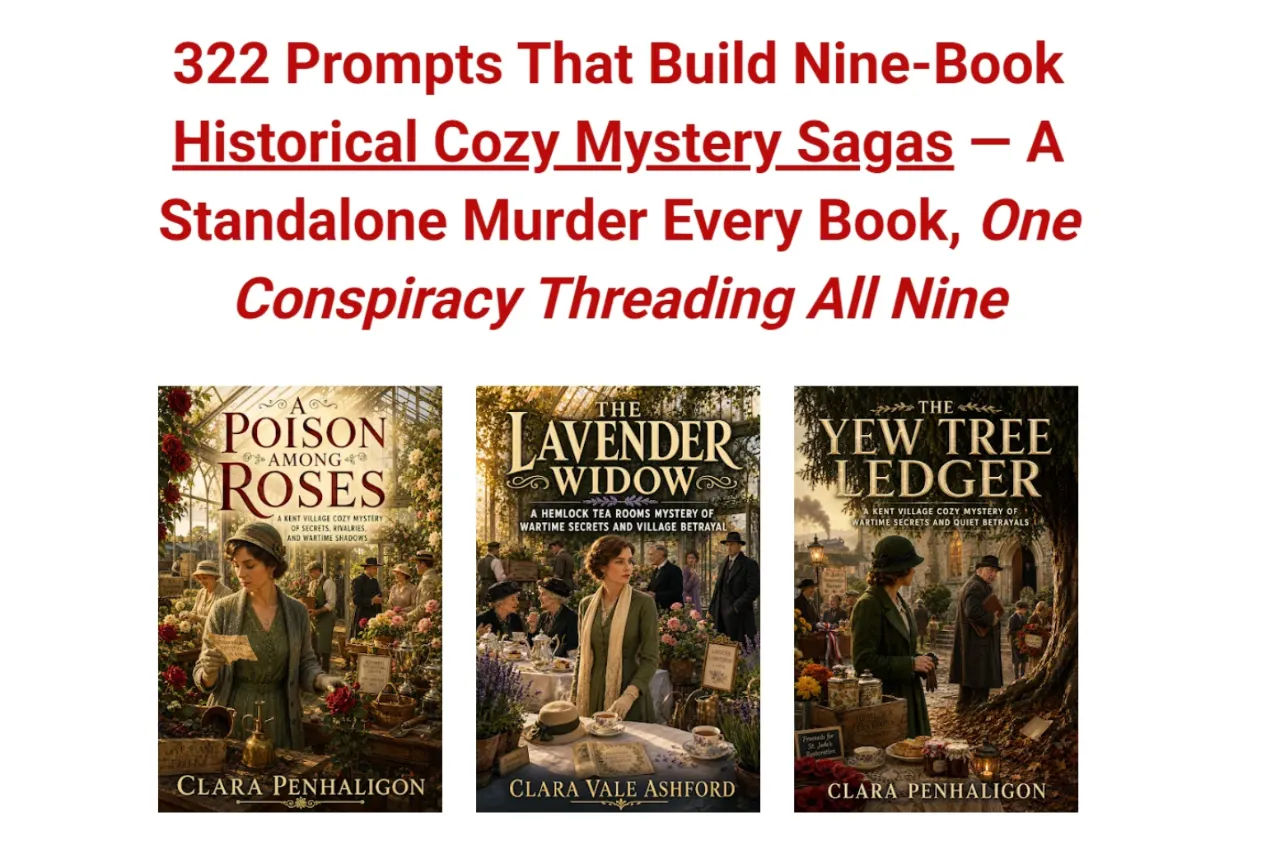
Most AI writing products look impressive until you try to use them for something serious.
Generating a short story is easy. Generating a chapter is easy. Even generating a character profile is easy now.
But building a full fiction series?
That is where most AI tools start to break.
The problem is not speed. AI is already fast. The real problem is continuity, structure, genre logic, and reader trust.
If you are writing historical cozy mystery, this becomes even more obvious. A good cozy mystery is not just a murder in a pretty village. It needs fair-play clues, believable suspects, emotional warmth, historical constraints, recurring characters, and a world readers actually want to return to.
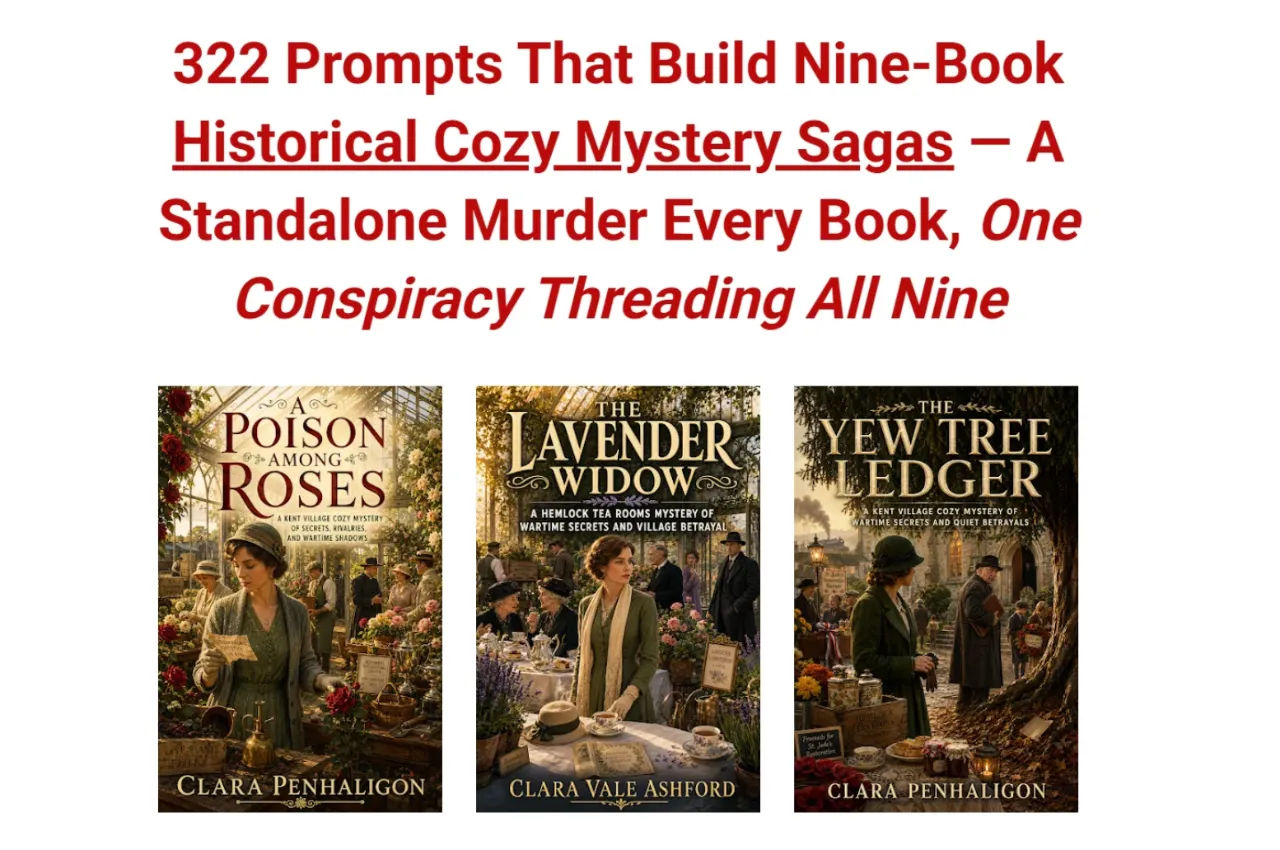
That is why I decided to take a closer look at 322 Prompts for Historical Cozy Mystery Sagas.
This product was only launched a few days ago, so I did not approach it with blind excitement. I approached it with the same question I always ask when reviewing AI writing products:
Is this actually useful in a real workflow, or is it just another prompt bundle with a strong sales angle?
After going through the system, the examples, and the way the prompts are structured, I think this product is more serious than the average prompt pack.
It is not a magic button.
It will not replace editing.
It will not guarantee book sales.
But for the right creator, especially someone interested in Amazon KDP, AI-assisted fiction, or historical cozy mystery publishing, it solves a real problem: how to build a full series architecture before writing yourself into a mess.
What Is 322 Prompts for Historical Cozy Mystery Sagas?
322 Prompts for Historical Cozy Mystery Sagas is a prompt-based fiction creation system designed to help users build 9-book historical cozy mystery sagas.
The key point is that it is not only giving you story ideas.
It is designed to create complete saga universes.
Each prompt can help generate a full series foundation with characters, setting, historical constraints, community dynamics, fair-play mystery mechanics, slow-burn romance progression, and a long-term conspiracy thread that runs across all 9 books.
That matters because cozy mystery readers usually do not just want one case.
They want a world.
They want a sleuth they can follow. They want a village or community that feels familiar. They want small emotional payoffs. They want each book to solve a mystery while still giving them a reason to read the next one.
This product understands that structure.
It is built around the idea that every book should contain a complete standalone murder mystery, while the full saga carries a deeper unresolved thread across all 9 books.
That is a strong fiction publishing model because it combines satisfaction with readthrough potential.
From a creator’s perspective, this is valuable because the hardest part of building a series is not always writing Chapter 1. It is knowing what must stay consistent across Book 1, Book 2, Book 3, and beyond.
You can check out the product here and see how the saga-building system is structured.
Why This Product Caught My Attention
I have tested many AI writing prompts, SaaS tools, content systems, and digital products over the years. The products that usually disappoint me have one thing in common: they focus too much on output and not enough on workflow.
They give you text, but not a process.
They give you ideas, but not a system.
They give you speed, but not control.
That is where 322 Prompts for Historical Cozy Mystery Sagas feels different.
The product is organized around several working parts, not just a random list of prompts.
There is the Architect, which contains the 322 Universe Seed Prompts.
There is the Outliner, which helps turn a saga universe into a specific book package.
There is the Writer, which supports chapter-level generation.
There is the Memory, also called the Canon Lock Prompt, which helps preserve continuity after each book.
There is also a setup guide and a desktop-agent method for people who want a more automated workflow.
That structure makes sense.
A serious fiction series needs stages.
First, you build the world.
Then, you define the book.
Then, you write the chapters.
Then, you summarize and lock the canon.
Then, you continue without contradicting yourself.
Most AI fiction workflows fail because they skip that middle part. Users jump straight into writing, then realize later that the mystery logic does not hold together.
This product forces more planning upfront, which is exactly what a multi-book saga needs.
The Biggest Benefit: Series Architecture
The main reason I see value in this product is the series architecture.
A single AI prompt can create a fun scene.
But a 9-book historical cozy mystery saga requires much more than that.
You need a protagonist with enough emotional depth to carry multiple books. You need a recurring cast with secrets, loyalties, conflicts, and evolving relationships. You need a setting that does more than look nice. You need historical limitations that actually shape how the mystery is investigated.
For example, in historical cozy mystery, the absence of modern forensic tools is not a weakness. It is part of the appeal.
The sleuth has to rely on observation, social intelligence, handwriting, gossip, class dynamics, timing, letters, receipts, weather, clothing, train schedules, and subtle contradictions.
That is what makes the genre satisfying.
The product seems to understand this very well. It does not treat history as wallpaper. It treats history as a constraint system.
That is important because a weak historical mystery often feels like a modern detective story wearing old clothes. The best historical mysteries make the era part of the plot.
When a woman cannot freely question certain people because of social propriety, that changes the investigation.
When communication is slow, secrets survive longer.
When class barriers prevent honest testimony, the sleuth must work through indirect channels.
When rail schedules determine alibis, the setting becomes part of the puzzle.
This is the kind of structural thinking that makes 322 Prompts for Historical Cozy Mystery Sagas more useful than a generic writing prompt collection.
The Canon Lock System Is More Important Than It Sounds
At first glance, “canon management” may not sound exciting.
But for AI-assisted fiction, it is one of the most important parts of the entire workflow.
AI can forget.
It can change a character’s voice.
It can repeat emotional beats.
It can contradict earlier clues.
It can accidentally reveal information too soon.
It can make a romantic relationship move too quickly.
It can forget who knows what.
For a standalone article or short story, that may be manageable.
For a 9-book saga, it becomes dangerous.
The Canon Lock Prompt is designed to create a structured summary after each completed book. This summary can include the mystery resolution, character development, romance status, unresolved threads, and long-term conspiracy elements.
That means when you move from Book 1 to Book 2, the system has a clearer memory of what already happened.
This is not just a convenience feature.
It protects the reader experience.
Mystery readers are detail-oriented. If a clue is planted in Book 2 and forgotten by Book 5, they notice. If a character acts on information they should not know, they notice. If the romance resets emotionally after a major moment, they notice.
Canon Lock helps reduce those problems.
It does not remove the need for human review, but it gives the creator a much stronger continuity foundation.
How It Feels in a Real Publishing Workflow
The way I would use this product is not as a one-click novel machine.
I would use it as a planning engine.
That is an important distinction.
If someone buys this product and expects to paste one prompt, generate a book, upload it immediately, and make money, they are probably going to be disappointed.
But if someone uses it to build a structured series bible, generate a strong outline, create a first draft, then edit and package the work properly, the product becomes much more useful.
In a real workflow, I would use it like this:
First, choose one historical cozy mystery universe.
Second, generate the saga setup and world bible.
Third, review the protagonist, setting, and recurring cast.
Fourth, generate the Book 1 package.
Fifth, improve the title, description, and outline manually.
Sixth, generate chapters in sequence.
Seventh, edit for voice, pacing, clue logic, and historical accuracy.
Eighth, use the Canon Lock Prompt before moving to the next book.
This workflow is not effortless, but it is much more organized than starting from scratch.
And that is where the value is.
The product reduces blank-page stress. It reduces planning fatigue. It gives structure before the writing begins.
For many creators, that is the difference between having an idea and actually finishing a project.
What I Like Most
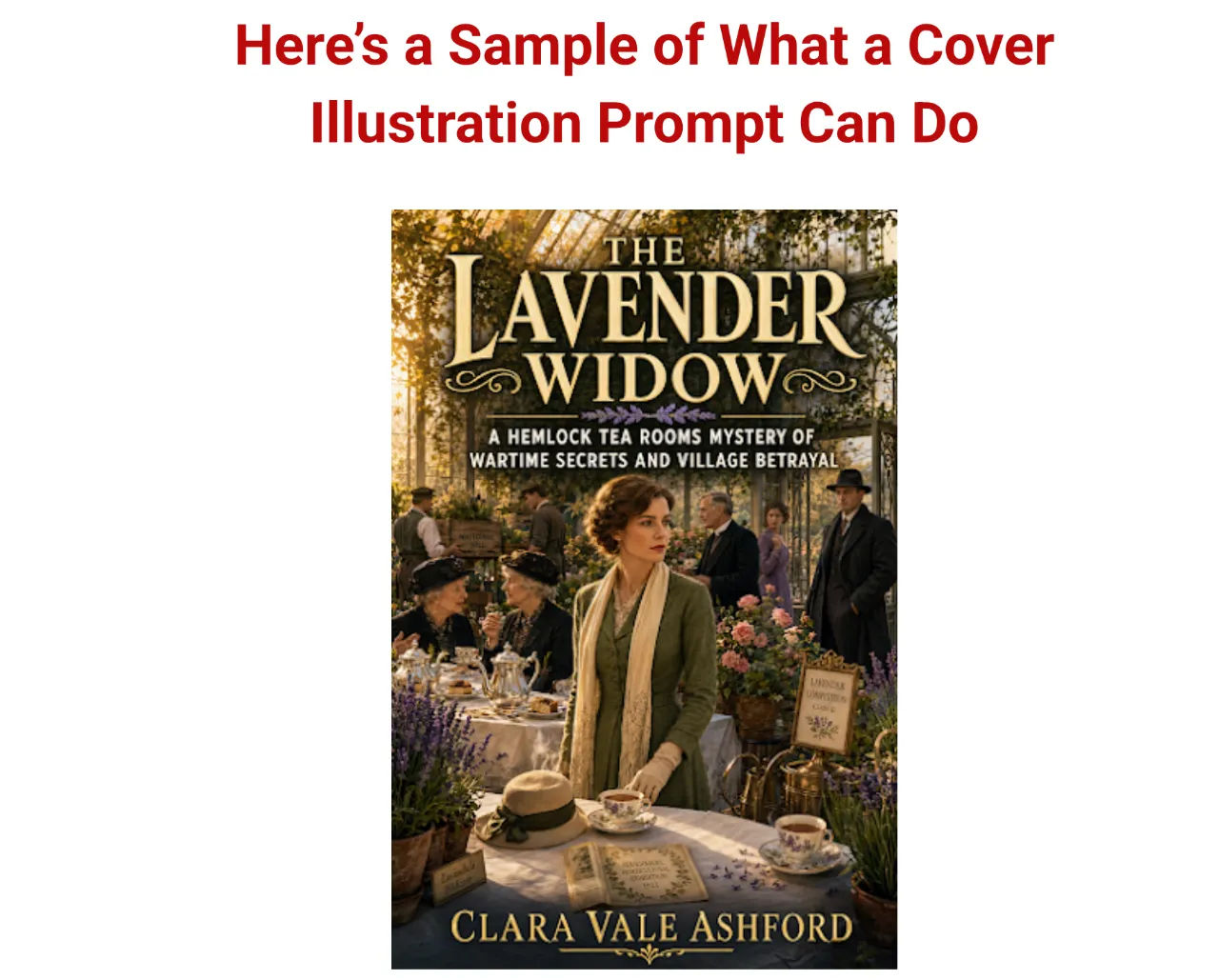
The strongest thing about 322 Prompts for Historical Cozy Mystery Sagas is that it understands the difference between a story idea and a publishing asset.
A story idea is temporary.
A saga universe can become long-term intellectual property.
If you are publishing on Amazon KDP or building fiction-based digital products, this matters.
A single book can be useful, but a series gives you more leverage. You can build reader familiarity. You can improve readthrough. You can create consistent branding. You can design covers as a connected line. You can test different historical settings and see which ones have the strongest appeal.
The product also gives you a strong niche angle.
Historical cozy mystery is specific enough to target real readers, but broad enough to allow many variations: Victorian London, 1920s villages, Regency estates, WWII homefront settings, medieval monasteries, post-war secrets, seaside murders, tea shops, bookshops, gardens, railway mysteries, and more.
That range matters because creators often struggle with variety.
The product gives you multiple angles while staying inside a recognizable genre lane.
Pros and Cons
Pros
The system is much deeper than a normal prompt pack.
It focuses on 9-book saga creation, not just isolated stories.
It includes structure for standalone mysteries and long-term conspiracy arcs.
It supports fair-play mystery planning.
It includes historical constraints that shape the investigation.
It helps with KDP-style packaging, including titles, descriptions, SEO keywords, outlines, and cover prompts.
The Canon Lock workflow is highly useful for continuity.
It can save significant planning time for writers and AI-assisted publishers.
Cons
It still requires editing and human judgment.
Historical accuracy should still be verified.
Raw AI output should not be published without review.
The product may feel too advanced for people who only want simple short story prompts.
It does not replace cover strategy, category research, pricing, launch planning, or audience building.
Because it is newly launched, buyers should evaluate it based on the workflow itself rather than long-term public feedback.
Pricing and Value: Is It Worth It?
I always prefer to analyze products like this through practical ROI, not hype.
The question is not, “Will this make me rich?”
That is not a serious way to evaluate a prompt product.
The better question is:
Can this save enough time, reduce enough mental load, and improve enough structure to justify the purchase?
For the right user, I think the answer can be yes.
If you were to manually build 322 historical cozy mystery saga concepts, each with characters, setting logic, mystery mechanics, long-term arcs, and book structures, that would take a huge amount of time.
Even building one strong series bible can take days or weeks.
This product compresses that planning stage.
That does not mean every output will be perfect. You still need to review it. You still need taste. You still need editing. You still need publishing sense.
But it gives you a serious starting point.
And in creative production, a serious starting point has value.
For me, the product is best understood as skill enhancement, not skill replacement.
It helps you think faster.
It helps you structure better.
It helps you avoid starting from zero.
But you still need to make creative decisions.
If you are building AI-assisted fiction products or KDP series, you can view the product here.
Who Should Buy This?
This product is a good fit for AI-assisted fiction writers who want stronger structure.
It is also a good fit for Amazon KDP publishers who want to explore historical cozy mystery as a niche.
It can work well for digital product creators who want to build fiction-related assets, prompt collections, or publishing systems.
It is useful for writers who struggle with outlining, continuity, and series planning.
It is also suitable for people who already understand that publishing is not just about creating text. It is about packaging, positioning, consistency, and reader experience.
Who Should Skip It?
This product is not for people who want instant money with no effort.
It is not for someone who refuses to edit.
It is not for someone who only wants 1 simple story idea.
It is not for users who expect AI to replace all creative thinking.
It is also not ideal for someone who has no interest in historical cozy mystery, fiction publishing, or long-form storytelling.
That is fine.
A good product does not need to be for everyone.
This one is clearly designed for creators who want to build structured fiction systems, especially around cozy mystery and KDP-style publishing.
Final Verdict
My final view is that 322 Prompts for Historical Cozy Mystery Sagas is one of the more thoughtful AI fiction prompt systems I have seen in this niche.
It stands out because it focuses on the part most creators underestimate: architecture.
It does not just ask AI to write.
It teaches the workflow to build a world, organize a book, maintain continuity, manage reader expectations, and continue the saga without losing the thread.
That makes it more practical than a basic prompt bundle.
The product is not perfect, and it should not be treated as a replacement for editing, research, or publishing strategy. But if you are serious about using AI to create historical cozy mystery fiction faster, this gives you a stronger foundation than starting from an empty chat window.
For me, the biggest reason to consider it is simple:
It helps turn scattered story ideas into structured series assets.
And in fiction publishing, that structure can be the difference between an unfinished idea and a complete product line.