343 Prompts for Interactive Story-Based Coloring Pages Review: The AI Publishing System That Makes Children’s Activity Books Easier to Scale
I tested 343 Prompts for Interactive Story-Based Coloring Pages to see if it’s actually useful for KDP, Etsy, and AI publishing creators. Here’s what surprised me about the workflow, integrated activities, and time-saving publishing system.
There’s a reason the children’s activity-book market refuses to die.
Parents still buy coloring books.
Teachers still need printable activities.
Homeschool families constantly search for screen-free educational content.
And platforms like Amazon KDP and Etsy continue rewarding creators who can consistently publish engaging material in evergreen niches.
But after testing dozens of AI publishing tools over the last year, I noticed the same frustrating pattern over and over again:
Most AI-generated coloring books don’t actually feel like products.
They feel like random pages.
One page has a coloring scene.
Another page has a disconnected maze.
Another includes tracing practice with zero relationship to the illustration.
Technically, the content exists.
But emotionally and visually, the experience feels fragmented.
And that matters more than people think.
Because parents, teachers, and buyers may not consciously analyze “page cohesion” — but they absolutely notice when a product feels generic.
That’s exactly why I became interested in 343 Prompts for Interactive Story-Based Coloring Pages.
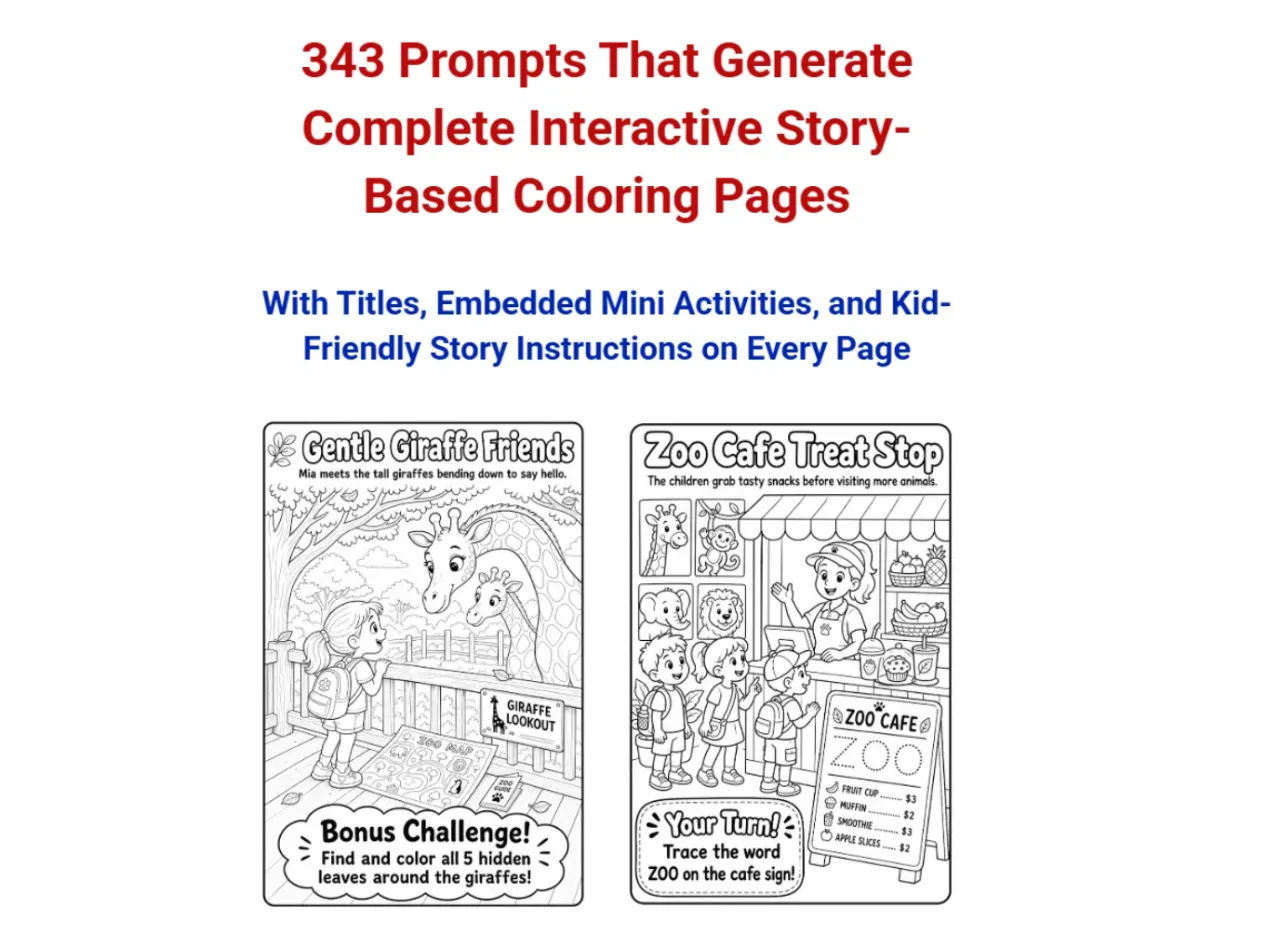
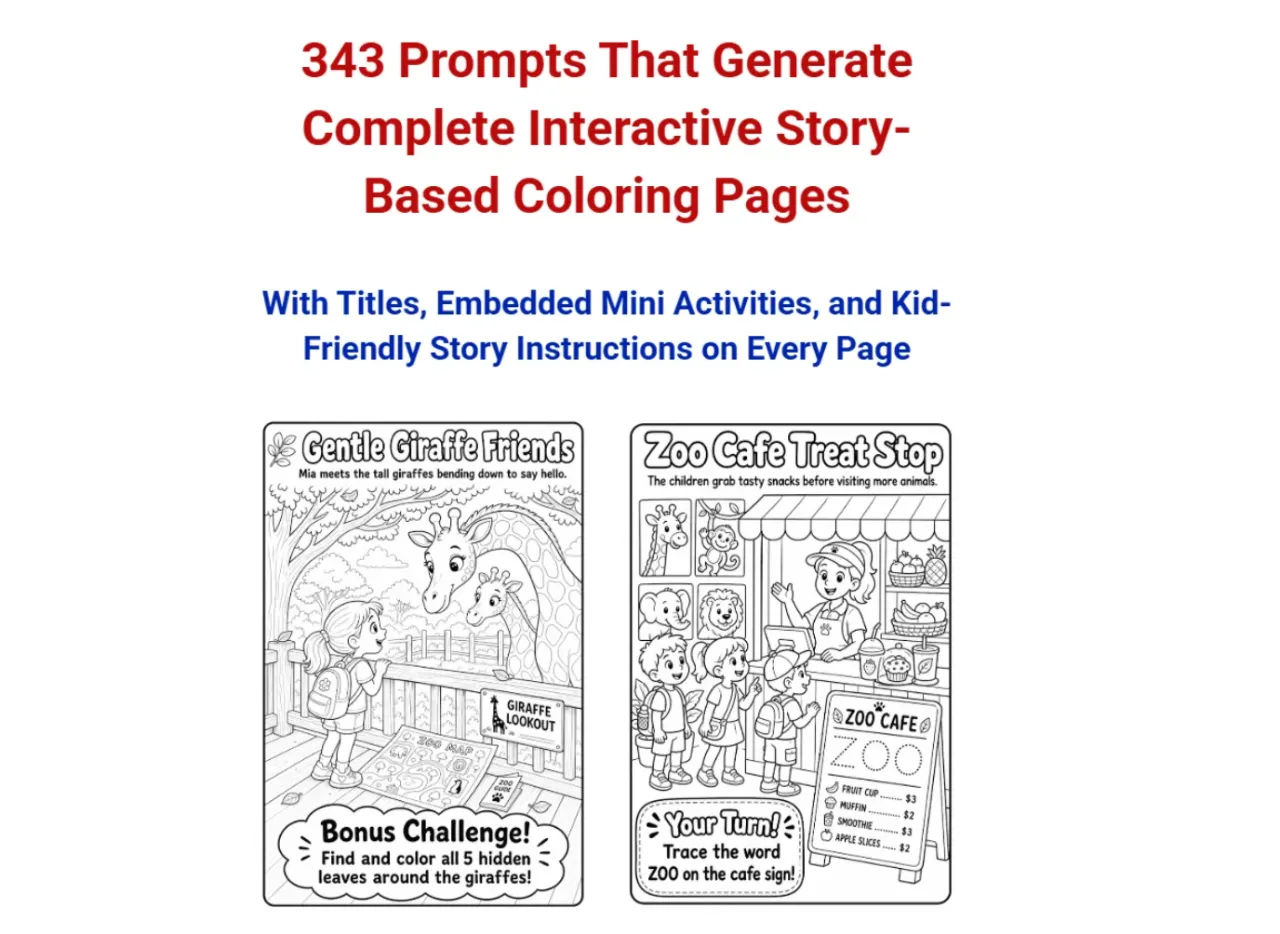
Unlike most AI prompt packs that simply generate isolated activity sheets, this system focuses on creating integrated story-based scenes where the activity itself is naturally embedded into the coloring page.
After spending time testing the prompts inside ChatGPT Images 2.0, generating multiple sample pages, and comparing the workflow against other AI publishing systems, I can confidently say this product is significantly more practical than most prompt libraries currently flooding the market.
Not because it promises unrealistic shortcuts.
But because it genuinely reduces the hardest part of children’s activity publishing:
creating structured, engaging, commercially usable pages consistently.
Why Most AI Coloring Book Workflows Fail
The majority of AI coloring-book systems focus too heavily on image generation.
That sounds obvious, but it creates a serious publishing problem.
Generating images is easy now.
Generating cohesive products is not.
Most creators quickly discover that building an actual activity book requires:
educational structure
visual consistency
theme coordination
activity variety
print formatting
instructional flow
audience appropriateness
And that’s where many AI workflows collapse.
The output often feels repetitive, disconnected, or visually inconsistent.
That’s why I found the architecture behind this product surprisingly thoughtful.
Each prompt isn’t simply:
“Generate a coloring page.”
Instead, every prompt contains:
a narrative setup
a themed illustration concept
an integrated mini activity
instruction formatting
clean black-and-white print styling
page structure logic
That distinction changes the experience completely.
Instead of manually designing activities and then trying to force them into illustrations afterward, the prompts already understand how the educational interaction should fit naturally inside the scene itself.
For example:
counting butterflies hidden throughout a picnic illustration
tracing a path to help a bunny reach carrots
spotting matching objects within a zoo environment
identifying which item does not belong inside the story world
The activities feel connected to the narrative instead of bolted onto the page.
And honestly, that alone makes the outputs feel significantly more premium than most low-effort AI coloring books currently appearing on Amazon.
If you want to explore the product directly, you can check it out here.
The Biggest Strength: Workflow Reduction
This is the part many buyers underestimate.
The true value isn’t just “343 prompts.”
The real value is reducing creative friction.
If you’ve ever tried publishing children’s content manually, you already know how exhausting the process becomes after the first few pages.
You constantly have to think about:
what the child should interact with
how the activity fits the scene
whether the illustration is too cluttered
whether the instructions make sense
whether the page feels repetitive
whether the design looks educational or cheap
That mental load slows everything down.
What impressed me here is that the prompts already contain much of that structural thinking.
So instead of acting like:
illustrator
activity designer
instructional designer
layout planner
…you mainly become an editor and curator.
That dramatically accelerates the publishing workflow.
And unlike many AI systems that still require extensive Photoshop cleanup afterward, these prompts are specifically optimized for ChatGPT Images 2.0 behavior.
The text readability was noticeably better than I expected.
Not perfect every single generation.
But significantly cleaner than older AI image-generation workflows.
That matters because cleanup time is where many AI publishing projects quietly become unsustainable.
The “Integrated Activity Blueprint” Is More Important Than It Sounds
At first glance, this concept may sound like marketing language.
But after generating multiple pages across different categories, I realized this is actually the product’s core advantage.
The system forces activities to exist naturally inside the illustration itself.
That creates several practical benefits:
1. The Pages Feel More Interactive
Children stay engaged inside the story world instead of mentally switching between separate worksheets and illustrations.
2. The Final Product Looks More Professional
The pages resemble professionally designed activity books instead of AI-generated printable sheets.
3. The Content Feels More Original
Even when using AI, the integrated layouts help the pages avoid the “generic prompt output” feeling that hurts many low-quality AI products.
4. It Improves Product Scalability
Because the structure is already engineered into the prompts, creators can produce larger catalogs without manually redesigning interaction systems from scratch.
This becomes extremely valuable if you’re planning to publish consistently on:
Amazon KDP
Etsy
Teachers Pay Teachers
homeschool marketplaces
printable activity stores
The market rewards creators who can build catalogs efficiently.
And this product clearly understands that.
The Bonus Prompt System Is Smarter Than Most AI Upsells
Normally, I’m skeptical when digital products advertise “bonus prompts.”
Most bonus content feels unnecessary.
But here, the bonus system actually solves real publishing problems.
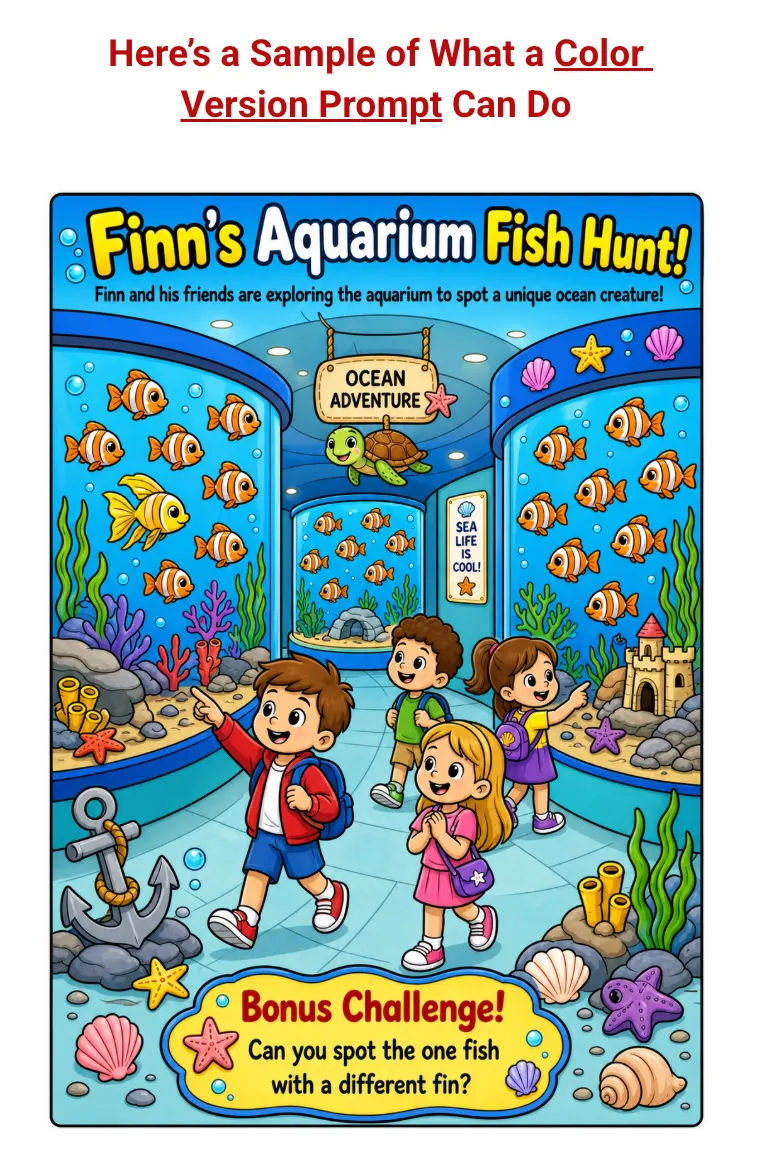
Each base page can quickly transform into:
a full-color version
a simplified preschool edition
an answer-key version
That means one concept can realistically become 4 separate sellable products.
This is where the system becomes commercially interesting.
Because different audiences want different versions:
teachers often need answer keys
preschool buyers need simpler layouts
printable marketplaces prefer colorful editions
KDP audiences often buy black-and-white activity books
Instead of rebuilding everything manually, the prompts adapt the page automatically.
That creates real workflow leverage.
Especially for solo creators.
If you want to see how the full system works, here’s the official product page.
What Using It Actually Feels Like
This is where many AI publishing products fail.
Because even if the marketing sounds impressive, the actual workflow becomes frustrating after 10 minutes.
Thankfully, this system feels relatively smooth to use.
The process is simple:
Choose a category
Copy the prompt
Paste it into ChatGPT Images 2.0
Generate the page
Apply bonus prompts if needed
That simplicity matters.
Especially for beginners who feel overwhelmed by advanced prompt engineering.
The included interactive browser also deserves credit.
Instead of scrolling through giant PDFs, the prompts are organized by:
categories
themes
searchable keywords
one-click copying
That may sound small, but organization quality dramatically affects long-term usability.
And importantly, the categories themselves are commercially smart.
Not random experimental niches.
The themes focus on evergreen children’s interests:
zoo adventures
birthday parties
beach days
Christmas
dinosaurs
fairy gardens
playgrounds
Halloween
baking activities
farm animals
These are proven demand categories that consistently perform well across children’s publishing marketplaces.
That’s another reason this system feels more grounded in actual publishing logic than most AI prompt packs.
What Surprised Me Most
Honestly?
The consistency.
Most AI-generated publishing workflows break down after multiple generations.
The quality drifts.
The layouts become inconsistent.
The educational structure weakens.
But these prompts maintained a relatively stable structure across different themes and activity types.
That consistency is incredibly important for creators building entire books instead of isolated pages.
I was also surprised by how quickly it became possible to prototype a complete activity-book concept.
Within about an hour, I had enough usable pages to realistically assemble a themed mini book draft.
That doesn’t mean every page was perfect.
Some still required rerolls or small adjustments.
But compared to designing pages manually, the speed difference was massive.
And this is where many people misunderstand AI publishing.
The biggest value isn’t replacing creativity.
The biggest value is compressing production time.
Pros & Cons
What I Liked
Well-structured prompts instead of generic image ideas
Integrated activities feel natural inside the illustrations
Strong evergreen category selection
Beginner-friendly workflow
Minimal technical setup required
Bonus prompts add legitimate publishing flexibility
Better text readability than most AI image systems
Reduces creative fatigue significantly
Makes large-scale content production more realistic
What Could Be Better
Some generations still require rerolls
You still need curation judgment
Not every page is instantly publish-ready
Best results depend heavily on ChatGPT Images 2.0
People expecting “instant passive income” may misunderstand the workflow
And honestly, those limitations are completely normal.
No AI publishing workflow currently removes the need for human oversight.
Nor should it.
Who This Product Is Best For
I think this system works especially well for:
Amazon KDP publishers
Etsy printable sellers
homeschool content creators
teachers creating activity packs
AI creators exploring children’s publishing
beginners who want structured workflows
I would probably not recommend it for:
traditional illustrators seeking handcrafted originality
users who dislike AI-assisted workflows
buyers expecting zero editing effort
people looking for overnight business results
This is a production acceleration system.
Not a magic business machine.
That distinction matters.
Pricing & Value Analysis
The launch price is currently $17.
Considering the amount of structured workflow engineering included, I think the pricing is reasonable.
Especially because this isn’t simply:
“343 random prompts.”
You’re paying for:
publishing structure
educational interaction logic
activity integration systems
scalable workflow design
multi-version product generation
And if you’ve ever outsourced illustration or activity-book design before, you already know how quickly production costs escalate.
Even simple children’s content becomes expensive at scale.
This system dramatically lowers the barrier for creators who want to experiment with publishing without hiring artists or spending months learning design software.
If you want to review the product directly before making a decision, you can explore it here.
Final Verdict
After testing 343 Prompts for Interactive Story-Based Coloring Pages, I understand why this launch is attracting attention so quickly.
Not because it promises unrealistic outcomes.
But because it addresses a very real publishing bottleneck:
creating engaging, structured, commercially usable activity pages efficiently.
That’s much harder than most people realize.
The internet is now flooded with AI-generated content.
But genuinely useful AI publishing systems are still relatively rare.
This product stands out because it focuses less on hype and more on workflow practicality:
less manual planning
less activity design stress
less formatting frustration
less creative inconsistency
faster content production
And in real-world publishing, those improvements matter far more than flashy promises.
If you’re serious about exploring AI-assisted children’s publishing — especially for Amazon KDP, Etsy, homeschool marketplaces, or printable educational products — this is one of the more practical systems I’ve tested recently.