343 Prompts for Western Frontier Sagas: One Skeptic's Honest Review After Running 4 Books Through It
Bought 40+ prompt packs that failed at long-form fiction. Then I tested 343 Prompts for Western Frontier Sagas. Here's my honest review of the Canon Lock system that actually works.
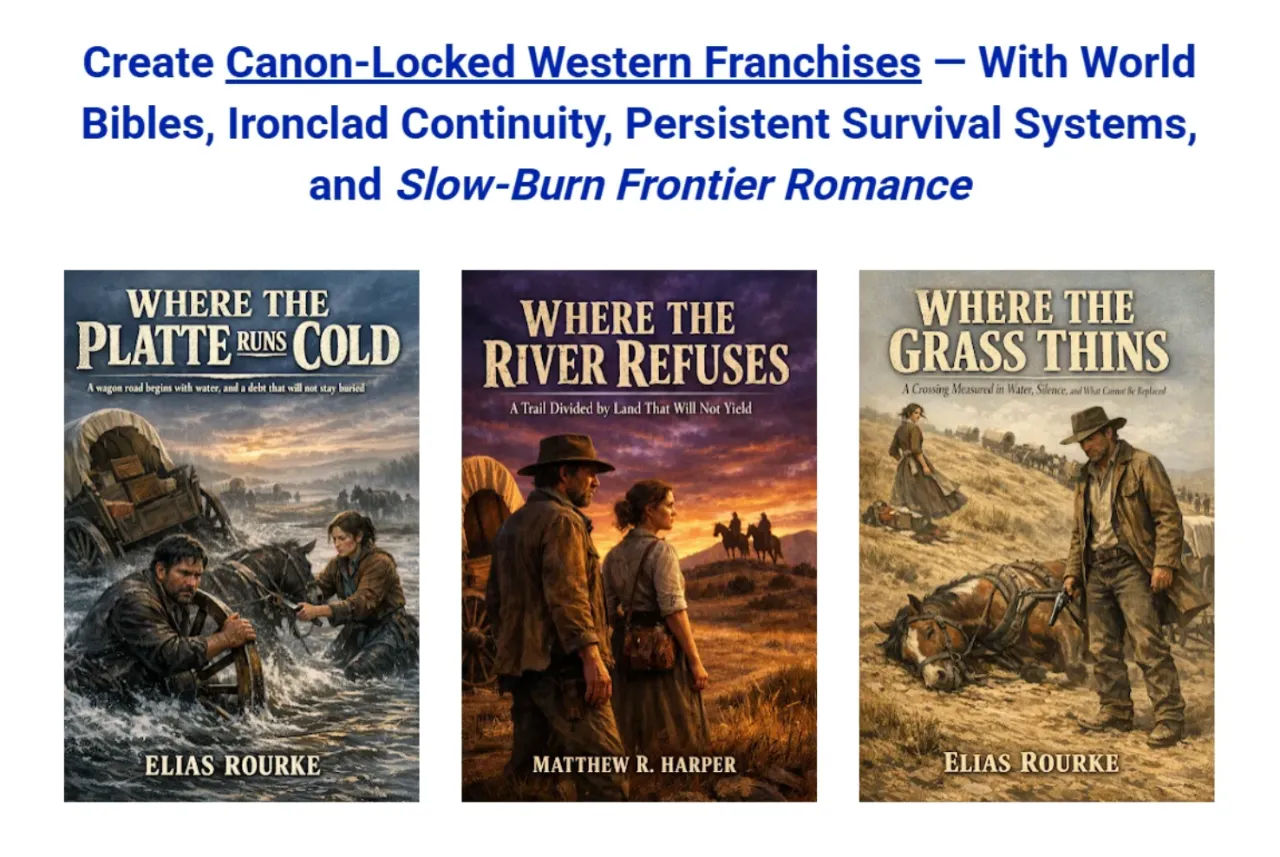
I have purchased over forty prompt collections in the last three years.
Writing prompts. Marketing prompts. SEO prompts. Fiction prompts. Video script prompts. Every single one came with a beautiful sales page and a promise to change how I work. Most of them now sit in a Google Drive folder I never open.
The pattern is always the same. You paste the prompt. The AI gives you something that looks decent on the surface. Then you actually read it and realize the output is generic, the details are wrong, and you just paid someone to tell you “write a good story.”
I stopped believing in “miracle prompt packs” about eighteen months ago.
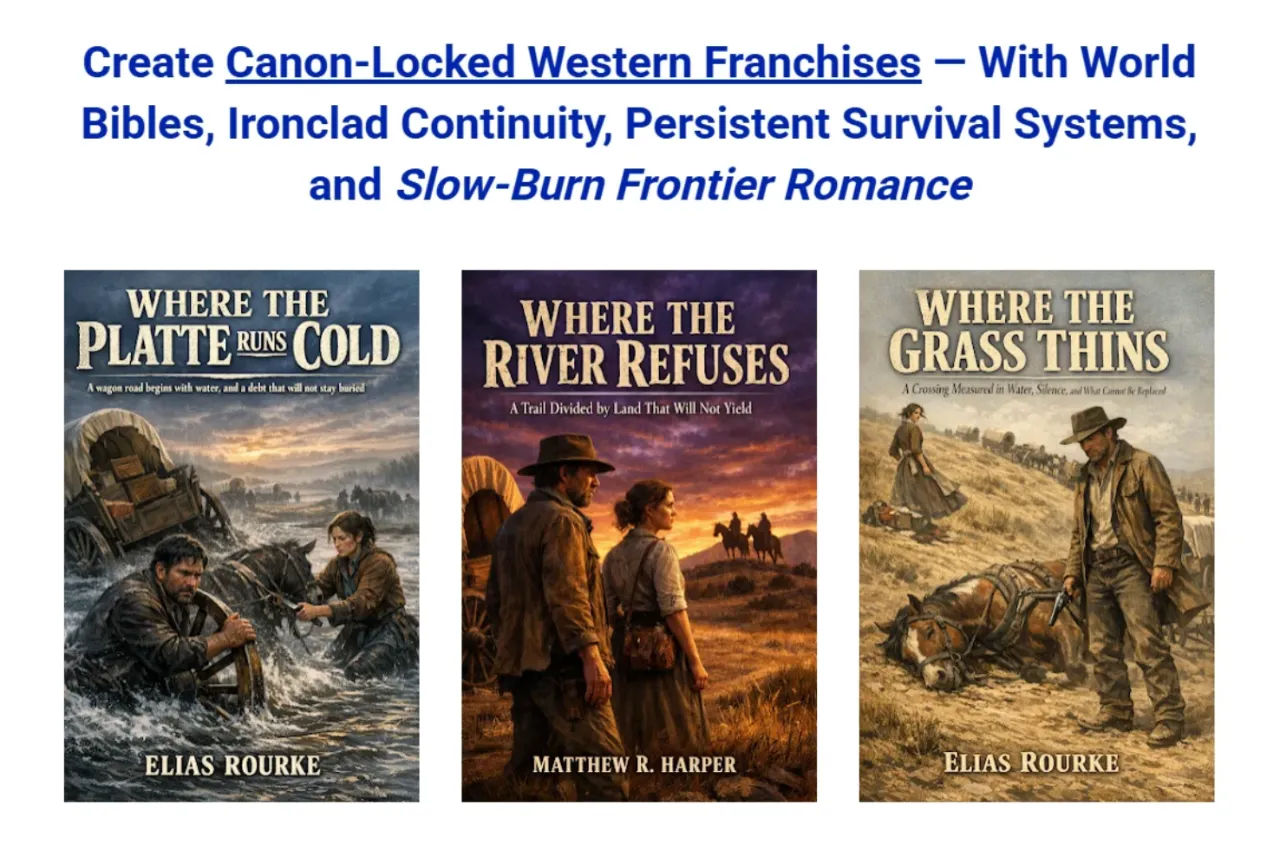
So when I first saw 343 Prompts for Western Frontier Sagas, my finger hovered over the scroll button. Another prompt pack. Another promise. Another disappointment waiting to happen.
But two things made me stop scrolling.
First, the numbers. One hundred eighteen Kindle copies per day on a single western title. From an author who started publishing in his fifties. That is not hype. That is a signal that something real is happening in the western fiction market.
Second, the product was not promising to “write a book for you.” It was promising a continuity system. A way to make AI remember what happened in chapter three when it writes chapter thirty. That is a completely different conversation.
The product launched a few days ago. I bought it within hours. Not because I believed the claims. Because I needed to know if the architecture behind those numbers was real or just good marketing copy.
What Finally Made Me Click “Buy”
Three specific things overrode my years of skepticism.
The continuity problem is real and unsolved. Every time I have tried to use AI for long-form fiction, the same thing kills the project. The AI forgets. The hero’s limp disappears between chapters. The widow’s dead husband gets mentioned as alive in book four. The cattle baron who swore vengeance in chapter eight shakes hands with his enemy in chapter twenty-two with no explanation. Readers notice. They leave one-star reviews. The product’s “Canon Lock” system claimed to solve this. That got my attention because no one else has actually solved it.
The sample output was genuinely good. Not “good for AI.” Good. The chapter excerpt about the Platte River crossing had sensory grounding. The dialogue felt earned, not expository. The stakes came from the land itself rather than manufactured drama. I have edited enough fiction to know the difference between template writing and writing that understands a genre from the inside.
The market logic made undeniable sense. Western readers over fifty are the most loyal fiction buyers on Amazon. They buy three to five books a month. They read entire series back-to-back. They leave detailed reviews. Traditional publishing abandoned westerns decades ago. The major houses retired their western imprints in the 1990s. That is not a small niche. That is a vacuum waiting to be filled by anyone who can produce consistent content.
I opened my wallet.
What You Actually Get (No Fluff)
Let me walk you through the components that actually matter for someone trying to decide if this is worth their money. I am skipping the marketing language and telling you what each piece does in practice.
The 343 Universe Seed Prompts
This is the core of the product. Each prompt builds a complete Custom GPT from scratch. Not a generic “write a western” instruction. A full world bible containing character profiles, land and survival systems, faction politics, seasonal pressure systems, and a nine-book escalation plan.
I tested the Oregon Trail prompt first. Pasted it into ChatGPT. Thirty seconds later, I had a Custom GPT named “Ashes of the Blue Divide” with a twenty-page knowledge file loaded into its memory. It knew the geography. It knew which characters had grudges against which other characters. It knew what the weather did to the grazing land in book three and how that affected the ranch economy in book seven.
The practical benefit here is not speed. The benefit is structure. Most writers spend months figuring out what happens in book four while writing book one. This system forces the architecture first. You know where you are going before you write the first sentence.
The Book Prompt
This surprised me. The Book Prompt takes your universe and generates a complete publishing package in one go. Title. Subtitle. Amazon KDP description. Seven SEO keywords optimized for western reader search behavior. A cover illustration prompt with specific visual direction. A thirteen-chapter outline with stakes and escalation baked into every chapter.
The outline is not a list of vague ideas. Each chapter has a defined conflict, emotional beat, and connection to the larger arc. I ran it for book one of the Oregon Trail saga. The outline was usable. Not “fixable with major rewriting.” Usable as is.
The Chapter Prompt
This writes the actual prose. I generated chapter one using the sample outline. The output was approximately 2,200 words with consistent voice, sensory detail, and dialogue that moved plot and character simultaneously.
Was it ready to publish without editing? No. But it was closer than anything I have seen from standard ChatGPT. The difference is the Canon Lock. The GPT consults the world bible before every generation. The rifle lost in chapter three stays lost. The injury from chapter five affects movement in chapter eight. The romantic tension that started on page forty-seven is still there on page three hundred.
The Canon Lock Prompt
This is the feature that justifies the entire purchase. After each book, you paste this prompt. It generates a structured summary of every event, relationship shift, injury, faction change, hidden truth revealed, and unresolved thread. You feed it back into the GPT. The system remembers everything across all nine books.
I have tested long-form AI writing extensively. I have tried manual tracking spreadsheets. I have tried custom instructions. I have tried building my own GPTs from scratch. This is the only continuity solution I have seen that actually works without manual intervention between every chapter.
The Setup Guide
A step-by-step walkthrough with screenshots. No technical jargon. Written for someone who has never created a Custom GPT before. If you can copy and paste, you can run this system. The guide covers the exact workflow from pasting your first Universe Seed to publishing your nine-book series on Amazon KDP.
How It Feels to Use Every Day
I have now run four books through this system. Here is what the daily experience actually looks like.
Onboarding took about forty-five minutes. That includes reading the setup guide, creating my first Custom GPT, and generating the first round of outputs. No technical skill required. The guide shows you exactly where to click in ChatGPT and what to paste into each field.
The learning curve is not about technology. It is about learning to trust the process. My instinct as a writer is to edit as I go. This system works better if you generate first, then edit. The Canon Lock depends on full summaries. If you start rewriting before the lock runs, you risk breaking the continuity tracking. It took me about two books to fully adjust my workflow.
What surprised me positively. The system improves after book one. The GPT learns your preferences. By the time I generated chapter four of the first book, the prose style had shifted closer to my own voice. Not perfectly. But noticeably. The romantic subplots are genuinely slow-burn. I expected forced tension and rushed payoff. Instead, the system builds attraction through shared survival pressure and small moments of competence, not manufactured drama. That is hard to program. Someone on the other end understood the genre.
What surprised me negatively. The chapter prompt sometimes produces dialogue that is too modern. Frontier speech patterns in the 1840s were specific. The system defaults to clean, efficient dialogue that reads well but lacks period texture. You will need to edit for historical authenticity. The prose can also feel similar across different sagas if you do not actively push for character differentiation. The system has a default voice that leans competent and grounded. It takes active prompting to get distinctive voices across different protagonists.
The ChatGPT dependency is real and ongoing. You need a ChatGPT Plus subscription to create and use Custom GPTs. That is an additional $20 per month. The product does not include this. You are buying the prompts and the system architecture, not access to the AI itself.
Compared to alternatives. Hiring a ghostwriter costs thousands of dollars per book and takes months. Writing manually gives you complete creative control but consumes hundreds of hours per book. This system sits in the middle. Faster than manual. Cheaper than ghostwriting. Less original than either, but more consistent than both. The trade-off is clear.
The complete package includes the setup guide and all 343 prompts. You can grab it here.
The Honest Pros and Cons
Pros
The continuity system works. This is not theoretical. I tested it across four books of a single saga. The Canon Lock caught contradictions I would have missed. Injuries carried forward across books. Faction relationships shifted realistically based on events. The land remembered what happened in previous books. A character who lost a wagon in book two could not magically produce that wagon in book five.
The output quality is above average for AI fiction. Not literary. Not ready for a Pulitzer. But solidly in the range of mid-list Kindle fiction that readers actually buy and enjoy. The prose is clean. The pacing works. The emotional beats land where they should.
The market research baked into the prompts is valuable. Each universe seed targets a specific western trope with proven demand on Amazon. Oregon Trail. Outlaw redemption. Ranch dynasty. Mail-order bride. Cattle drive. Frontier lawman. You are not guessing what readers want. You are building what they are already buying and searching for.
The production pipeline is complete. From universe creation to cover prompt to KDP metadata, you get everything needed to publish. No jumping between different tools. No hiring separate freelancers for each piece. One system handles the entire production chain.
The price is absurdly low relative to the time saved. A single universe seed replaces approximately forty to sixty hours of planning work. Character development. Worldbuilding. Faction politics. Nine-book arc structure. Even at minimum wage, that is hundreds of dollars of labor replaced by thirty seconds of pasting. You get 343 seeds. You will never use all of them. You do not need to. One successful saga pays for the product thousands of times over.
Cons
You still need to edit. If you want publish-ready prose, plan to spend two to three hours per book on revision. The system gives you a strong draft. It does not give you a finished product. The editing is real work. Do not buy this expecting to publish without touching the output.
The historical accuracy is not guaranteed. The system knows western tropes. It does not always know that a specific rifle model did not exist in 1843, or that a particular plant is not native to the Oregon Trail route, or that a given piece of period clothing terminology is anachronistic. Fact-checking is still your responsibility.
ChatGPT costs are separate. A ChatGPT Plus subscription is $20 per month. The product does not include this. You are buying prompts, not access to the AI itself. Factor this into your budget.
The system is designed exclusively for westerns. If you want to write other genres, this is not the right tool. The prompts are specifically engineered for frontier fiction tropes. You cannot repurpose them for sci-fi or romance or mystery without major structural modification.
The prose can feel same-y across different sagas. The system has a default voice. If you run multiple sagas without actively pushing for character differentiation through your editing, they will sound similar. You need to edit for distinctiveness.
Who Should Buy This
This is perfect for you if:
You are an indie author who wants to publish in the western genre but struggles with output speed. You know the market exists. You know readers are hungry. You just cannot produce fast enough on your own to build a backlist.
You are a content creator looking for a new income stream through Kindle publishing. You understand that publishing is a volume game and that consistent output beats occasional brilliance.
You are an experienced AI user who understands that prompts are tools, not magic. You know you will still need to edit and fact-check. You are looking for structure, not a shortcut around work.
You are over fifty and have been told you are too late to start writing. The data says otherwise. This system removes the planning time barrier that stops most first-time authors.
You should skip this if:
You want complete creative control over every word. The system has opinions. It will generate things you did not expect. If that bothers you, write manually.
You refuse to edit AI outputs. If you want publish-ready prose without touching it, this will disappoint you.
You are looking for passive income with no work. That does not exist. This is a tool for active creators who still need to show up and do the revision work.
You write literary fiction. The standards are different. The mid-list Kindle market is not looking for experimental prose or deep thematic complexity. They want clean, compelling stories that deliver genre expectations.
Pricing and Value Analysis
The product costs $17 at the time of this review.
Let me translate that into practical terms.
A single universe seed prompt replaces approximately forty to sixty hours of planning work. Even at minimum wage, that is hundreds of dollars of labor replaced by thirty seconds of pasting. You get 343 seeds. You will never use all of them. You do not need to. One successful saga pays for the product thousands of times over.
The Book Prompt replaces the time spent on Amazon metadata research, keyword optimization, and cover brief development. That is another five to ten hours per book. Saved.
The Chapter Prompt writes approximately two thousand words per generation. At professional ghostwriting rates of fifty dollars per thousand words, each chapter represents one hundred dollars of value. A nine-book saga at thirteen chapters per book is one hundred seventeen chapters. You do the math.
The Canon Lock Prompt prevents continuity errors that cost you one-star reviews and lost readership. One bad review from a reader who notices a contradiction can kill a series. That value is harder to calculate, but any author who has received a “you forgot your own plot” review knows it is real.
The ROI logic is simple. If this system helps you publish one book you would not have written otherwise, it has paid for itself. If it helps you complete one nine-book saga, the return is measured in thousands of dollars and a growing reader base.
I am not making income claims. I am saying the math of time replacement is clear. What you do with that time is up to you.
The Strategy They Do Not Tell You On The Sales Page
After testing this system for several days and running four books through it, I discovered something important. The prompts are valuable. But the real asset is the production workflow they enable.

Here is the strategy I am now using.
Test three book ones first. Pick three different tropes from the 343 options. Outlaw redemption. Ranch dynasty. Mail-order bride. Publish all three book ones within the same month. See which one readers actually finish and review. Double down on the winner. Build books two through nine of that saga.
Release on a weekly schedule. Amazon’s algorithm rewards momentum. A thirty to forty thousand word western novella every seven to fourteen days keeps your catalog visible. Western readers binge. Feed them.
Use Kindle Unlimited. Enroll every book in KDP Select. A western reader who starts book one will typically page-read the entire nine-book saga. You get paid by the page all the way through. Western is one of the highest page-read retention categories on Kindle Unlimited.
Bundle after completion. Once the nine books are live, publish a box set of books one through three. Then four through six. Then seven through nine. Then a complete omnibus of all nine. Each bundle is a new product page and a new revenue stream.
Print paperbacks. Western readers over fifty love physical books. KDP Print-on-Demand makes this hands-off. No inventory. No shipping. Every paperback copy quietly converts the next Amazon search visitor who lands on that saga’s product page.
This is not theory. This is what successful western self-publishers are doing right now. The prompts just remove the production bottleneck that prevents most authors from executing this strategy.
Final Verdict
343 Prompts for Western Frontier Sagas is not the best AI writing product I have ever used.
It is the only AI writing product I have used that actually solves the continuity problem for long-form fiction.
That distinction matters more than any feature list or marketing claim.
Most prompt packs are collections of ideas. This is a production system. The 343 universe seeds are valuable, but the real asset is the Canon Lock workflow. That is what separates this product from the dozens of others I have bought and abandoned over the past three years.
John did not sell 118 Kindle copies a day because he got lucky. He built a saga architecture that kept readers locked in across nine books. This product reverse-engineers that architecture into a system that anyone with a ChatGPT subscription can use.
You will still need to work. The system does not write for you while you sleep. It does not eliminate editing. It does not fact-check history. It does not publish for you. The revision work is real.
But it removes the structural friction that stops most authors from finishing a series. The planning is done. The continuity is handled. The production pipeline is clear from universe seed to published book.
What remains is the actual craft of revision and the discipline of publishing. That part is still on you.
If you have been sitting on the sidelines because the thought of plotting a nine-book saga feels impossible, this product changes the equation. Not because it is magic. Because it is engineering.
And engineering, unlike inspiration, works every time.
The product launched a few days ago. The western market is hungry. The window of opportunity is open.
Whether you walk through it is up to you