I Tested Audio Dollars: The $27 System That Turns Free AI Into Passive Audiobook Royalties (Honest Review)
Can you really build passive income with AI audiobooks? I tested the $27 Audio Dollars system. No hype. No fluff. Just what actually works - and what doesn't. Click to read.
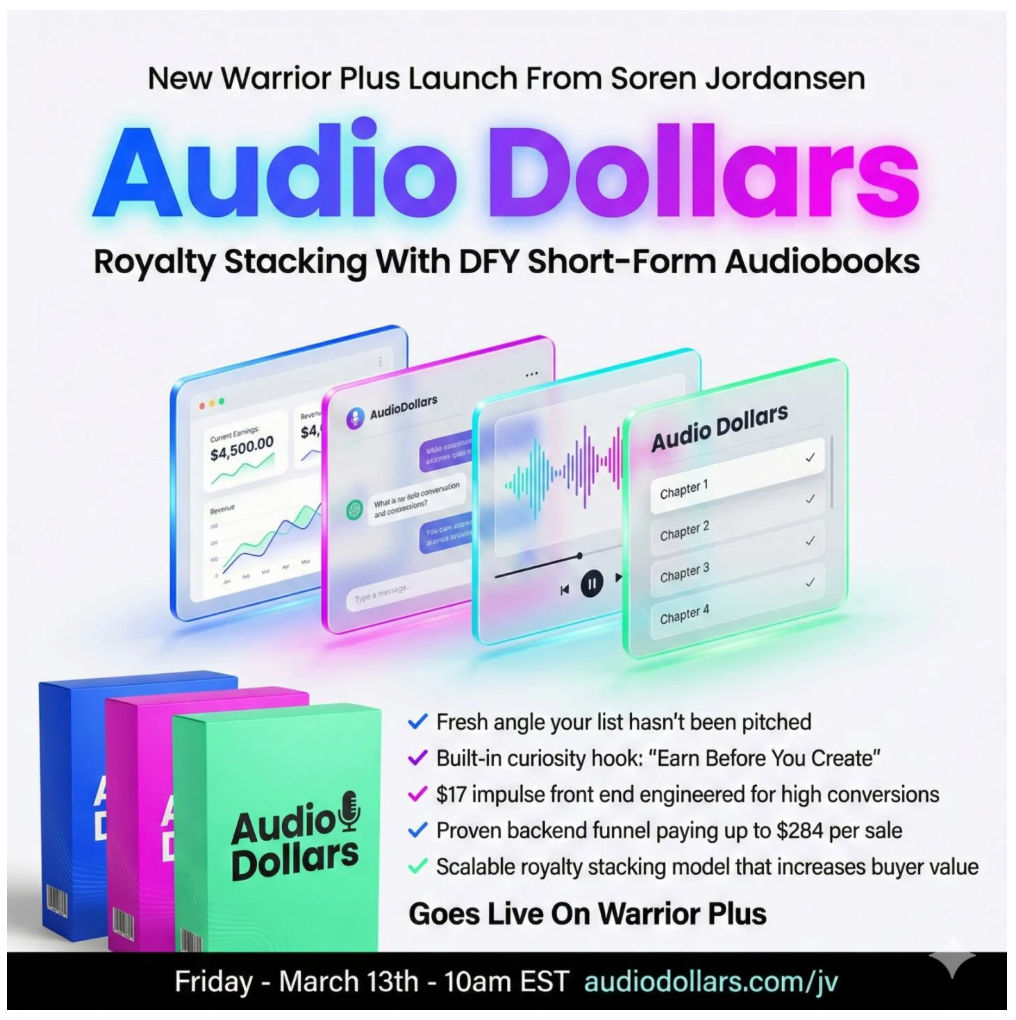
For the past three years, I have watched the audiobook market explode while feeling completely locked out. Not because I lack ideas. Because traditional audiobook production costs thousands of dollars per title. And every time I looked into AI narration, I ran into the same wall: subscriptions, credits, and outputs that sounded painfully robotic.

I am ThanhDaisy9x. I review digital products, AI tools, and SaaS platforms for a living. I have tested everything from voice generators to prompt marketplaces. And I have learned to spot the difference between something that looks good in a sales video and something that actually works when you sit down to use it.
When Audio Dollars launched a few days ago, I approached it the same way I approach every new product: with curiosity, skepticism, and a willingness to be disappointed.
What I found surprised me enough to write this review.
The Problem That Led Me Here
My frustration started simply. I wanted to create audio content without spending hours behind a microphone or hiring voice actors. The AI tools exist. But they cost money per minute. And traditional wisdom says audiobooks need to be long – eight hours, ten hours, twelve hours – to be taken seriously.
I tried the prompt packs. You know the ones. Twenty dollars for a PDF with ChatGPT prompts that promise “high-converting content.” The results were consistently underwhelming. Robotic phrasing. Awkward pacing. Content that sounded like it was written by someone who had never listened to an audiobook.
What stopped me from going deeper was simple: I did not want to gamble money on tools that might not work, only to discover I had wasted time and credits on content nobody would listen to.
When I first saw. Audio Dollars, the claim that caught my attention was not the revenue numbers. It was the zero-cost pipeline. No subscriptions. No credits. A method to publish audiobooks without spending money upfront.
That changes the risk calculation entirely.
What Audio Dollars Actually Gives You
Let me be direct about what this product contains, because the presentation can feel overwhelming. Audio Dollars is not one thing. It is a system with three core components.

The Prompt Library
This is a live web tool, not a PDF. You choose from sixteen genres. Enter a creative seed – a word, a phrase, a title, or nothing at all. Click save. The tool generates a complete, structured prompt ready to paste into any AI.
I tested this across multiple genres. The difference between these prompts and generic ones is immediately obvious. Where a basic prompt produces greeting card language, the Audio Dollars framework produces dialogue, pacing, and structure built for audio consumption.
The Business Guide
Seventeen modules with video walkthroughs. This covers the entire pipeline: picking pen names, publishing to ten platforms, metadata optimization, pricing strategy, and the volume model that makes short-form audiobooks work. Nearly twenty thousand words of instruction.
What I appreciated here is the honesty. The guide repeatedly emphasizes that one audiobook will not change your life. The model depends on catalog building. That is not hype. That is math.
The Bonuses
Three additional reports: an AI testing evaluation across thirty models, a quick start checklist, and a voice toolkit for expanding production beyond the free pipeline.
Why the Zero-Cost Pipeline Matters More Than You Think
Most products in this space assume you are willing to pay for subscriptions. AI writing tools. Narration credits. Hosting fees. The costs add up before you earn a single dollar.

Audio Dollars takes a different approach. The entire production pipeline can be done at zero cost. Not low cost. Zero.
The AI that writes your scripts? You can use any AI you already have. But one of the best tools for this is completely free and unlimited.
Narration and publishing? These platforms are not free by default. But the system shows you a way to do both at zero cost. No credits. No subscriptions.
This changes the risk equation. You are not gambling money on content that might not work. You are testing ideas for free and seeing what sticks. Publish fifty audiobooks for zero dollars. See which ones earn. Invest in the winners.
That is a fundamentally different model than buying credits and hoping.
How It Feels to Use Audio Dollars Day to Day
I started with the quick start checklist. Four steps. Under an hour. My goal was simple: take a genre from the library, run the prompt through a free AI model, and see what came out.

I chose children’s bedtime stories. The prompt library generated a structured script with emotional beats, pacing markers, and formatting optimized for text-to-speech. I pasted it into a free AI tool. The output was coherent, narratable, and genuinely usable.
The narration step took longer than the claims suggest – not because the tools are slow, but because I wanted to understand what I was doing rather than just clicking through. That said, having a zero-cost narration path changed my willingness to experiment. I was not watching a credit balance decrease with every test.
The publishing process required setting up accounts on platforms I had never used before. The guide walked through each one with screenshots. Tedious? Slightly. But the clarity reduced the mental load significantly.
What surprised me most was how quickly I moved from “this is interesting” to “I have published something.” That is unusual for me. I tend to overthink. The combination of structured prompts and clear publishing instructions removed most of the friction points that normally stop me.
The Before and After Difference


You might be wondering: does the prompt framework actually make a difference?
Here is an example from my testing. Same AI. Same genre. Same basic idea.
Without the framework – a basic prompt:
“He took her hand. And as they stood there, hand in hand, two other hearts had finally found their perfect, steady, and unbreakable rhythm.”
That is not a story. That is a greeting card.
With the Audio Dollars framework – same AI, same genre, same idea:
“Nora. Look at me.”
She shook her head. Small.
“Why?” he asked. Quiet. Not demanding. Just asking.
“Because I can’t.”
Every pause. Every short sentence. Every moment of silence between lines. Written to be heard, not read.
That is the difference between a prompt and a framework. And you get sixteen genres built this way.
The Honest Pros and Cons
Let me balance this.
Pros
The prompt frameworks genuinely produce different output than generic prompts. The banned word lists alone eliminate most of the phrases that make AI writing sound like AI writing.
Zero-cost pipeline is real. You can produce and publish without spending money on subscriptions or credits.
The guide covers distribution to ten platforms. Most similar products stop at Audible or Amazon. That matters for royalty stacking.
The genre selection is strategic. These are categories where short-form content and AI narration are both accepted by listeners.
Video walkthroughs reduce the learning curve significantly. When a process is easier to watch than read, there is a video.
The 14-day money-back guarantee removes purchase risk. Any audiobooks you create during that time are yours to keep.
Cons
The publishing process requires setting up accounts on multiple platforms. This takes time. The guide is clear, but the administrative work is real.
AI narration has limitations. The system works within genres where those limitations are acceptable. But if you expect indistinguishable human performance, you will be disappointed.
The volume model requires consistency. You cannot publish one audiobook and expect meaningful royalties. The math does not work that way.
The prompt library is a web tool, not downloadable. You need internet access to use it.
Some of the revenue examples reflect one person’s experience over twelve months. The system gives you the tools. Results depend on execution.
Who This Is For
Perfect for:
The side income builder who wants a royalty model without building an audience or filming videos.
KDP publishers already familiar with Amazon who want to expand into audiobooks without traditional production costs.
Curious beginners who have looked at online income methods but found them technically overwhelming.
Not for:
People looking for a one-click riches system. The model requires publishing multiple titles across multiple genres.
Anyone uncomfortable with AI narration or who believes all audio content must be human-performed.
Those unwilling to commit to consistent production over time.
The Value Question
At $27, the decision comes down to time saved versus learning curve.

Without Audio Dollars, you could piece together this information yourself. Research which genres accept AI narration. Learn prompt engineering through trial and error. Build your own banned word lists. Figure out distribution to ten platforms. Test different AI models to see which perform best.
I have done that kind of research for other tools. It takes weeks, not hours. The time value alone makes $27 reasonable if the system works as described.
The mental load reduction matters too. Having a structured framework removes the “what do I do next” paralysis that kills momentum for most people starting something new.
The total value of everything included is $235 based on the pricing breakdown. The launch price is $27. That is a significant gap. Whether that represents value to you depends on whether you actually use the system.
Final Verdict
Audio Dollars is not magic. It is a well-engineered system for a specific opportunity: short-form audiobooks published to platforms where subscription listeners are already browsing.
The frameworks work. The zero-cost pipeline is real. The guide is thorough without being overwhelming.
What makes this different from the prompt packs and AI income courses I have tested over the years is the honesty about what it takes. The volume model is clearly explained. The limitations of AI narration are acknowledged. The risk is transparent.
If you are looking for a one-audiobook lottery ticket, skip this. If you understand that fifty audiobooks is a portfolio and are willing to build that portfolio over time, the system gives you everything you need to start at zero cost.
I went in skeptical. I came out with a published audiobook and a clear path to publishing more. That is more than I expected.
This review reflects my personal experience with Audio Dollars. Individual results vary. The revenue examples in the sales material are case studies, not guarantees. Your success depends on your consistency, genre selection, and execution.
P.S. One audiobook is a lottery ticket. Fifty audiobooks is a portfolio. Audio Dollars gives you the system to build that portfolio starting at zero cost. The 14-day guarantee means you have nothing to lose and potentially a growing royalty catalog to gain.