Funny Comics For Kids Review: A Surprisingly Practical AI Workflow for Creating Comic Books Without Drawing
I tested Funny Comics For Kids to see if this AI comic workflow could actually save time for KDP and Etsy creators. Here’s my honest experience using it to turn simple stories into structured comic books with panels, dialogue, characters, and ready-to-use prompts.
The AI content space is getting crowded fast.
Every week, another tool promises to help creators:
write faster,
publish faster,
design faster,
or “automate creativity.”
And honestly, I understand why many people are skeptical now.
Most AI products look impressive in sales demos but become frustrating the moment you try using them for real projects.
Especially in creative niches like comics.
Comic creation sounds simple until you actually sit down and try to build one from scratch.
Suddenly you’re dealing with:
story pacing,
character consistency,
panel structure,
dialogue timing,
scene flow,
visual prompts,
and layout organization.
That’s usually the point where creators either:
abandon the project completely, or
spend far more time editing than expected.
I’ve tested enough AI creative tools over the years to know that “faster” does not always mean “easier.”
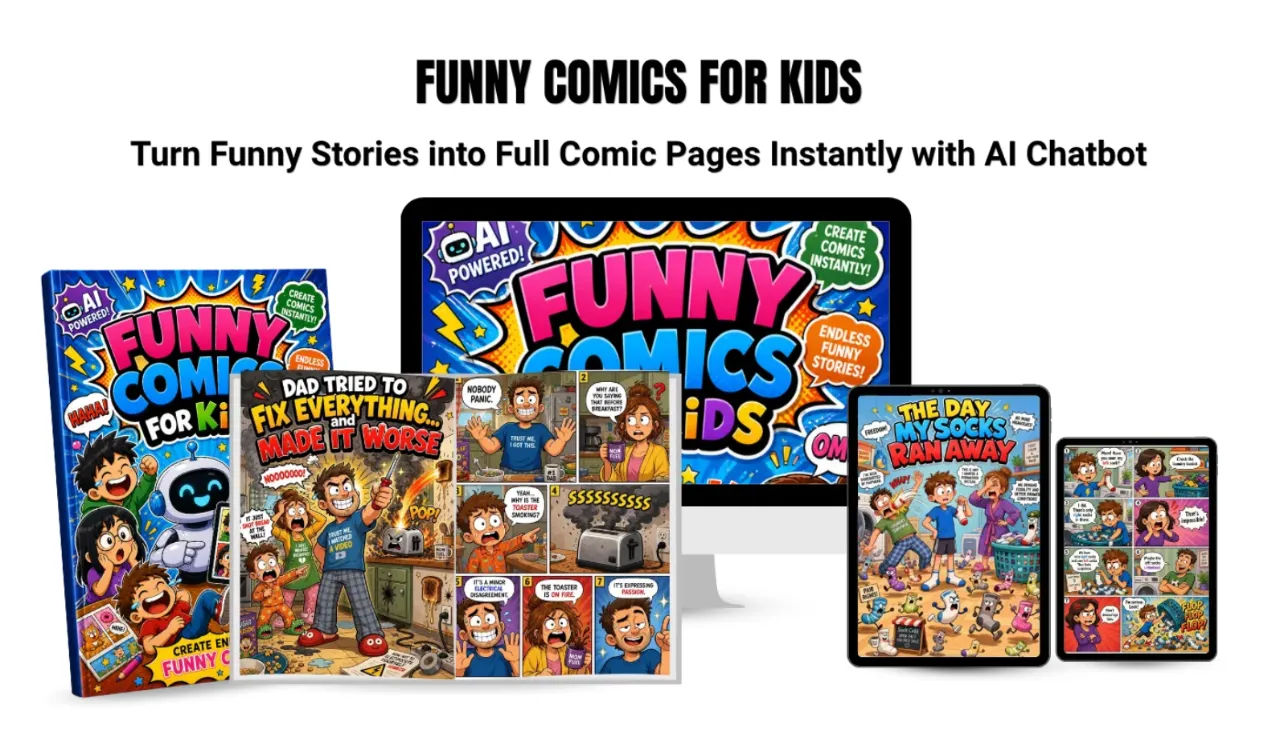
That’s why I decided to test Funny Comics For Kids, a newly launched AI comic chatbot system designed to turn simple stories into complete comic workflows.
At first, I assumed it would be another basic prompt pack wrapped in flashy marketing.
But after actually using it, I realized the real value wasn’t the prompts themselves.
It was the structure.
And surprisingly, that’s what made the product useful.
Why Most AI Comic Tools Fail in Practice
Before talking about what Funny Comics For Kids does well, it’s important to understand why so many creators hesitate to buy products like this.
Most people aren’t afraid of AI anymore.
They’re afraid of wasting time.
That’s the real issue.
A lot of AI comic systems generate:
disconnected scenes,
awkward dialogue,
inconsistent characters,
bloated storytelling,
or outputs that still require massive manual cleanup.
So even if the initial output looks “cool,” the workflow itself becomes exhausting.
That’s where many creators quietly give up.
Especially beginners.
The hidden problem isn’t creativity.
It’s production friction.
That’s exactly what caught my attention about Funny Comics For Kids.
Instead of focusing only on generating comic art prompts, it tries to organize the entire comic-building process:
story → characters → pages → panels → dialogue → prompts → ending page.
That sounds simple.
But in real-world content creation, workflow structure matters far more than people realize.
What Funny Comics For Kids Actually Does
At its core, Funny Comics For Kids is an AI chatbot system that helps transform a basic story idea into a structured comic workflow.
The system generates:
Character Bible
comic cover concepts
panel breakdowns
dialogue
reactions
comic scene prompts
ending pages
The important difference is that the outputs feel connected.
Many AI tools generate random pieces.
This one tries to maintain narrative continuity across the project.
That alone saves a surprising amount of mental effort.
The Feature That Helped Me Most: Character Consistency
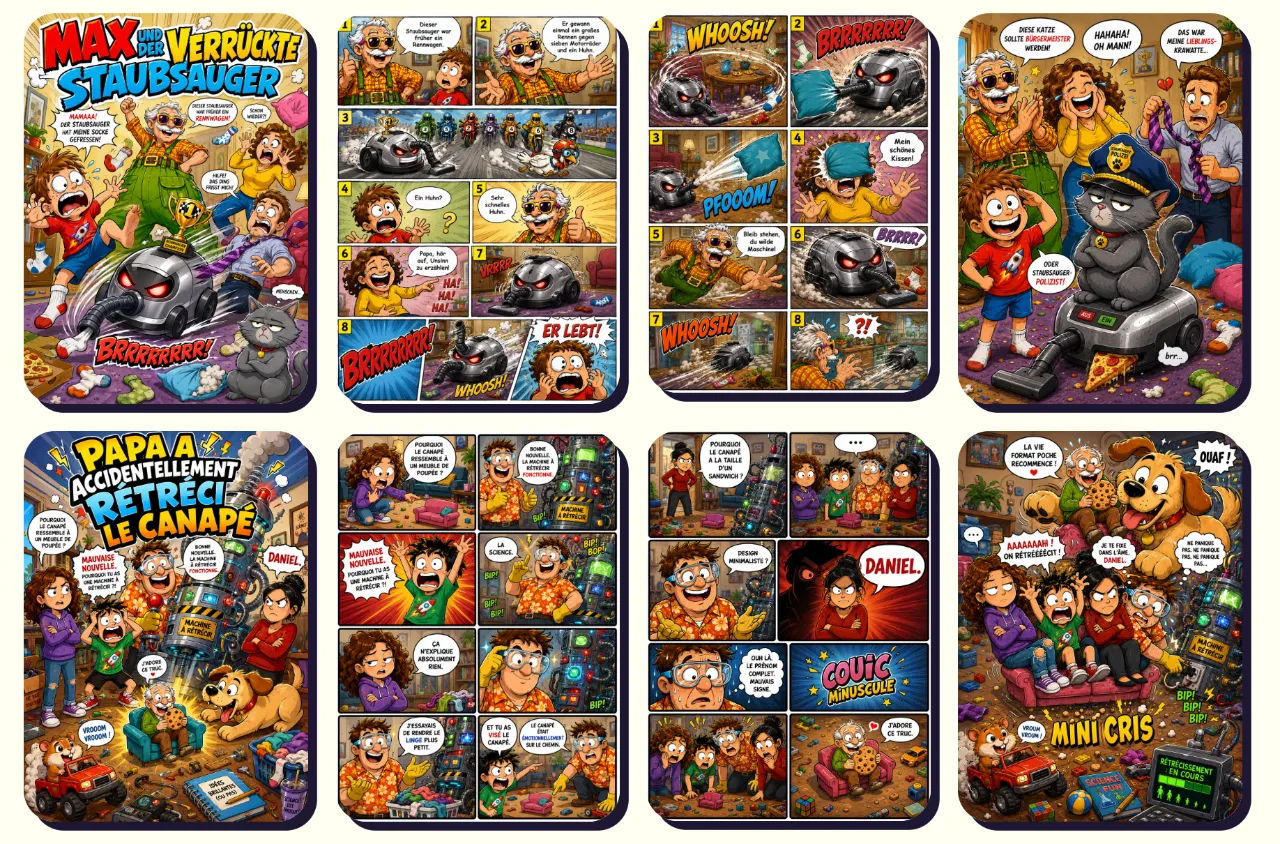
One of the biggest frustrations in AI-generated visual storytelling is character inconsistency.
If you’ve experimented with AI image generation before, you already know the problem:
different hairstyles,
changing outfits,
inconsistent personalities,
random facial expressions,
visual continuity issues.
Funny Comics For Kids addresses that with its Character Bible workflow.
The chatbot defines:
appearance,
clothing,
colors,
personality traits,
emotional reactions,
and visual behavior early in the process.
That creates a much more stable foundation for generating comic scenes later.
This matters more than people think.
Because inconsistent characters instantly make comic projects feel amateurish.
Especially for:
KDP books,
Etsy products,
educational comics,
or children’s content.
If you want to see how the workflow works in practice, you can check the official product page here.
The Dialogue Is Better Than I Expected
This was another surprise.
Most AI writing tools still struggle with comic dialogue.
They generate text that:
sounds too formal,
feels too long,
or doesn’t fit naturally into comic bubbles.
Comic pacing is very different from regular storytelling.
Funny Comics For Kids handles this better than most low-ticket AI systems I’ve tested recently.
The dialogue outputs are:
shorter,
more visual,
reaction-focused,
and easier to place into comic layouts.
Not perfect, obviously.
You’ll still edit things occasionally.
But the editing feels manageable instead of overwhelming.
That distinction is important.
Because many “AI productivity” tools secretly create more editing work than they save.
Real Usage Experience After Testing It
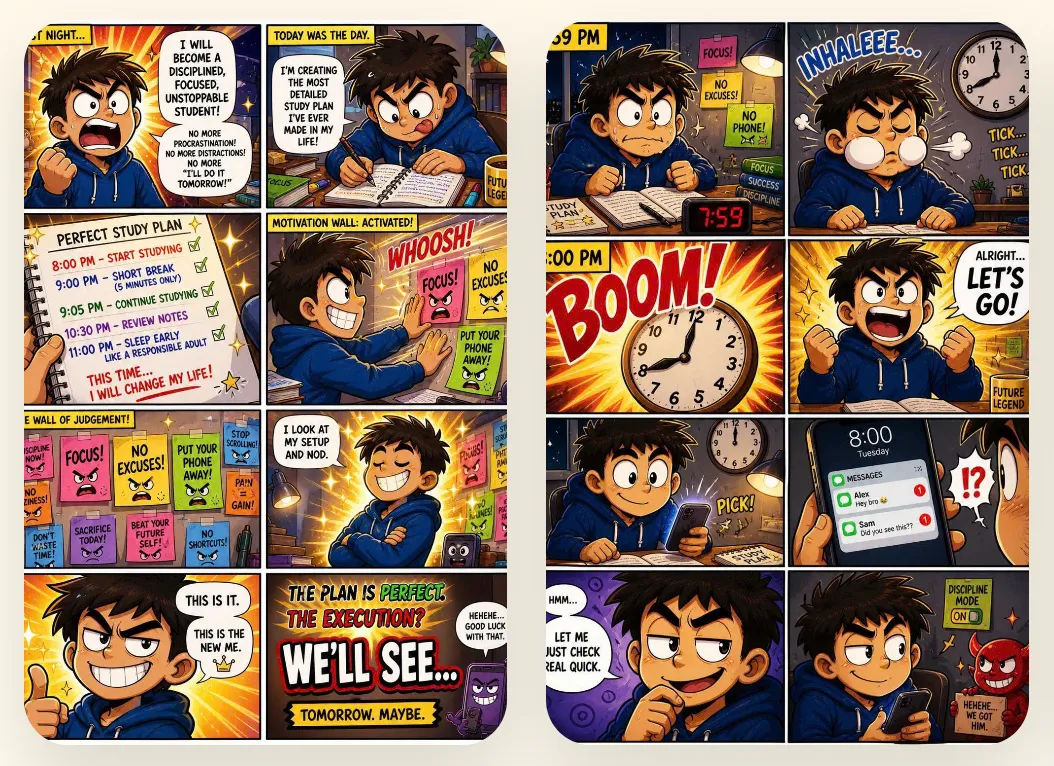
This is the section most reviews skip.
Features are easy to list.
Actual usability is what determines whether a product becomes part of someone’s workflow long-term.
Onboarding Was Surprisingly Easy
One thing I appreciated immediately:
there was almost no technical friction.
You don’t need:
drawing experience,
design software,
advanced prompting skills,
or complicated AI workflows.
The process is basically:
paste your story,
follow the chatbot flow,
refine outputs if needed.
That simplicity matters.
Especially for beginners.
A lot of creators don’t quit because they lack ideas.
They quit because the process becomes mentally exhausting.
This system reduces a large amount of that friction.
It Feels More Like a Production Assistant Than a Generator
The longer I used it, the more I realized this isn’t really a “comic generator.”
It’s closer to a workflow assistant.
And honestly, that makes it much more useful.
Many AI systems generate chaotic outputs quickly.
Funny Comics For Kids focuses more on organization:
panel flow,
dialogue pacing,
scene continuity,
visual consistency,
and comic structure.
That’s where the real value is.
Especially if you’re building:
KDP comic books,
printable products,
Etsy downloads,
social storytelling content,
or educational material.
Multi-Language Support Is More Useful Than I Expected
At first, I thought this was mostly marketing filler.
After testing it with non-English prompts, I changed my opinion.
The chatbot keeps the original language structure from the story input.
That means creators can potentially build:
localized children’s comics,
multilingual KDP products,
region-specific Etsy content,
or educational material for different markets.
Most AI content tools still focus heavily on English-only workflows.
That leaves a lot of opportunities open internationally.
If you want to explore the workflow yourself, here’s the official page again.
Pros & Cons
What I Liked
Structured comic workflow instead of random prompt outputs
Character Bible improves consistency
Dialogue is optimized for comic pacing
Beginner-friendly setup
Useful for KDP and Etsy creators
Multi-language support adds flexibility
Helps reduce creative fatigue
Faster than manual comic structuring
What Could Be Better
Requires ChatGPT access
Some outputs still need editing
Advanced creators may want deeper customization
Not a replacement for professional illustration skills
Weak story ideas still produce weak outputs
That last point is important.
This tool improves workflow structure.
It does not magically create great storytelling automatically.
Pricing & Value Analysis
Funny Comics For Kids is currently priced at $17 during launch.
The advertised regular pricing is higher, but realistically most people will judge it based on the launch offer.
So the real question becomes:
Is it worth paying for?
Honestly, I think that depends entirely on what problem you’re trying to solve.
If you expect:
instant bestseller comics,
fully polished artwork,
or fully automated publishing…
you’ll probably be disappointed.
But if your biggest bottleneck is:
organization,
structure,
pacing,
or creative overwhelm…
then the value becomes much easier to justify.
The Real ROI Isn’t “Making Money Faster”
This is something many reviews get wrong.
The real ROI here is:
reduced mental load,
faster project completion,
fewer abandoned ideas,
and smoother production workflows.
That’s much more realistic.
And honestly, much more sustainable.
Who This Product Is Best For
I think Funny Comics For Kids works best for:
KDP creators
Etsy sellers
printable businesses
beginner comic creators
educational creators
AI-assisted publishers
parents creating personalized stories
Especially people who already have ideas but struggle turning them into finished comic structures.
Who Should Skip It
This probably isn’t ideal for:
professional comic artists,
advanced illustrators,
users wanting cinematic graphic novels,
or people expecting “1-click passive income.”
This is a workflow tool.
Not a miracle shortcut.
And I actually respect that.
Bonuses Included
The launch currently includes:
50 comic story ideas
249 comic title ideas
additional story-generation chatbot
tutorial walkthroughs
Thankfully, the bonuses are actually related to the core workflow instead of random filler products.
That makes the overall package feel more coherent.
Final Verdict
After spending time testing Funny Comics For Kids, I think its biggest strength is surprisingly simple:
It helps creators move from idea → structure → usable comic workflow faster.
That may not sound flashy.
But in practice, it’s extremely valuable.
Most creative projects fail because the workflow becomes too chaotic or mentally draining.
This system reduces a large amount of that friction.
No, it won’t replace creativity.
No, it won’t instantly produce bestselling comics.
But for creators who want a faster, cleaner way to organize comic-style storytelling for KDP, Etsy, or digital products, it delivers more practical value than most low-cost AI creative systems I’ve tested recently.