My Kindle Short Reads Generator Review: PLR Worth Selling?
I bought the Kindle Short Reads Generator PLR and tested the Super Prompts and sales materials myself. Here is what worked, what did not, and who should skip this one.
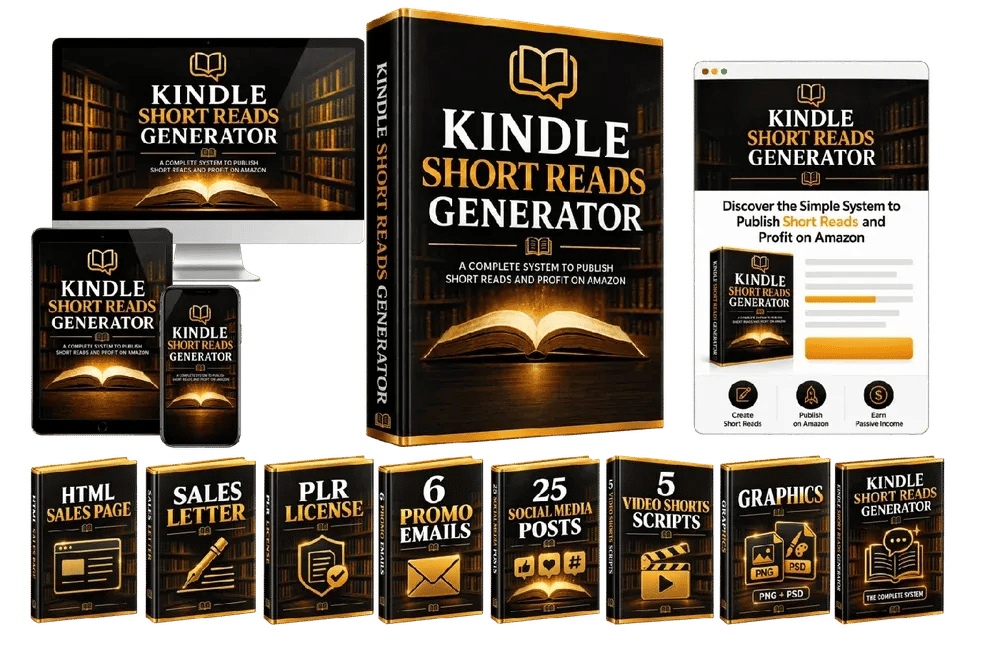
I have been selling PLR products for about three years now, and the hardest part is never the product itself. It is finding something my list has not already seen twenty times. Every week another "AI Kindle publishing" offer lands in my inbox, and every week I delete it because I know my buyers already own three versions of it. So when I came across the Kindle Short Reads Generator PLR, I was sceptical in the usual way. Another prompt pack, another gated sales page, another product my subscribers would ignore.
But the angle got me. Short Reads are a genuinely different slice of Kindle publishing, and the sales copy kept hammering one point: the whole system runs on just two Super Prompts instead of the usual hundred disconnected instructions. That sounded like something I could actually demonstrate to my audience without making their eyes glaze over. I paid the $9.95 entry price and downloaded the whole package. I have spent the last two weekends testing the prompts, reading the guides, and deciding whether this is worth putting in front of my own buyers. My honest verdict is mixed, but probably not for the reasons you would guess.
What You Actually Get
The package is a complete PLR offer, which means you are not just buying a product to use yourself. You are buying a ready-made launch that you can resell to your own list. The contents are fairly extensive for the price, and I have laid them out below based on what was in my download and what the sales page promises.
- PLR rights to the full product: This includes the core system called Kindle Short Reads Generator, which I can resell as my own.
- Super Prompt #1 (My Short Reads Market Researcher): The research prompt that takes a reading-time band, a genre, and a comparable Amazon book, then produces a direction brief.
- Super Prompt #2 (Manuscript Generator): The prompt that takes the research brief and builds the complete outline plus the full fiction or nonfiction manuscript.
- Amazon ShortReads Profits guide: A written guide covering both revenue paths (per-sale royalties and Kindle Unlimited page reads) and how the business math works.
- The exact HTML sales page you are reading: Fully editable so I can rebrand it and host it myself.
- Promo emails, social media posts, and video scripts: Ready-made marketing materials for launching to my list.
- Graphics and demonstration images: Visual walkthroughs of both Super Prompts in action so my prospects can see what happens before they buy.
- A finished sample manuscript: A complete Short Read created with the system, which I can show as proof of the workflow.
The sales page also references a dimesale structure, where the price started at $9.95 and will rise to $27 as more copies sell. The operator notes confirm the $9.95 base price, but the page mentions $27 twice, so that is the likely ceiling.
Key Features
The two Super Prompts are the entire centre of gravity here, so understanding how they divide the work matters if you are thinking of reselling this.
Prompt #1 slows down the biggest beginner mistake. Most AI book products have users asking for a random book idea and then sprinting off to write chapters. This prompt forces a research phase first. You paste it into a fresh ChatGPT session, supply an Amazon listing URL and balanced written reviews, and the system looks for reader signals: what people appreciate, what execution problems keep showing up in negative reviews, and where preferences conflict. It then walks you through several direction choices before producing a concise brief that Prompt #2 can consume.
Prompt #2 is where the manuscript actually gets made. You feed it the research brief from Prompt #1 and it handles the outline and then the chapter-by-chapter manuscript generation. The workflow is pre-built, so your buyer is not inventing prompts as they go. They are answering the questions the Super Prompt asks and letting the system carry the organisational weight.
There is an important caveat baked into the instructions that I appreciated. The comparable book you study is not there to be copied. The operating instructions explicitly tell the system to treat it only as a reader-experience reference and to develop a new, original direction. That is a small thing, but it protects your buyers from accidentally producing something that looks derivative, which matters on Amazon.
The publishing guide also covers the two revenue paths you can explain to your buyers. The first is the standard per-sale royalty for eligible Kindle ebooks. The second is Kindle Unlimited, where enrolled books earn based on valid normalized pages read by subscribers. The guide is clear that this is not passive magic. The niche, book quality, packaging, and promotion still determine whether anything sells.
Actually Using It
I have tested both Super Prompts in a fresh ChatGPT session, exactly the way the package tells buyers to do it. I wanted to see if the mechanism actually produced a usable Short Read manuscript or if it was another overpromising AI wrapper.
My first test was a nonfiction Short Read in the personal finance niche, targeting the 30-minute reading band. I found a comparable Amazon book with a dozen written reviews and pasted a few balanced ones into the chat along with the full text of Prompt #1. The system asked me to choose a direction from the options it generated, I picked one, and it produced a compact research brief. The brief was sensible. It identified a clear reader pain point (overspending on subscriptions) and suggested a tight structure for solving it. No fluff, no generic advice.
Then I ran Prompt #2 with that brief. The prompt generated a full outline first, asked me to approve it, and then produced a complete manuscript in under thirty minutes. The word count came out to roughly 4,500 words, which fits the 30-minute reading band nicely. Reading it back, I found the prose serviceable but not dazzling. It had the usual AI tendencies toward repetition and overly neat paragraph structure. I spent about an hour editing it down, adding some personal examples, and tightening the language. The result was a decent Short Read that I would not be embarrassed to publish under a pen name. It is not going to win literary awards, but it is a legitimate asset.
My second test was fiction, because I wanted to see if the system handled narrative without turning it into a mess. I chose a mystery short in the 45-minute band. Prompt #1 did its job on research, although the comparable book reviews for fiction are more varied and harder to draw clean signals from. The fiction brief took me about fifteen minutes of back-and-forth choices. Prompt #2 then produced an outline with a clear central conflict and a satisfying reversal at the end. The actual chapters came out at around 6,000 words. The pacing was surprisingly solid. The dialogue had that slightly stiff AI quality where every character sounds like the same person, but the structure held up and the ending landed.
The two Super Prompt approach genuinely reduces the friction of the old multi-prompt method. I have used AI book systems that required managing thirty or forty separate prompts in a single session, and they break down quickly. One wrong output and you are manually correcting the workflow. Here, the entire process is contained in two big blocks of instructions, which means fewer points of failure. That is a real advantage and one I can explain honestly to my list.
What the package does not do is sell itself. The sales page copy is decent, but you still have to do the work of positioning it for your own audience. The included promo emails are a starting point, not a finished launch. And if you are not already in the publishing niche, you will have a hard time selling this to a cold list. This is a product for people with buyers who already care about Kindle publishing and self-publishing.
The demonstration graphics are useful for marketing. They show the prompts being pasted into ChatGPT and the step-by-step process unfolding, which is far more convincing than a screenshot of a bullet list. I used one of them in a draft email and it drew a couple of replies asking what the product was, so the visual angle works.
Pricing and Value Analysis
The price structure is where this gets interesting. The sales page runs a dimesale, starting at $9.95 and rising to $27 as more copies sell. I paid the $9.95 entry price, which is frankly a steal for the amount of done-for-you material in the download. If I had paid $27, I would still have felt it was reasonably priced compared to similar PLR packages I have purchased.
To put that in context, I have bought basic PLR articles for $5 each that contained a fraction of the usable content. This package includes a full sales page, a complete guide, two tested Super Prompts, demonstration graphics, promo emails, and video scripts. The $9.95 price point is clearly designed to get early buyers in and generate social proof, and the $27 price is still competitive for what you receive.
The real value comes from the resale opportunity. One sale of this product to your own buyer at, say, $17 covers what you paid several times over. But the operative word here is "if". If you do not have an audience in the publishing niche, you will not sell this. The value is locked behind your ability to market it to the right people.
| Item | What You Get | Approx. Value |
|---|---|---|
| Core system with 2 Super Prompts | Full PLR rights | The main offer |
| Amazon ShortReads Profits guide | Written guide | Backend content |
| HTML sales page | Editable page | Saves design work |
| Promo emails + social posts | Copy-paste launch | Reduces prep time |
| Video scripts + graphics | Sales assets | Extra credibility |
If you are comparing this to alternatives like generic AI prompt packs or multi-module Kindle courses, the main advantage is the narrow focus. This is not trying to teach everything about publishing. It is one clear mechanism, which makes it easier to sell and easier for your buyers to grasp.
Pros and Cons
I have used the system for my own book creation and I have evaluated it as a PLR asset to resell. Both perspectives matter, and the verdict runs along these lines.
Who This Is For
This is for PLR sellers, list owners, and marketers who already have buyers interested in Kindle publishing, self-publishing, ebooks, or AI-assisted content creation. If you have a warm audience that has bought publishing products before, this package gives you a fresh angle with a full marketing kit to launch it. The complete nature of the offer means you can have a campaign live within a day of buying it.
Who Should Skip It
Skip this if you do not have an established list or audience in the publishing space. Selling PLR to a cold audience is an uphill battle, and this product does not change that. Also skip it if you are looking for a polished, ready-to-use book factory with zero editing required. The Super Prompts produce drafts that need real human input to be publishable, and expecting otherwise will lead to disappointment.
Frequently Asked Questions
What is the Kindle Short Reads Generator PLR?
It is a complete PLR package that gives you resale rights to a Kindle publishing system built around two Super Prompts. One prompt handles market research, the other creates the manuscript. You also get the sales page, emails, graphics, and guides to promote it.
Does the Kindle Short Reads Generator actually work?
I tested both prompts in ChatGPT and produced a complete nonfiction manuscript of about 4,500 words in under thirty minutes. The prose needed editing, but the structure and research process were solid. It works as a draft generator, not a one-click publishing solution.
What is the price of the Kindle Short Reads Generator?
The dimesale price starts at $9.95 and rises to $27 as more copies sell. The longer you wait, the more you pay. You get the full PLR rights and marketing materials regardless of which price you buy at.
Can I sell the Kindle Short Reads Generator as my own product?
Yes, that is the entire point of the PLR licence. You can rebrand the product, edit the sales page, and sell it to your own audience. You keep the revenue from every sale you make.
Do I need to have my own product to use this?
No. This package solves the product creation problem by giving you a complete offer with marketing materials included. You bring the audience and the promotion. The product itself is already built for you.
What kind of books can this create?
The system handles both fiction and nonfiction Short Reads across various reading-time bands, from roughly 15-minute reads up to two-hour reads. The genre or subject is your choice based on what you research in Prompt #1.
Is there a refund policy for this PLR product?
I cannot confirm the exact refund terms from my sources. In my experience, PLR products are typically sold as final sale due to their downloadable nature, but you should check the checkout page for the specific policy before purchasing.
Final Verdict
I am keeping this in my rotation for the publishing list. The Kindle Short Reads Generator gives me something I have not had in months: an angle my subscribers have not already bought, wrapped in a complete marketing package. The two Super Prompts work, the demonstration graphics sell the mechanism, and the $9.95 entry price lets me test it without much risk.
The downsides are real and worth acknowledging. You need an existing audience to make money from this. The sales page copy has been used by every other buyer of the same package, so you will need to rewrite it to stand out. And the manuscripts produced by the prompts require human editing before they are publishable. None of that is fatal, but all of it is work you should expect.
If you sell PLR to publishing buyers and you want a fresh offer before the Short Reads angle gets saturated, this is a sensible buy at the current price. If you are hoping for a fully automated passive income machine, you will be disappointed.
I have already started rewriting the sales page for my own launch next week. The two test manuscripts I created are sitting in my drafts folder, one in personal finance and one in mystery fiction. I will likely publish both under a pen name to see how the Short Reads market responds. The system is not perfect, but it is a legitimate tool I am comfortable recommending to my buyers.
For the price of a couple of coffees, you get a complete resellable product with a tested mechanism and the marketing assets to launch it. That is rare in the PLR space these days.