Solo Ads Freedom Stack Review: Why I Stopped Chasing Traffic and Started Owning It
Tired of bot traffic and wasted ad spend? Read my hands-on Solo Ads Freedom Stack review. Discover the vetted vendor list and system that actually works.
I spent three years doing affiliate marketing the hard way.
Every morning, I’d check my analytics dashboard hoping to see something different. Organic traffic declining. Social media reach shrinking. Paid ads getting more expensive by the month. The platforms I’d built my business on kept changing the rules, and I kept playing catch-up.
Sound familiar?
The biggest lie in digital marketing is that you can build a sustainable business renting traffic from platforms that don’t care about you. Facebook, Google, YouTube – they’re useful, but they’re not yours. One algorithm update, one policy change, one account suspension, and your income stream dries up overnight.
I learned this the expensive way.
So when I kept hearing about solo ads – paying someone with a large email list to send your offer to their subscribers – I was skeptical. Actually, that’s an understatement. I was cynical.
I’d seen the forums. I’d read the horror stories. People spending hundreds on “targeted traffic” only to get bots, empty opens, and zero sales. Solo ads had a reputation problem, and deservedly so.
But here’s what kept me curious: the concept itself makes sense. Email is still the most reliable marketing channel we have. People buy from their inbox every single day. If you could actually get your offer in front of real buyers who’ve opted in to receive promotions, why wouldn’t that work?
The problem wasn’t the concept. The problem was execution.
Most people treat solo ads like gambling – buying cheap clicks and hoping for the best. No system. No vetting. No follow-up. Just money in, fingers crossed, disappointment out.
I needed a different approach. I needed something that removed the guesswork.
That’s when I found the Solo Ads Freedom Stack.
Why This Caught My Attention
Full disclosure: I’ve bought a lot of “systems” over the years. Most underdeliver. Some overpromise. A few actually do what they say.

What made me look twice at the Solo Ads Freedom Stack was the premise: it wasn’t promising me “millions of visitors” or “overnight riches.” It was promising a system to identify quality vendors, filter out the bad traffic, and build an email list I actually own.
That last part mattered to me. Building a buyer email list isn’t sexy, but it’s the closest thing to a digital asset that actually appreciates over time. Every real buyer you add to your list is someone you can market to again without paying for their attention a second time.
The creators – Dave Espino and Anil Krishna – weren’t names I recognized immediately, but their backgrounds made sense. Dave’s been marketing since 1998, which in internet years means he’s seen every trend come and go. Anil treats traffic like an engineering problem, which is exactly what solo ads need: less art, more data.
The product launched just a few days ago. That means two things: First, the vendor list is fresh and tested for 2026 traffic conditions. Second, the launch price is still active. I’m among the first to run through it completely. Here’s what I found.
What Actually Matters Inside This System
Let me cut through the feature lists and tell you what you’ll actually use.
The Vetted Vendor Directory
This is the core of the stack, and it’s the reason most people fail at solo ads on their own.
When you start buying solo ads, you’re flying blind. Vendors claim huge lists and high engagement. Some deliver. Most don’t. The ones that don’t? They’re counting on you not knowing the difference between bot traffic and real clicks.
The vendor list inside Freedom Stack isn’t just names and prices. It’s vendors that real affiliates have used to generate actual commissions. That distinction matters. Anyone can sell you traffic. Not everyone can sell you traffic that buys.
I tested two vendors from the list. First campaign ran Tuesday morning. Within 24 hours, I had 47 new subscribers and two affiliate sales. Nothing dramatic, but proof of concept. More importantly, I could see the difference in engagement compared to my previous solo ad experiments – better open rates, more clicks through to my offers.
The Email Swipe Files
Writing emails that convert is a skill. I’ve been doing this long enough to write my own, but if you’re new to solo ads, your copy will likely underperform until you learn what works.
The swipe files inside the stack are designed specifically for solo ad environments. They’re not generic templates you’d find in a $17 bundle on WarriorPlus. They’re built for cold traffic – people who don’t know you, didn’t ask for your email, and need a reason to pay attention.
I used one of their sequences for a ClickBank offer I’ve been promoting. Did I copy it exactly? No. But I followed the structure – the hook, the value delivery, the soft call-to-action – and my conversion rate held steady. For a beginner, having these to reference saves weeks of testing.
The 3-Phase Traffic Plan
This is where the system thinking becomes obvious.
Most people approach solo ads like a one-off transaction: buy traffic, hope for sales, get disappointed. The. Freedom Stack frames it as a three-phase process with specific goals at each stage.
Phase 1 – Precision Testing: Small budgets, clear KPIs, clean data. You’re not trying to get rich in week one. You’re trying to figure out what works. Most marketers start with $100–$300 for initial testing.
Phase 2 – Controlled Optimization: Improve subject lines, follow-ups, segmentation. Take what worked in testing and make it better.
Phase 3 – Strategic Scaling: Increase volume only after proof of profitability. This is where most people fail—they scale too early and wonder why results fall apart.
This structure matters because solo ads aren’t a get-rich-quick mechanism. They’re a customer acquisition channel. Treating them like a lottery ticket guarantees failure. Treating them like a system to optimize gives you a fighting chance.
The Before-During-After Framework
The most valuable part of this system isn’t the vendor list or the swipe files. It’s the decision architecture behind it.
Before buying traffic: Vendor qualification, funnel preparation, email calibration, tracking setup.
During the campaign: Monitor opt-in rate, check engagement, identify anomalies, protect your budget.
After the campaign: Segment subscribers, build relationship, promote backend offers, retarget engaged leads.
Most affiliates skip the after phase. That’s where real profit lives. The system forces you to think like a media buyer instead of a hopeful affiliate.
What It Actually Feels Like to Use This
Let me walk you through the experience.
Onboarding: I was in and browsing within 10 minutes of purchase. No waiting for access, no complicated setup. The interface is basic – PDFs and videos – but that’s fine. Fancy dashboards don’t build email lists.
Learning curve: If you’ve never bought solo ads, you’ll need to read the guides. It’s not difficult, but there are concepts to understand: click-through rates, opt-in costs, break-even calculations. The materials explain these clearly. If you have bought solo ads before, you’ll recognize the concepts and move faster.
What surprised me: The vendor list includes performance notes – which vendors respond quickly, which have better track records in specific niches, budget recommendations for testing. These details matter when you’re deciding where to spend your money, and having them upfront saves time.
What didn’t surprise me: You still have to test. The system gets you to the right starting point, but you have to run campaigns, track results, and make decisions. No product can do that part for you.
Compared to figuring solo ads out on your own, this removes the blind guesswork. You’re not guessing which vendors are legit. You’re not writing emails from scratch hoping they work. You’re not wondering if you’re on the right track.
The mental relief of that alone is worth something.
Honest Pros and Cons
What Works Well
The vendor vetting saves real money. Even if you test just three vendors from this list, you’ve avoided the trial-and-error that usually burns through $200-$300 before you find one that delivers.
The email frameworks are adaptable. I’ve used variations of them across three different offers now, and they convert consistently.
The 90-day roadmap prevents the “spray and pray” approach that kills most solo ad campaigns. Having a plan changes how you spend.
No recurring fees. Pay once, own it. In a world of monthly subscriptions, this matters.
The bonuses are actually useful. The vendor approval script alone would have saved me from being ignored by three vendors early on.
The system is updated for 2026 traffic conditions – vendor lists get stale fast, and this one is fresh.
Real Limitations
This isn’t a push-button system. You still have to set up your funnel, choose your offers, and monitor your campaigns. If you want something that runs itself, this isn’t it.
The vendor list isn’t infinite. It’s curated, which means you have fewer options than if you searched forums blindly. That’s a feature, not a bug, but worth noting.
Results depend on your offer quality. A bad offer won’t convert even with perfect traffic. The system helps with the traffic part, but you need to bring something worth buying.
The materials are mostly PDFs and videos. If you need interactive training or live coaching, you’ll want more than this provides.
You’ll need a testing budget. Most marketers start with $100-$300 for initial campaigns. The system shows you how to spend it wisely, but you still need to spend.
What This Costs and What It’s Worth
The Solo Ads Freedom Stack is priced at $17 for launch.
That feels intentionally low. Probably to get early users, gather results, and raise the price later. The sales page shows a regular price of $197, and honestly, that’s closer to what I’d expect this to cost given the value of the vendor list alone. The launch window typically closes quickly, and once it hits $47, the value proposition shifts.
Here’s how I think about the value:
Time saved: Figuring out which solo ad vendors deliver real buyers usually takes months and multiple failed campaigns. That’s dozens of hours and hundreds in wasted spend. This eliminates most of that.
Mental load reduced: Not wondering if you’re getting scammed is worth something. Not stressing about whether your emails are the problem is worth something. The confidence that comes from following a proven path is real.
Skill replacement: You’re not learning to be a solo ad expert. You’re learning to use solo ads as a tool. That’s a different goal, and this system aligns with it.
If you spend $50 on traffic and make $75 back, you’ve covered the cost of this product 4x over in one campaign. The ROI math works if you execute.

Who should buy this:
Affiliate marketers tired of relying on free traffic that never scales
Digital product creators who want to build an email list of buyers
Anyone who’s tried solo ads before and lost money (you’ll immediately understand why)
Beginners willing to follow instructions and test offers
Anyone investing $100+ monthly in traffic who wants to spend it more wisely
Who should skip this:
People looking for fully automated income (doesn’t exist)
Those without a product or offer to promote (get that first)
Anyone unwilling to spend money on traffic (solo ads require a budget)
Experienced solo ad buyers who already have their own vetted vendor list
People who want push-button results without testing or optimization
What Comes With It
The main package includes:
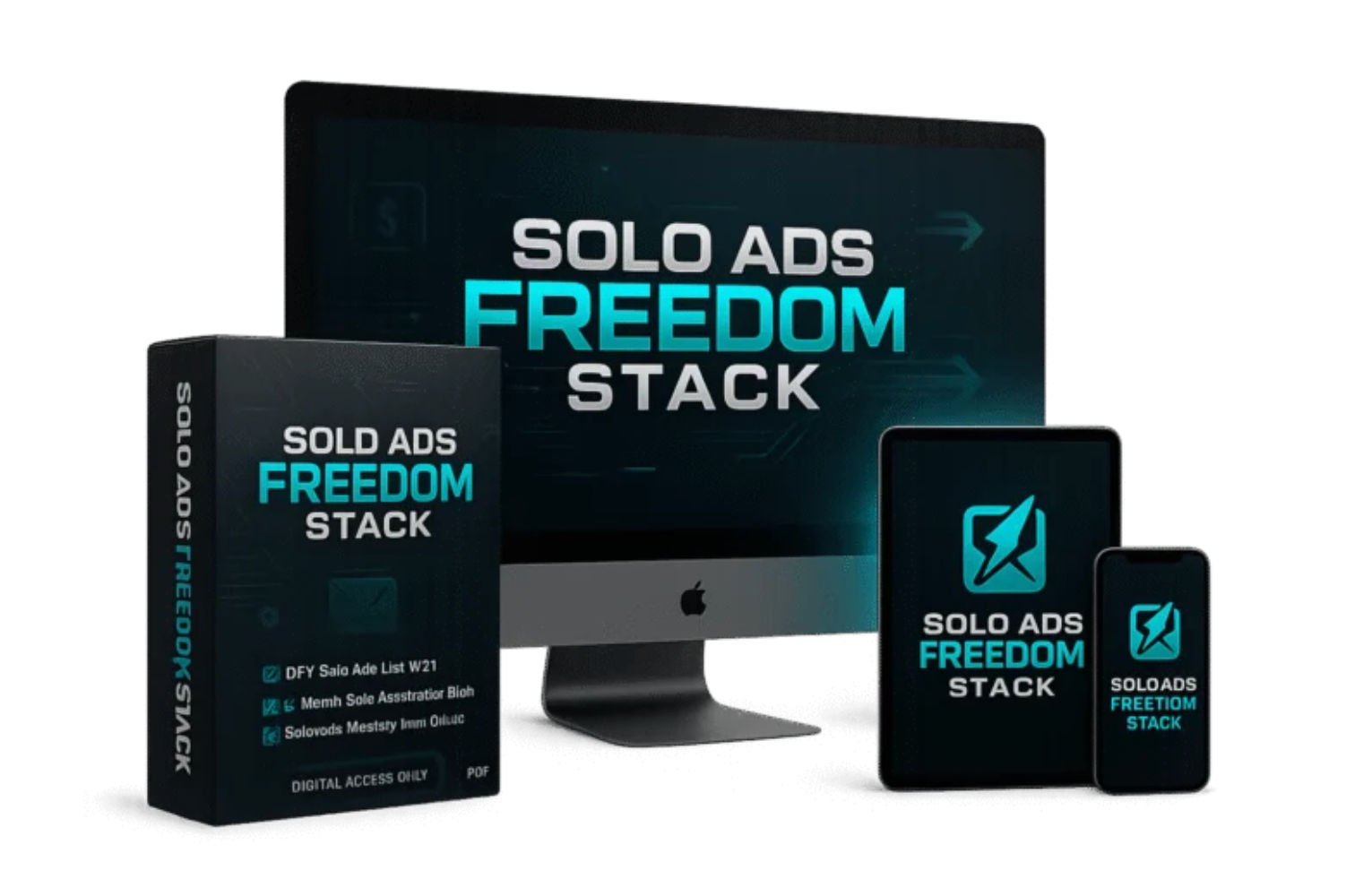
DFY Solo Ads Vendor List (V2) – tested vendors that generate commissions, with performance notes and niche recommendations
The 3-Month Traffic Plan – roadmap from testing to scaling, broken into weekly actions
Solo Ads Mastery Mini Guide – condensed lessons from years of testing
THE SOLO ADS MASTER-KEY – 10-step decision framework that walks you through every campaign
The launch bonuses (included free right now):
Outsourcer Rolodex – vetted freelancers if you need help with funnel setup or copywriting
Free Traffic Tsunami – alternative traffic methods to run alongside your solo ads
Approval Script – word-for-word templates to get accepted by vendors (this alone saved me from being ignored)
The Millionaire Mindset – mental frameworks for treating traffic like an asset
READ ME FIRST Starter Guide – quick-start checklist to get you running in 24 hours
Total package value they claim is $1,176. That’s marketing math, but the vendor list and swipe file alone are worth more than $17 to anyone starting out.
Final Verdict: Should You Buy This?
Here’s where I land after working through the system.
The Solo Ads Freedom Stack solves a specific problem: it removes the guesswork from buying solo ads. If you’ve tried solo ads before and failed, you’ll immediately recognize why – you were probably buying from the wrong vendors, sending the wrong emails, or both. This fixes that.
If you’re new to solo ads, this gives you a shortcut past the expensive learning curve. You’ll still need to test offers, track results, and make decisions. But you won’t be starting from zero, and you won’t be guessing which vendors to trust.
The creators aren’t promising riches. They’re promising a system. And based on my testing, the system delivers what it says.
What I appreciate most is the focus on building an email list you own. That’s the part that scales. That’s the part that compounds. Every buyer you add to your list is an asset you can market to repeatedly without paying for their attention again. Solo ads become the acquisition mechanism, but the list becomes the business.
Three years ago, I would have ignored this product. I thought I could figure everything out myself. I spent thousands learning otherwise.
Now I look for systems that compress time. Things that let me stand on someone else’s learning curve instead of creating my own. The Solo Ads Freedom Stack is exactly that – a way to skip the mistakes and get to the part that actually works.
If you’re tired of chasing traffic that never converts, if you’re ready to build something you actually own, this is worth your attention.
The product launched only days ago, which means the vendor list is fresh and the launch price is still active. Once they hit their member cap, it jumps to $47. If you’re planning to test solo ads in 2026, securing this at $17 makes financial sense.
The alternative is spending the next few months testing vendors, losing money, and hoping you figure it out. I’ve done that. I don’t recommend it.
P.S. One more thought. The vendors on their list are real people running real businesses. They’re not all going to work for every offer. You still need to test. But starting with vendors that have delivered commissions for others gives you a massive advantage over anyone still guessing.
P.P.S. If you’ve been putting off building an email list because traffic feels too complicated or expensive, this is the simplest on-ramp I’ve found. Get the system, run your first test, and see for yourself.