My Weekend Was Disappearing Into AI Prompts. Then Lazy Artist Studio Changed the Math.
Tired of broken AI outputs and hours of cleanup? This Lazy Artist Studio review shows how to create print-ready coloring books in 20 minutes. No prompts needed.
Saturday morning. Coffee hot. Intentions good.
I had a niche. I had a plan. I had everything I needed except the actual coloring pages.
Twenty minutes later, I was still on page one.
Not because the AI couldn’t understand me. It understood me fine. But what it gave me back was a mess. Gray shading that would never print right. Lines so thin they’d disappear after the first marker. A character with seven fingers on one hand and an extra elbow on the other.
I rewrote the prompt. Regenerated. Better, but now there was weird text baked into the corner.
Another rewrite. Another generation. This time, the lines were clean but the style was completely wrong. Too detailed. Too sketchy. Not at all what I asked for.
Twenty-three minutes. One page.
I looked at the clock. Looked at my coffee. Cold. Looked at the twenty-nine pages still ahead of me.
And I did something I have done more times than I care to admit.
I closed the laptop and walked away.
The Real Problem Nobody Wants to Name
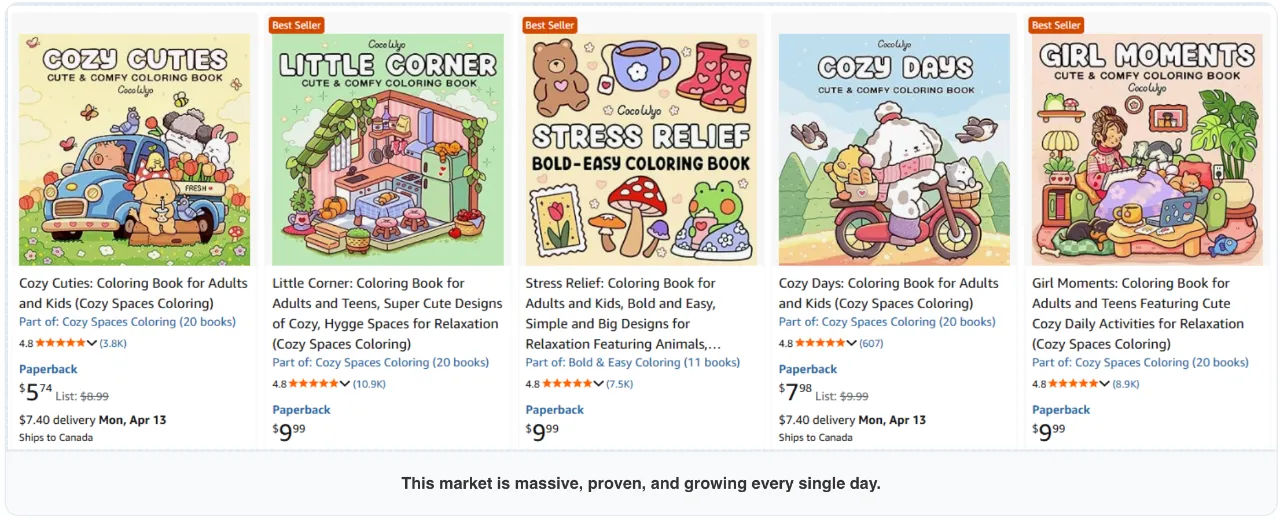
Here is what I have learned after four years of publishing coloring books on KDP.
The problem is not you. The problem is not your creativity. The problem is not even the AI tools themselves.
The problem is that every tool on the market was built for someone else.
Midjourney was built for artists who want beautiful, dreamy images. DALL-E was built for general purpose image generation. Prompt packs were built to be sold, not to make you unique.
None of them were built for a person who just needs clean, bold, black-and-white line art. Fast. Consistent. Different from what everyone else is making.
So you end up doing what I did. You fight with prompts. You clean up every page by hand. You spend eight hours on a thirty-page book. And you tell yourself that is just how it works.
It does not have to be that way.
What Made Me Click Buy on Lazy Artist Studio
I am going to be honest with you. When I first saw Lazy Artist Studio-Visual Coloring Creator, I assumed it was like everything else.
Another AI coloring tool. Another sales page with impressive numbers. Another thing I would buy, use once, and forget about.
But three things stopped me from scrolling past.
First, they did not promise me a Lamborghini.
The sales page was surprisingly grounded. No income claims. No guru photos. No “I made forty thousand dollars in one week” screenshots. Just a clear explanation of what the tool actually does and who it is for.
That is rare in this space. Most sellers try to hype you into a purchase. These guys seemed content to let the product speak for itself.
Second, they solved a problem I have complained about for years.
Prompt writing is a skill. A real skill that takes time to learn. And even when you get good at it, you are still spending five to ten minutes per page.
Lazy Artist Studio replaces prompts with dropdown menus. Pick a character. Pick a style. Pick a scene. Pick an action. The system builds the prompt for you behind the scenes. You never see it. You never write it.
That is not a small improvement. That is a completely different workflow.
Third, the tool launched only a few days ago.
That scared me a little. But it also told me something. The people behind it are not reselling an old product with a new name. They built something new and put it out into the world.
Low price. One-time payment. No monthly subscription. The risk felt manageable.
I bought it at 11:30 on a Saturday morning. By 11:45, I had my first page.
See the dropdown builder in action here.
The Workflow That Made Me Question Everything I Thought I Knew
Let me walk you through what actually happens inside Lazy Artist Studio.
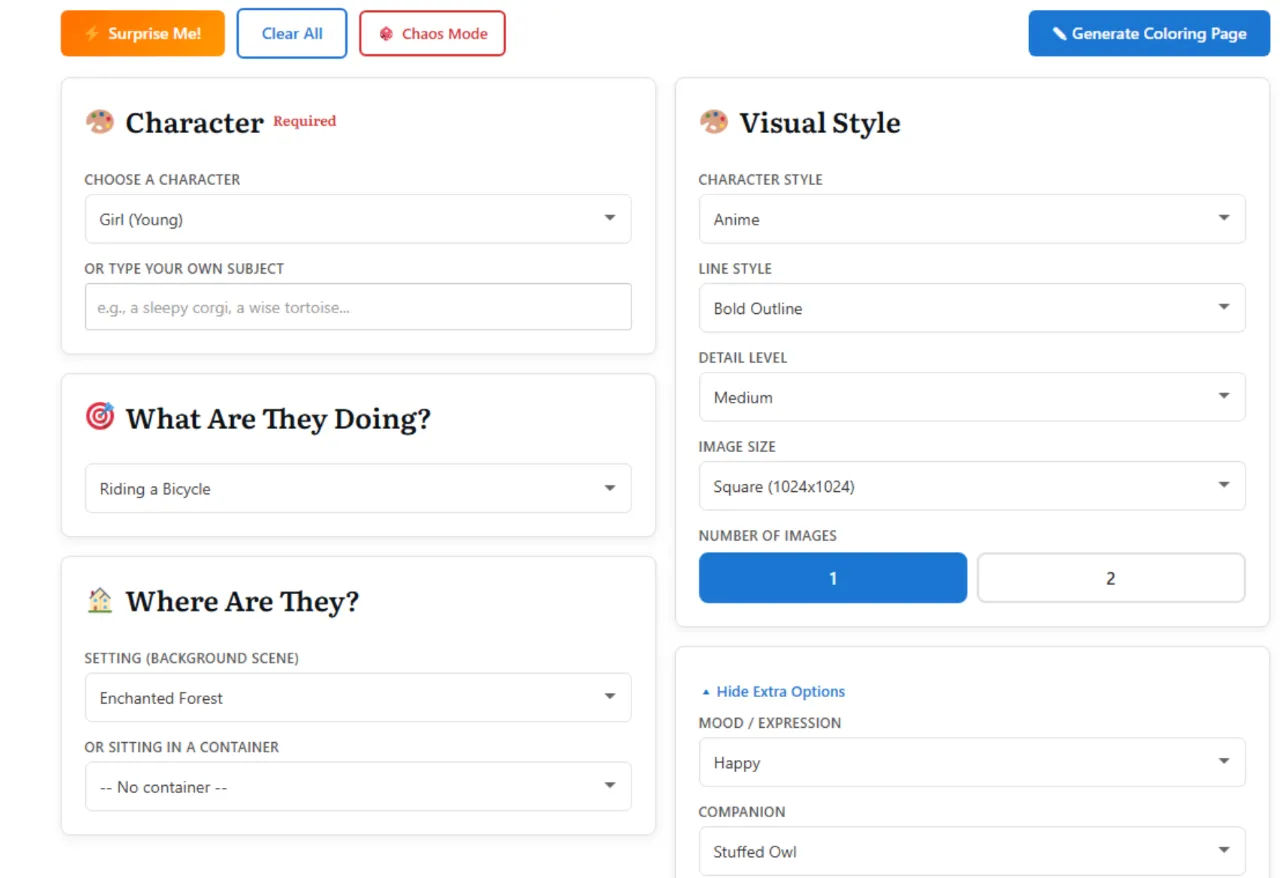
You log in. The dashboard is simple. Left side, ten dropdown menus. Right side, a blank canvas. Top, your project library.
Here is what the dropdowns look like:
Character. You can pick from a long list of animals, people, dinosaurs, fantasy creatures. Or you can just type your own. “Grumpy sloth wearing a bow tie.” Whatever you want.
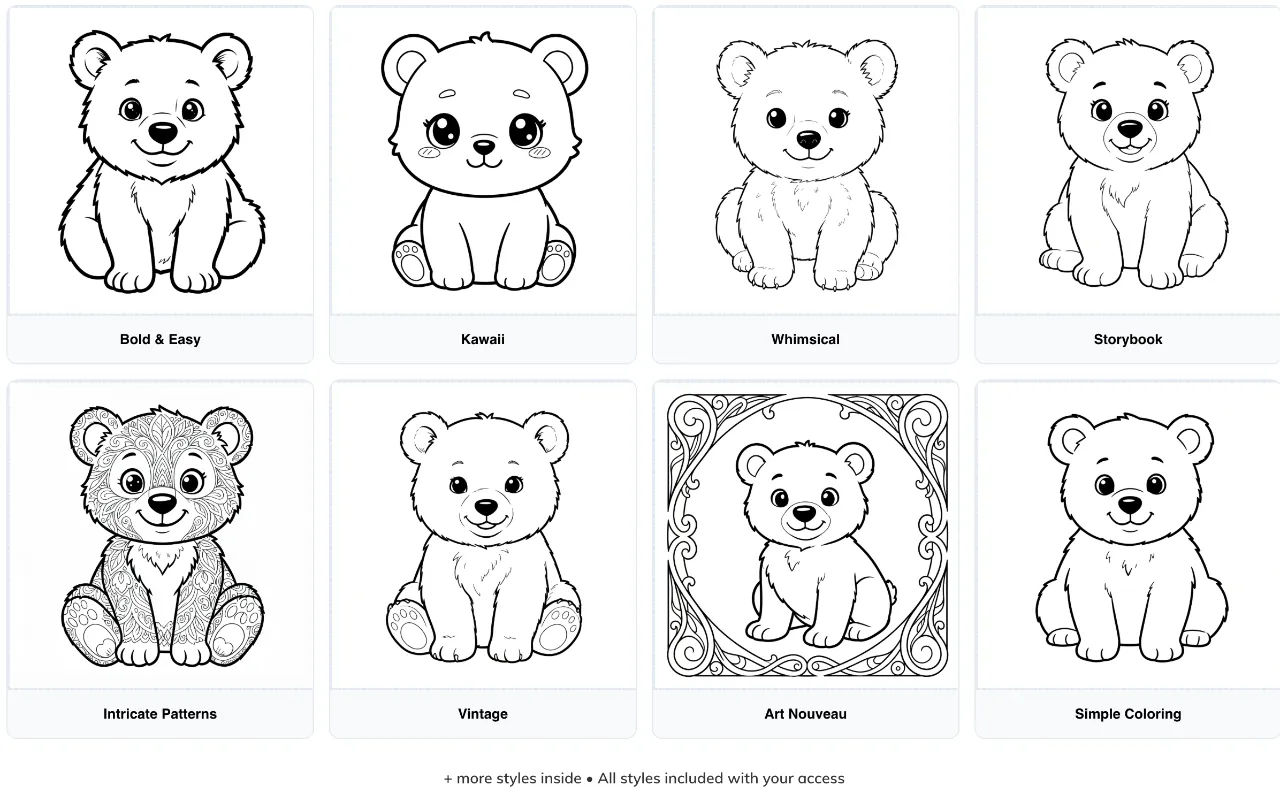
Style. Bold and easy. Kawaii. Whimsical. Storybook. Intricate patterns. Vintage. Art nouveau. Simple coloring. Each one changes the entire look of the output.
Scene. Reading nook. Garden. Kitchen. Outer space. Underwater. Bedroom. Forest.
Action. Sleeping. Eating. Reading. Dancing. Playing. Hugging.
Mood. Happy. Sleepy. Grumpy. Curious. Brave. Silly.
Props. Books. Coffee cups. Flowers. Balloons. Hats. Musical instruments.
You pick one option from each menu. Click generate. Wait ten seconds.
A clean, bold, black-and-white coloring page appears.
No prompt. No cleanup. No Photoshop. No gray shading. No missing limbs. No extra fingers.
I sat there for a moment just staring at the first page. It was exactly what I would have typed if I had spent five minutes crafting the perfect prompt. Except I spent zero minutes. I just clicked.
That was when I realized how much time I had been wasting.
What Surprised Me Most (Two Things, Actually)
First surprise: The accessibility features are not an afterthought.
Most tools have a character list. Cat, dog, bear, rabbit. Fine. Basic.
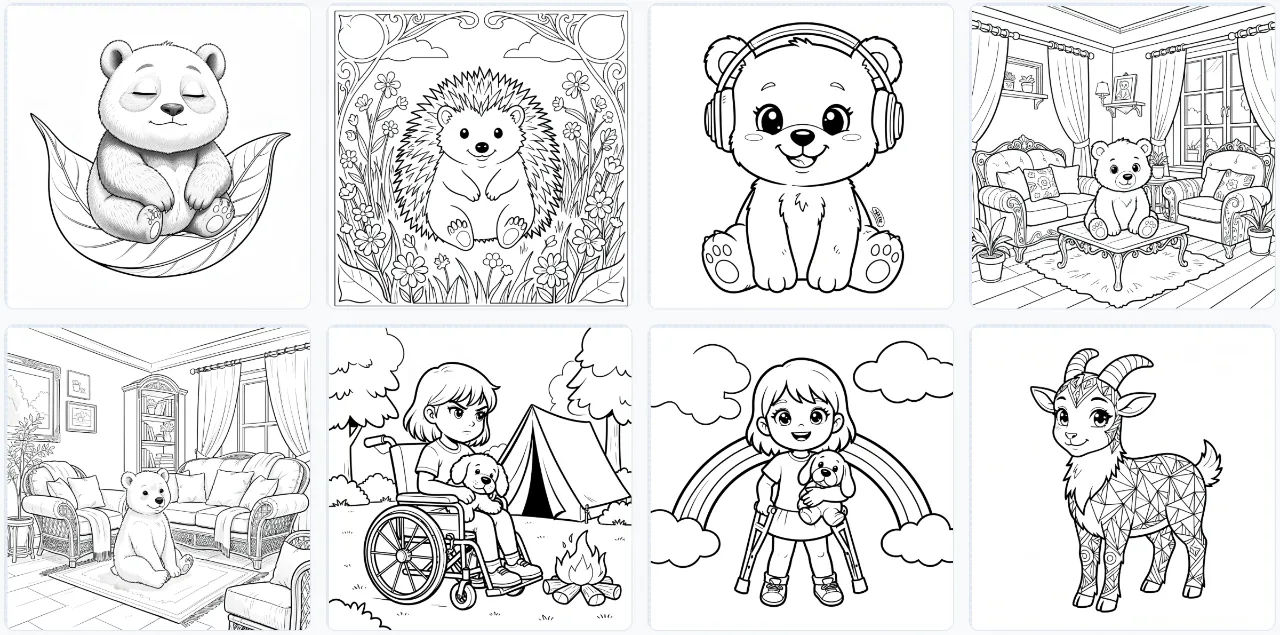
Lazy Artist Studio has those plus modifiers for wheelchairs, hearing aids, service animals, prosthetic limbs, communication devices, sensory companions.
I am not saying this to be politically correct. I am saying this because if you are making coloring books for schools, therapists, or diverse families, this is a feature you cannot find anywhere else at this price point.
I tested the wheelchair option with three different characters. Every time, the character was naturally integrated into the scene. No weird angles. No awkward positioning. The wheelchair just existed as part of the image.
That is thoughtful design. That is someone who actually understands what creators need.
Second surprise: Chaos Mode is genuinely useful for creative blocks.
There is a button called Surprise Me and another called Chaos Mode. Surprise Me picks random combinations from your selected menus. Chaos Mode goes completely wild.
I clicked Chaos Mode expecting nonsense. It generated a dolphin riding a bicycle through a mushroom village. Absolutely ridiculous. Completely unusable for the book I was working on.
But it gave me an idea for a different book. A whimsical fantasy series I would never have thought of on my own.
Sometimes the best features are the ones you did not know you needed.
The Math That Made Me Stop Feeling Guilty About Buying Another Tool
Here is where I have to be honest with myself. And you should be honest with yourself too.
I have bought a lot of tools over the years. Some were worth it. Many were not.
Every time I buy something new, there is a small voice that says: “You could have just done this yourself. You wasted your money.”
That voice did not show up with Lazy Artist Studio. Here is why.
My time is worth roughly fifty dollars an hour. That is what I would have to pay someone to do this work for me. It is also roughly what I would earn doing other freelance work instead of making coloring books.
With my old workflow, a thirty-page coloring book took me about eight hours. That is four hundred dollars of my time.
With Lazy Artist Studio, the same book takes me about twenty minutes. That is roughly seventeen dollars of my time.
The tool cost me twenty-seven dollars. One time.
So on the first book alone, I saved over three hundred fifty dollars of my time and spent twenty-seven dollars to do it.
That is not a purchase. That is a trade I would make every single day.
And that math only works if I actually use the tool. But here is the thing. Because the tool is so fast, I am actually publishing more books. Not because I have more time. Because the friction is gone. The dread is gone. The feeling of “not wanting to start” is gone.
I just open the tool. Click some dropdowns. Generate. Download.
Twenty minutes later, I have a finished PDF.
Check if the one-time deal is still available.
Where Lazy Artist Studio Falls Short (Because No Tool Is Perfect)
I have used enough products to know that every glowing review should come with asterisks. Here are mine.
The gallery is basic.
You can organize pages into projects, drag to reorder, rename, delete. That is it. If you are expecting sophisticated layout tools or advanced editing features, you will be disappointed. I still use Canva for cover design and final formatting. The tool gives you print-ready pages, not a complete publishing suite.
Some styles are slower than others.
Bold and easy generates in about ten seconds. Intricate patterns can take twenty to thirty seconds. Not a dealbreaker. But if you are impatient like me, those extra seconds add up across a full book.
There is a daily generation cap.
They do not publish the exact number. I generated two hundred pages in one day testing different combinations and did not hit it. Support says the cap is high enough for normal publishing workflows. But “unlimited” is not truly unlimited, and I appreciate that they are transparent about this instead of hiding it in fine print.
The tool launched a few days ago.
That means there are not many user reviews yet. You are an early adopter. The price is low enough that the risk is minimal, but it is still a risk. If you need hundreds of testimonials before you feel comfortable buying, wait a few months.
No refunds.
This is standard for software-as-a-service, but it is worth stating clearly. Digital products are non-returnable. Make sure you actually want this before you buy.
Who Actually Needs This Tool
I am not going to tell you that everyone needs Lazy Artist Studio. That would be dishonest.
Here is who genuinely benefits.
KDP publishers who are stuck at one book per month. If you have the ideas and the motivation but not the time, this tool removes the bottleneck. You can go from one book per month to three or four without working more hours.
Etsy sellers who need variety. Coloring page sets, activity sheets, digital downloads. The faster you create, the more listings you can test. And testing more listings is how you find winners.
Teachers and homeschool parents. You know exactly what your students need. Now you can generate it in seconds instead of searching through endless clip art sites.
Anyone starting from zero. Prompt engineering is a skill that takes months to develop. This tool lets you skip that learning curve entirely. You can publish your first book this weekend instead of next month.
Here is who should skip it.
Professional illustrators. If you draw everything by hand and that is your competitive advantage, keep doing that. This tool is not for you.
People who do not actually publish anything. If you collect tools the way some people collect hobbies, save your money. No tool will publish books for you.
Anyone who needs a refund safety net. Wait until there are more reviews. The price might go up, but you will have peace of mind.
The Question You Are Probably Asking Yourself Right Now
I know what you are thinking because I thought the same thing.
“Is this actually useful, or is this just another overhyped tool that I will use twice and forget about?”
Fair question.
Here is my honest answer after three days of heavy use.
The tool does exactly what it says. No more. No less. It generates clean coloring pages from dropdown menus. It exports PDFs. It includes a commercial license. It costs twenty-seven dollars.
If you are currently spending hours on prompts and cleanup, this tool will save you time. A lot of time. Enough time that the purchase price becomes irrelevant after one book.
If you are already fast at prompt engineering and comfortable with your workflow, you might not need this. You are the exception, not the rule.
For me, the real value is not the tool itself. It is what the tool enables. I publish more because the process no longer feels like a chore. I test more niches because a failed test costs me twenty minutes instead of eight hours. I enjoy the work again because I am not fighting with broken outputs.
That is worth twenty-seven dollars to me.
Final Thought Before You Decide
I started this review with a Saturday morning that ended with cold coffee and a closed laptop.
That morning, I told myself that publishing coloring books was supposed to be a side hustle, not a second job. It was supposed to be enjoyable. It was supposed to give me more freedom, not less.
I was wrong about a lot of things that morning. But I was not wrong about that feeling.
The right tool should not make you work harder. It should make the hard parts easier so you can focus on the parts that actually matter. Choosing niches. Writing descriptions. Marketing your books. Building a catalog.
Lazy Artist Studio solves one problem. The creation problem. And it solves it well.
If that problem is the one keeping you stuck, this tool is worth trying.
If it is not, keep doing what you are doing.
Either way, I hope your coffee stays hot next Saturday.