I Spent 7 Days With AI Viral Video Formula – Here’s Whether It Actually Saves Time or Just Wastes It
Struggling to make faceless AI videos? I tested AI Viral Video Formula for 7 days. 100 story templates, synthesis lab, and commercial rights for $17. Read my honest review before you buy.
I have a folder on my desktop called “Failed Experiments.” It has forty-seven subfolders. Each one represents a tool, a method, or a strategy that promised to make content creation faster but delivered only frustration.
The newest addition to that folder was my attempt at faceless AI videos.
I watched a channel go from zero to half a million followers in under two months. Simple animations. Anthropomorphic characters. Emotional storytelling. The videos looked cheap to produce but pulled millions of views. I thought I had found a gap.
I was wrong about the cheap part.
My first decent video took nine hours. Nine. That included story development, prompt engineering, character consistency testing, voiceover synchronization, and assembly. The cat I created looked different in every scene. By the fourth scene, it had somehow morphed from a black alley cat into a fluffy Persian. The voiceover felt disconnected from the visuals. And the story? It had no real hook. It just started and then ended.
I tried again. Eight hours. Better, but still unsustainable.
I tried a third time. Seven hours. I was getting faster, but the math still didn’t work. At that pace, publishing daily would be a full-time job with no room for strategy, engagement, or anything else that actually grows a channel.
I was about to delete the entire “Faceless Videos” folder when I saw someone mention a product in a creator group. The product had launched four days earlier. The price was $17. The name was AI Viral Video Formula.
I clicked buy at 1 AM with low expectations. At $17, the downside was a single meal. The upside was potentially saving my entire faceless content experiment.
What This Product Actually Is (And Is Not)
Let me be direct because misunderstanding this is the main reason people leave negative reviews.
AI Viral Video Formula is not a video generator. You do not press a button and receive a finished TikTok. That type of tool does not exist at a quality level worth using.
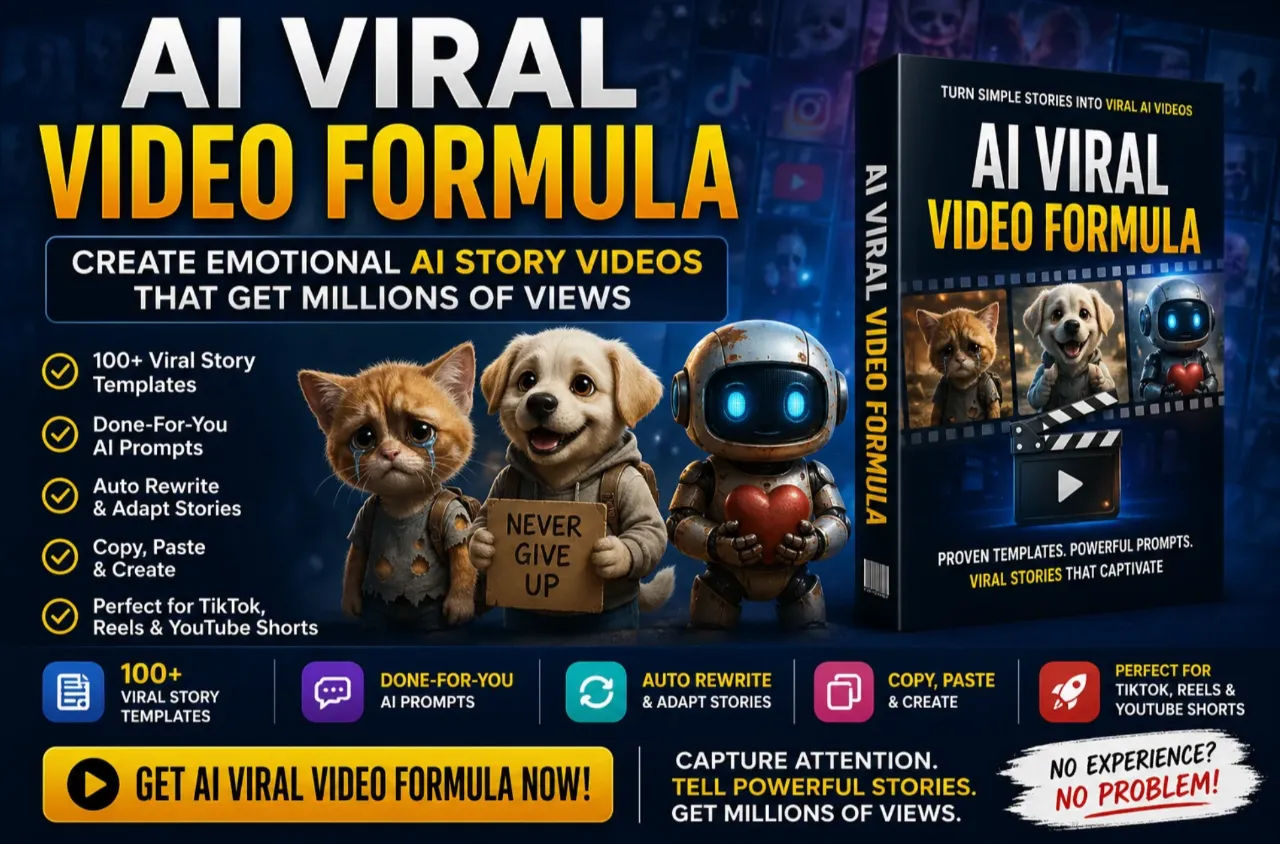
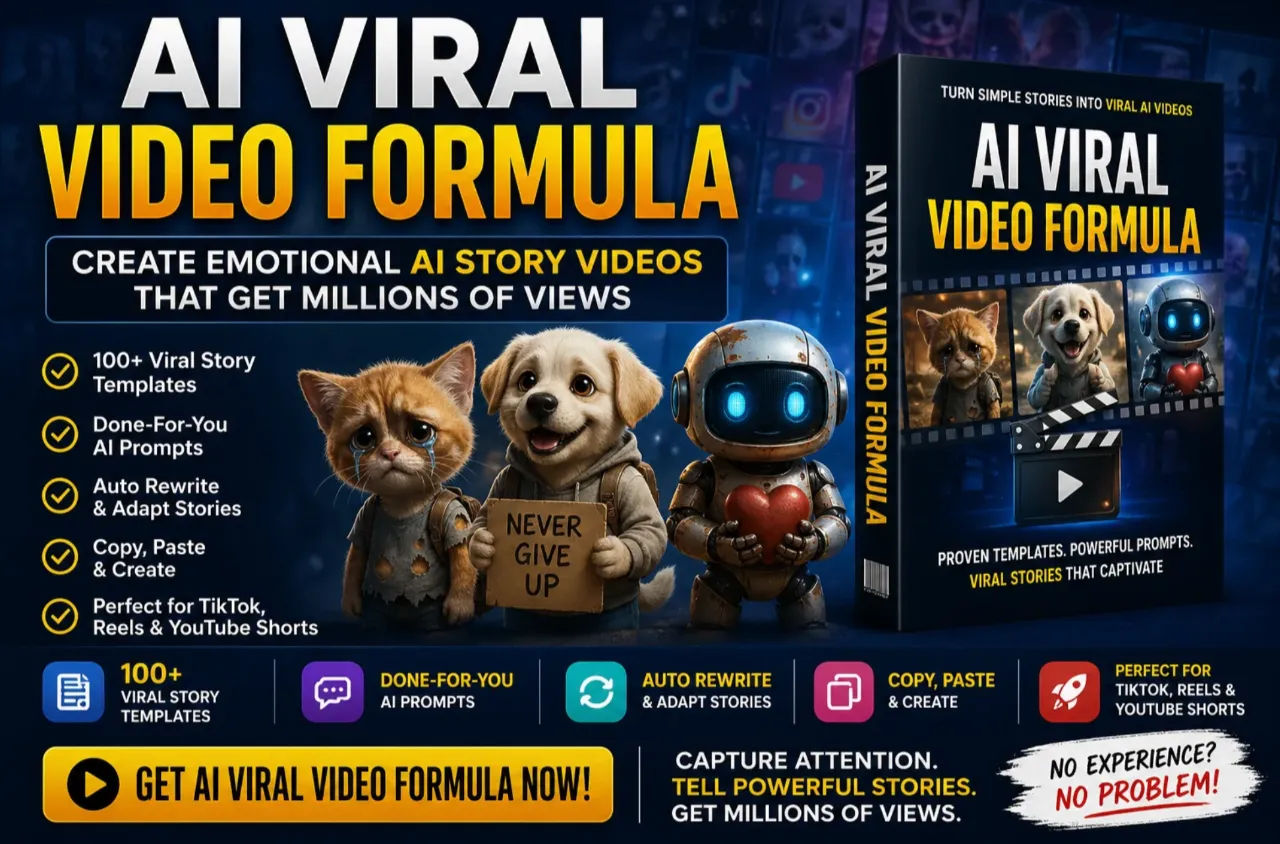
What this product is: a structured library of 100 viral story frameworks plus a synthesis engine that rewrites those frameworks for any character or object you want in seconds.
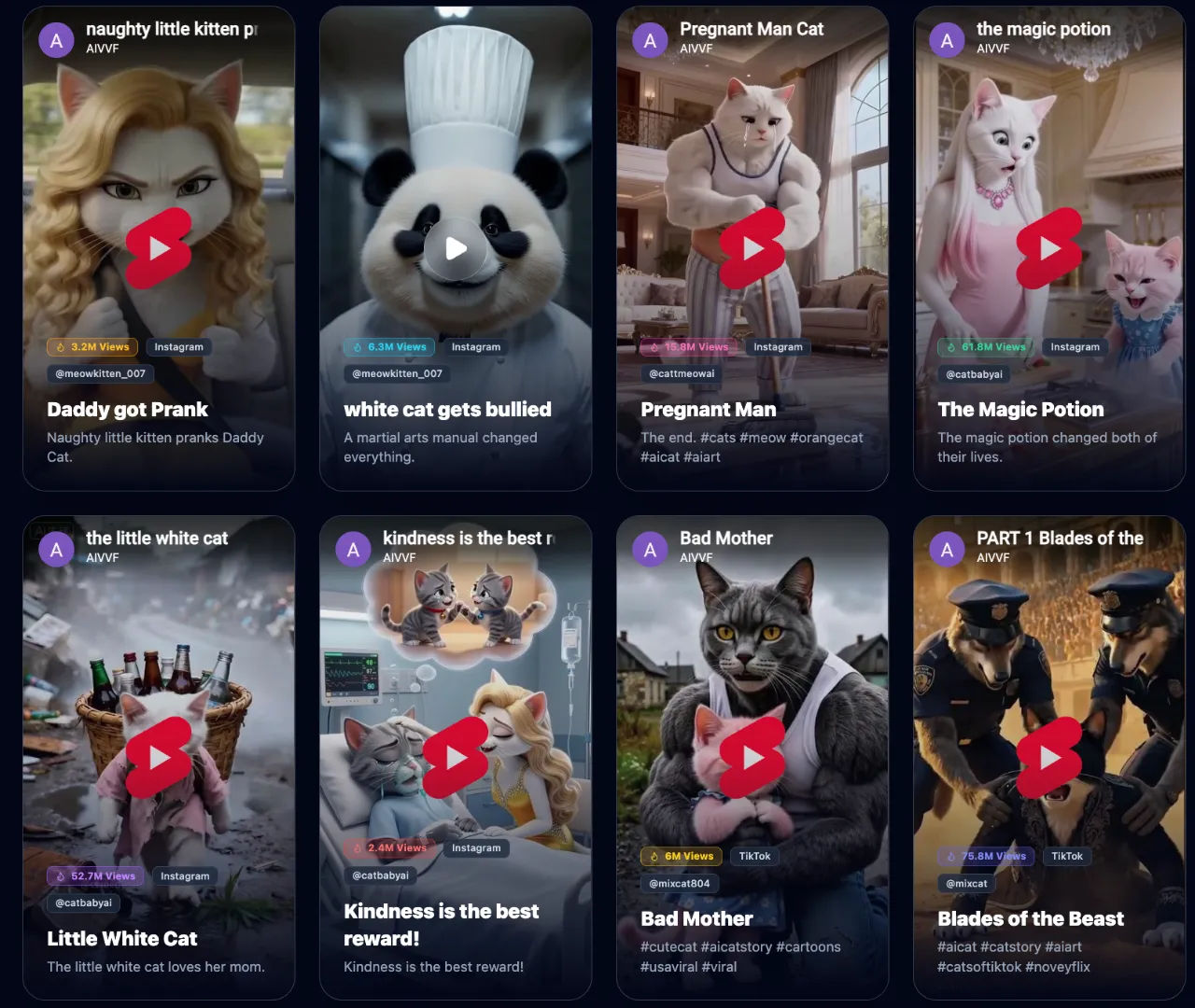
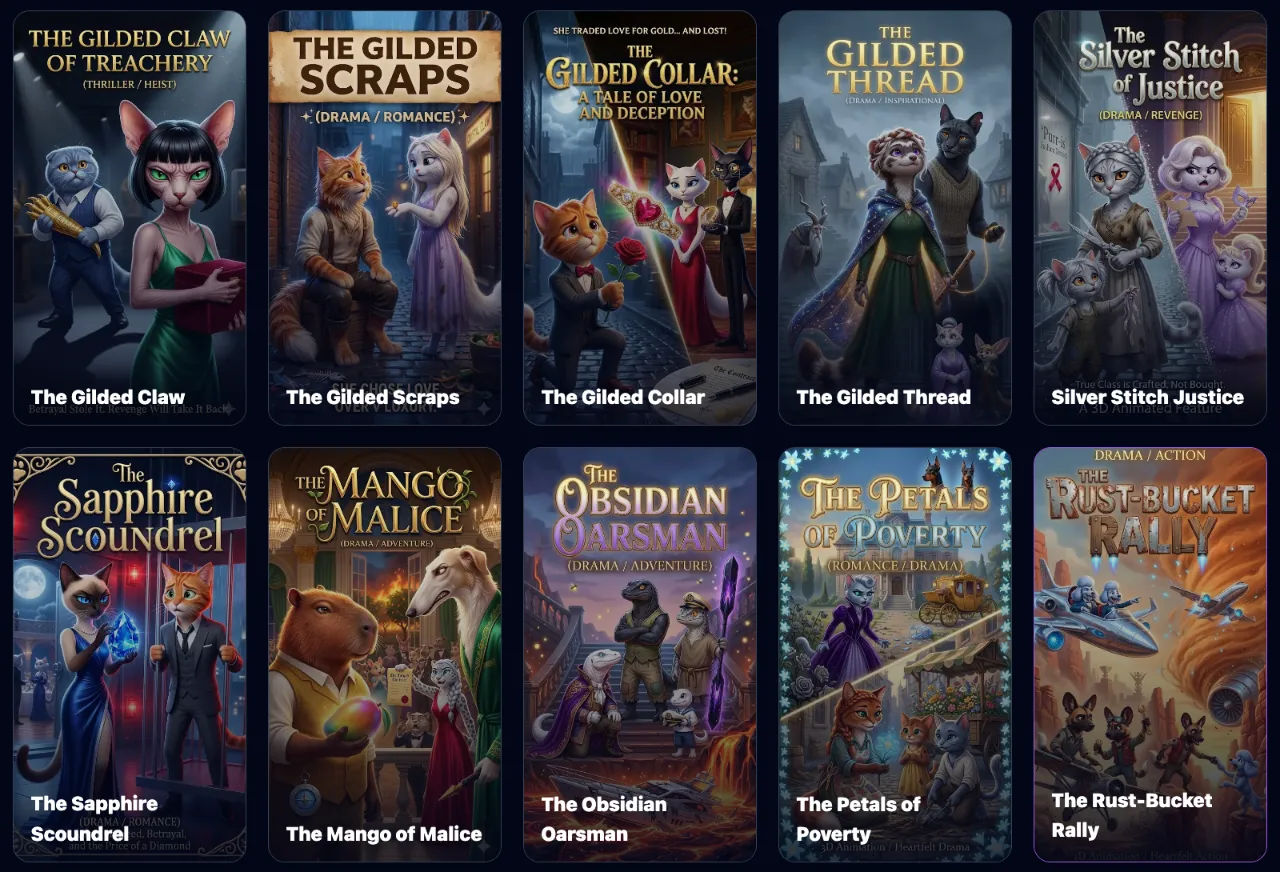
The workflow is simple. You open the dashboard. You browse through story templates organized by category. Each template has a cover image, a summary, and a clear emotional hook. You click into the Synthesis Lab. You type a new character name. The system rewrites every scene prompt and voiceover script automatically. You copy each scene. You paste into your preferred AI tools. You generate your video.
The part that surprised me was the level of detail. Each of the 100 stories is broken down scene by scene. Usually eight to twelve scenes per story. Each scene has separate prompts for image generation and voiceover. The formatting is already optimized. No editing required. Just copy and paste.
I tested this with six different characters in my first ninety minutes. A jealous avocado. A betrayed spaceship AI. A lonely streetlight. A revenge-driven teddy bear. A misunderstood toaster. A heartbroken smartphone. Each one took about ninety seconds to generate the full prompt stack.
Compare that to my old process. Forty minutes of staring at a blank page. Thirty minutes of writing and testing prompts. Twenty minutes of realizing the character broke between scenes. Fifteen minutes of starting over. The time difference is not small. It is the difference between publishing daily versus publishing weekly.
You can see the full dashboard and story library for yourself here. No pressure. Just look.
What Using It Every Day Actually Feels Like
Let me walk you through my actual workflow. Not the ideal version. The real version with mistakes, restarts, and lessons learned.
I opened the dashboard on a Tuesday morning. I intentionally skipped the video tutorials. I wanted to see if the interface was intuitive enough to figure out without hand-holding.
The archive loaded quickly. All 100 templates displayed as visual cards. Each card had a title, a category tag, and a generated cover image that gave me a feel for the story’s tone. The categories included Drama, Romance, Revenge, Comedy, Horror, and Inspirational.
I filtered by Drama. Fourteen templates appeared.
I clicked on a template called “The Golden Bone of Betrayal.” A popup opened showing the full story summary. The hook was strong. The emotional arc was clear. The character dynamic was established in the first two sentences. I spent maybe twenty seconds reading it and knew it would work for my test channel.
I decided to change the main character from a sophisticated Doberman to a stray ginger cat named Rusty. I went to the Synthesis Lab. I typed “Rusty the stray ginger cat” into the variable injector. I clicked generate.
The system took about four seconds to rewrite all ten scenes. Each scene came pre-segmented into three parts:
The system setup instructions for the AI tool
The voiceover script with emotional inflection notes
The image generation prompt with style consistency parameters
I copied the first scene’s image prompt. Pasted into Midjourney. Generated four variations. Picked the best one. Copied the voiceover script into ElevenLabs. Generated the audio. Moved to scene two.
The character consistency was not perfect on my first attempt. Rusty looked slightly different between scenes three and five. But here is what matters. It was about 85 percent consistent without any prompt engineering on my part. That is dramatically better than anything I had achieved manually, where my character would completely change by scene four.
The learning curve was about twenty-five minutes. Not because the tool is complicated, but because I had to learn a new rhythm. Copy, paste, generate, download, repeat. Once I understood the cadence, I could generate a complete prompt stack for a full 60-second story in under two minutes.
What bothered me at first: the platform does not integrate directly with any AI generation tools. You are still copy-pasting manually into Midjourney, Leonardo, Runway, Pika, or whatever you use. In my first session, I found this annoying. I wanted one-click rendering.
But after a few days, I realized this is actually a smart design choice. It keeps you tool-agnostic. You are not locked into any ecosystem. If a new AI generator launches next month that produces better results, you can switch immediately. Your story prompts still work.
What genuinely impressed me: the Lab Logs feature. Every generation you run is saved automatically with a timestamp. I can go back and see exactly what prompts I used for Rusty three days ago. That means if a video performs well, I can replicate the exact formula with a different character in seconds. No trying to remember what I did. No searching through browser history.
The favorites manager also proved useful. I have saved about twenty story templates that fit my niche. My workflow now is: open favorites, scroll, pick one, inject new character, generate, copy, paste, render. I am publishing one video per day compared to one per week before.
What Works and What Does Not
Let me be balanced because trust is earned through honesty, not hype.
What Actually Works Well
The story templates are genuinely well-constructed. This surprised me because most prompt libraries are filled with generic, low-effort structures. These templates have clear emotional hooks within the first three seconds. Each one follows proven retention mechanics. The rising tension, the character transformation, the satisfying resolution. That is hard to engineer from scratch.
The variable injection saves real, measurable time. Manually rewriting ten scenes for a new character would take twenty to thirty minutes of careful editing with high risk of introducing errors. The synthesis lab does it in four seconds without mistakes.
The formatting is optimized for real workflows. Each prompt is already split into the exact chunks you need. No reformatting. No cleanup. Just copy and paste into whatever tools you already use.
The search and filtering actually work well. You can filter by emotional tone, character type, niche, retention pattern, and length. This matters when you have 100 templates and need to find the right one fast without scrolling endlessly.
Commercial rights are included. Any video you generate using these prompts belongs to you completely. You can monetize YouTube channels, TikTok accounts, and Instagram Reels. You can also create videos for clients as a freelancer or agency.
The price point of $17 is unusually low for this market. Most comparable prompt libraries charge $47 to $97. The risk is nearly nonexistent at this price.
What You Should Know Before Buying
This is not an all-in-one video creation suite. You still need access to AI image generation tools like Midjourney, Leonardo, or DALL-E. You still need voiceover tools like ElevenLabs. You still need video assembly tools like CapCut, Premiere, or DaVinci Resolve. The product gives you the story and prompts but not the rendering engine.
The character consistency is prompt-dependent. While the templates include detailed character descriptions, different AI generators interpret them slightly differently. You may need to run a few test generations and tweak the character prompt slightly for perfect consistency across all scenes. The product gives you a strong starting point but not magic.
There is no refund policy. The product page states this clearly. Because the value is delivered instantly as digital prompts and dashboard access, they do not offer refunds. At $17, this did not bother me personally. But you deserve to know before buying so there are no surprises.
The learning curve for complete beginners is real. If you have never used Midjourney, never generated an AI voiceover, and never assembled a video timeline, you will need to watch the included video tutorials and spend an afternoon getting comfortable. The product removes the storytelling difficulty but not the technical basics.
Who This Is For and Who Should Skip
Buy this if:
You are already creating AI video content and want to cut your production time from hours to minutes. The time savings alone justify the purchase within your first few videos.
You are trying to start a faceless channel but feel paralyzed by not knowing what works. This product removes the guesswork completely. You do not need to study viral videos for weeks. You do not need to reverse-engineer success. You just pick a proven framework and execute.
You are a freelancer or agency selling content creation services. The commercial rights mean you can charge clients for videos produced using these formulas while spending dramatically less time per project.
You value your time at more than a few dollars per hour. If this product saves you two hours per week, it pays for itself in the first week.
Skip this if:
You are an experienced AI creator who already has a reliable prompting system and a personal library of tested frameworks. This product would be a convenience purchase rather than a necessity.
You are looking for a fully automated “push button, get video” solution. That does not exist yet. You will still need to do the actual generation work.
You have no interest in learning basic AI generation tools. If you are not willing to spend an afternoon learning Midjourney or similar tools, this product will frustrate you.
The $17 Question
The regular price is listed as $47. The launch price is $17 for lifetime access. No recurring subscription.
Here is how I think about value as someone who has wasted money on dozens of tools.
One hour of my time is worth more than $17. If this product saves me one hour per week, it pays for itself in the first week. It actually saves me closer to three hours per video. The return on investment is not marginal. It is dramatic.
But the time savings are only half the story. The mental load reduction is harder to quantify but equally real. Before this product, every video required creative energy spent on story structure, hook engineering, retention pacing, and emotional arc design. That energy was finite. After two videos, I was mentally exhausted.
Now that energy goes to execution and distribution. That is a fundamentally different workflow. Lighter. Faster. More sustainable.
I have spent more than $17 on delivery apps for meals I do not even remember eating. This tool has already changed how I approach content creation. That is not hype. That is just what happens when you remove friction from a repetitive process.
The lack of a refund policy is the main hesitation point. I understand that completely. But I made the calculation that even if I only extracted value from fifteen of the 100 templates, I would still come out ahead. That has proven accurate. I have already used twenty-five templates across different variations.
Final Verdict After 7 Days
AI Viral Video Formula does one thing well, and it does that one thing better than anything else I have tested in this price range. It eliminates the hardest, most time-consuming part of faceless AI storytelling. You no longer need to be a writer, a prompt engineer, or a viral structure analyst. You just need to be an executor.
Is it perfect? No. I still wish for better character consistency guardrails. I still need to maintain subscriptions to other AI tools. The workflow is not fully automated.
But is it useful? Yes. For $17, the time savings alone justify the purchase within your first few videos. The story quality is genuinely high. The synthesis engine works exactly as advertised. The dashboard is stable and fast.
I have tested over thirty AI content tools in the past two years. Most promise the world and deliver a mediocre template library with broken formatting and generic structures. This one surprised me because it focuses narrowly on the actual bottleneck in faceless video creation: structured, viral storytelling with fast character variation.
If you are serious about building an AI faceless channel and you value your time, this is one of the easiest purchasing decisions you will make this year. The risk is $17. The potential upside is hours of your life returned every week.
If you are just curious and not ready to execute, wait. The tools will still be here. But if you have been stuck in the cycle of wanting to start but not knowing what works, or if you have started but found the production pace impossible to sustain, this is worth your attention.