GameBooks Empire Review: AI Mystery Gamebooks for Kids
I built a full interactive mystery for 8 to 12 year olds with one prompt and a lot of typing the word next. Here is what held up and what did not.
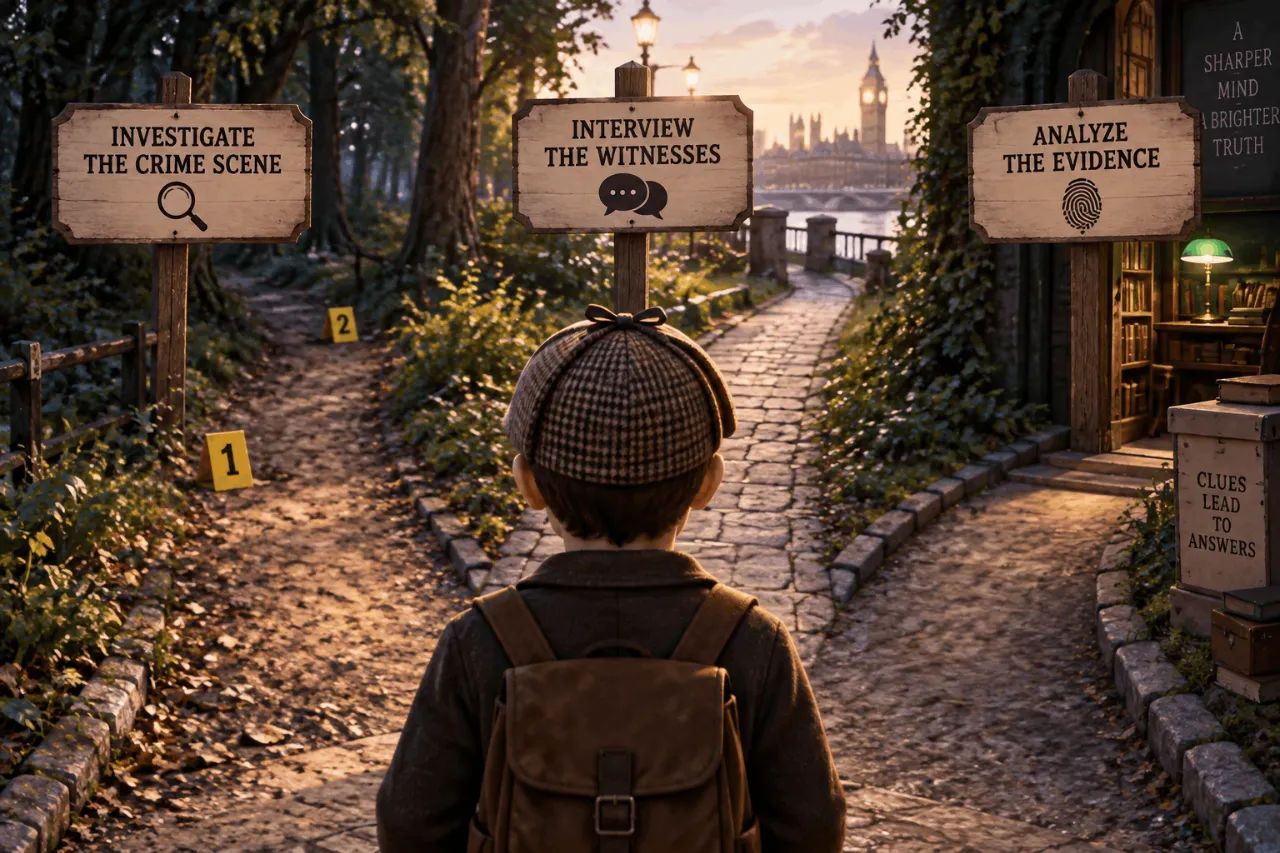
I have started and abandoned three choose-your-own-adventure projects in my life. Two of them died on paper when I hit section 40 and realised one of my early branches led nowhere. The third died when I tried to do it in a chat window and the AI forgot the culprit's name by branch four. So when I saw GameBooks Empire promising a complete, print-ready mystery gamebook from one mega prompt, I was skeptical in a very specific way. I have been burned by this exact problem before.
I bought it for $17, pasted the prompt into Claude, and spent most of a weekend generating a book called something like The Missing Recipe Box of Maple Hollow. I will tell you now that one branch still had a dead link in my first draft, which is exactly why there is a bonus testing pack included, and exactly why my second run worked.
Our Verdict
GameBooks Empire
A genuinely useful AI workflow for building interactive kids' mysteries, as long as you expect to stay the editor, not the passenger.
14 day money back guarantee, no forms to fill in
What You Actually Get
This is not a finished book, and it is worth being blunt about that because the sales page name is a little grand for what lands in your inbox. What you get is a system that produces books. Specifically:
- A single mega prompt, written as one clean block you can copy without dragging page formatting along with it.
- A plain-English guide that walks you through what to do after the paste, phase by phase.
- Built-in architecture: concept pitches, a private Case Bible, a flow map with route checks, batched writing instructions, the three endings, and book extras.
- Prompts for a front cover, a back cover, coloring page outlines, and full-colour art, run through ChatGPT Images.
- A path for turning a finished book into a series with the same main character.
- The bonus GameBook Testing Prompt Pack, which I will get to, because it is the part that saved my draft.
The book the prompt builds is aimed at eight to twelve year olds. The child is the detective, the story is written in second person present tense, and at the end of each section they get two or three choices in the classic gamebook style. Behind that sit six true clues and two false clues, and three of the true clues are key clues. You get three endings: the best one for finding all three key clues, a partial ending for one or two, and a cold case ending for none or for using a false clue as proof.
That scoring system is the actual product. Everything else is packaging.
Key Features and What They Do For You
The mega prompt itself
One block, no junk. That sounds like a low bar but I have copied prompts off sales pages before and ended up with stray navigation text and a header line the AI tried to interpret as instructions. This one pastes clean. It runs in ChatGPT, Claude, Gemini, Grok, DeepSeek, or anything similar, which matters if you are already paying for one of them and do not want another subscription.
The six phase workflow
You do not type one prompt and wait for a novel. You go through phases and type next between them. First, three concept pitches with title, hook, puzzle, setting and sidekick. You pick one. Then a private Case Bible: the truth, the culprit, the motive, the method, the timeline, four suspects, the clues A to F and the false clues X and Y, and the locations. Then a flow map with every section numbered and every choice mapped, followed by a route check. Then writing in batches of ten sections. Then the endings. Then the extras.
Splitting it into phases is what stops the drift. I did try a fully open "write me a choose your own adventure about a stolen pie recipe" prompt out of curiosity, and by section 12 the AI had invented a second timeline where the recipe was never stolen at all. The phased approach exists because that happens.
The Case Bible
You never show this to the reader. It stays in the chat as your reference so the story stays fair. In practice I found myself scrolling back to it constantly, checking whether the gardener was supposed to have been near the kitchen at noon or not. Having it written out once, in one place, is the difference between a coherent mystery and a pile of vibes.
The flow map and route checks
Every section numbered, summarised, choices mapped, then a check that every section is reachable, there are no infinite loops, the best ending is reachable by at least two routes, every key clue is obtainable, and there are no early confession shortcuts. This is the phase where a paper-based project dies. If your section 31 can only be reached from section 22 and section 22 got cut, you want to know that before you have written 12,000 words.
Cover and illustration prompts
Written to run in ChatGPT Images. Front cover, back cover, coloring page outlines, full-colour art. I asked for a coloring page outline of a dog beside a pie tent and got something usable. I would not build a business on the art alone, but as a starting point for a self-published paperback it is more than adequate.
The Testing Prompt Pack (the bonus)
This is the piece I did not expect to care about and ended up using more than the main prompt. It maps every section and every link first, then reports defects with an ID, a severity, and a suggested fix. Broken links and missing sections, an infinite loop detector, a clue route validator, a minimum route length checker, an ending accessibility checker, and a continuity and character audit. There is a Surgical Repair Prompt that fixes only what you choose with the smallest change, keeping your voice and your section numbers, and checking for side effects before applying.
It found a "turn to 47" in my draft when my book only had 44 sections. It found a section that mentioned a character the reader could never have met on the route that led there, which apparently is the most common gamebook defect of all. I believe it, because I made that mistake on my first attempt without noticing.
Actually Using It
Here is what the weekend actually looked like.
Friday evening, about forty minutes. I opened Claude, pasted the mega prompt, and asked for the concept pitch. Three came back. One was a stolen recipe box at a harvest festival, with a dog sidekick called Biscuit and a noon deadline. One was a missing trophy at a school sports day. One was a vanished cat in a hotel. I picked the recipe one because the noon deadline gave the whole thing a clock, and clocks make mysteries work.
Saturday morning, roughly two hours. Case Bible and flow map. This is the slow part and it is slow on purpose. The AI produced the truth, the culprit, the four suspects, the clues, the false clues, the locations. Then it built the flow map and ran the route check. I read through the whole map with a coffee, section by section. It was boring. It is also the reason the finished book held together, so I am not going to pretend I resented it.
Saturday afternoon, three hours. Writing in batches of ten. This is where it becomes genuinely fun, because the sections come back in easy kid language, short sentences, everyday words, one idea at a time. Each batch came with a continuity log I could check against. I tweaked a few lines for rhythm. I changed one suspect's name because I kept typoing it.
Saturday evening, an hour. The accusation section and the three endings, around 300 to 500 words each. The best ending walks through the clue logic step by step, which is the part that makes the whole thing feel earned rather than handed over. Reading it back, I could see how a child who found all three key clues would feel smart rather than lucky.
Sunday morning, an hour and a half. Book extras: How to Play page, Detective Notebook with a clue checklist, suspects list and a My Theory page, alternative titles, back-cover blurb, store description. Then I exported a kid-readable PDF with bold section titles and bold choices.
Sunday afternoon, two hours. The testing pack. This is the part I would not skip. It came back with a list of issues, each with an ID. LINK-03 was the phantom section 47. CLUE-02 was a key clue sitting on a branch that could not reach the best ending, which is the kind of thing that would have made a reader furious. I ran the Surgical Repair Prompt on just those two, it fixed them without renumbering anything, and I re-tested. Clean report. Then I went back and did one final read the way a kid would, choice by choice, and got the partial ending because I missed a clue. Which was slightly annoying and also proof the thing works.
Total: maybe eleven hours across two days for a complete, original, print-ready mystery for eight to twelve year olds. My abandoned paper project got nowhere near that in three times the hours.
The honest downside is that you are still the editor. The AI will produce a section where a suspect says something that contradicts the Case Bible, and if you do not catch it, the child will. The testing pack catches structural problems and continuity problems. It does not catch a flat paragraph or a joke that does not land. That part is you.
You are about ten hours from a finished gamebook
One-time payment, 14 day refund window if you try it on a real book and it does not fit
Pricing and Value Analysis
The price is $17, one time. No subscription, no upsell mentioned on the page, and access to the guide and mega prompt is described as one-time rather than a monthly seat. There is a 14 day guarantee: if you do not think the system is worth more than $17 after trying it on a real book, you email them within 14 days and get a refund. Support runs through puck82@gmail.com, and the page mentions the seller has been selling digital products for 18 years.
Whether $17 is good value depends entirely on what you compare it to. Here is the comparison that actually matters.
| Route | Cost | Time to first finished book | Main risk |
|---|---|---|---|
| GameBooks Empire | $17 one time | Roughly one focused weekend | You still have to edit and check |
| Open-ended AI chat, no system | Existing subscription | Frequently never finishes | Drift, lost clues, dead links |
| Writing it by hand on paper | Free | Weeks or months | Most people quit before book one |
| Hiring a gamebook writer | Into the hundreds | Weeks plus revision rounds | Cost, and it is one book only |
The line I care about is the open-ended chat row. That is free, and it is what most people will try first. If it works for you, you have not saved $17, you have saved a weekend, and honestly good for you. It did not work for me, twice, and the phased structure plus the architecture plus the testing pack is what changed the outcome. Put another way: a single paperback sale or one Teachers Pay Teachers download covers the cost several times over.
What you are not buying is a finished commercial story to upload with zero work, and if that is what you want, this is the wrong product. The page says that too, which I appreciate. The correct mental model is a blueprint plus a quality control process, sold for the price of a couple of coffees. You can pick it up here: GameBooks Empire.
Pros and Cons
Pros
- The six phase workflow actually stops the AI drifting on long branching stories
- The testing pack catches structural faults a reader would find on the first read
- Produces genuinely replayable books with three scored endings tied to a clue count
- Works in whatever AI you already pay for, no extra subscription
- Print-ready extras and publishing prompts mean you can go from draft to store listing in a weekend
Cons
- You are still the editor: the AI misses flat prose and weak jokes
- The Case Bible and flow map phase is slow and a bit tedious
- The art prompts get you a starting point, not finished professional illustration
- No marketing or pricing advice: getting the book in front of buyers is on you
Who This Is For
Parents and teachers who want an interactive mystery for a specific child or class rather than another flat chapter book. Digital product sellers who need a repeatable workflow instead of a chat that collapses at branch three. Anyone who has wanted to publish gamebooks but refused to map sixty sections by hand. And if you already have a finished book and are worried about dead links, the testing pack alone justified the $17 for me.
Who Should Skip It
If you want a completed story you can upload today with no AI work, skip it. If you want dark, violent or properly scary fiction, skip it: the system is built for ages 8 to 12 and stays gentle by design, with no weapons, no injuries and no real danger. And if you have no interest in editing at all, skip it, because the output is a strong first draft and a weak final draft. The gap between those two things is you, an afternoon, and the testing pack.
Frequently Asked Questions
Is GameBooks Empire worth it?
For $17 it is worth it if you will actually run the workflow and edit the output. The phased structure and the included testing pack solve the two problems that kill most AI gamebook attempts: drift across branches, and dead links in the finished draft. If you will not edit, it is not.
What does GameBooks Empire cost?
It costs $17 as a one-time payment for the mega prompt, the plain-English guide, the cover and illustration prompts, and the bonus GameBook Testing Prompt Pack. There is no subscription mentioned on the page, and it comes with a 14 day money back guarantee.
Which AI tools does it work with?
The sales page states it works in ChatGPT, Claude, Gemini, Grok, DeepSeek, or any similar AI. The cover and illustration prompts are written to run in ChatGPT Images. You do not need a specific paid tier or a new subscription to use the main prompt.
What ages are the finished gamebooks suitable for?
They are written for readers aged 8 to 12. Language stays easy, with short sentences and everyday words, and the system has a spooky level setting with none, mild, or cozy-spooky options. Motives stay kid-appropriate and wrong choices cost time or lead to comic dead ends, never danger.
Is there a refund policy?
Yes. The page offers a 14 day guarantee: try the system on a real book, and if you do not think it is worth more than $17, email within 14 days for a full refund. The wording says no forms and no hoops, and support is at puck82@gmail.com.
Can I sell the gamebooks I create with this?
The guide covers aiming a finished book at Amazon with paperback, Etsy, Teachers Pay Teachers, and your own Gumroad or Shopify store. How far each book goes depends on how you publish, price and present it. The system gives you the book and the packaging text, not a marketing plan.
What are the alternatives to GameBooks Empire?
You can write a branching book by hand on paper, which is free and slow and where most people quit. You can prompt an AI in an open chat, which drifts and loses clues past a few branches. Or you can hire a writer, which costs far more and produces one book rather than a repeatable process. You can see the full system here: GameBooks Empire.
Final Verdict
GameBooks Empire does the thing it claims, with one caveat that the sales page is honest about: it hands you a blueprint and a QA process, not a finished novel. The phased workflow is the real value, because it forces the boring structural work up front where it is cheap to fix, and the bonus testing pack catches the errors that would otherwise end up in a child's hands. I got a complete, original, print-ready interactive mystery out of it in about eleven hours across a weekend, and I had abandoned three attempts at this before. It is $17, one time, with a 14 day refund window, and if you want to write interactive fiction for kids without mapping sixty sections by hand, that is a fair trade.
Build your first mystery gamebook this weekend
Try it on a real book. If it is not worth far more than $17, ask for a refund within 14 days