Werewolf Romance Author Factory Review
I bought Werewolf Romance Author Factory to see if a $17 Claude Skill could really carry a werewolf romance from idea to draft. It's a structured workflow, not a novel machine, and that's the point.
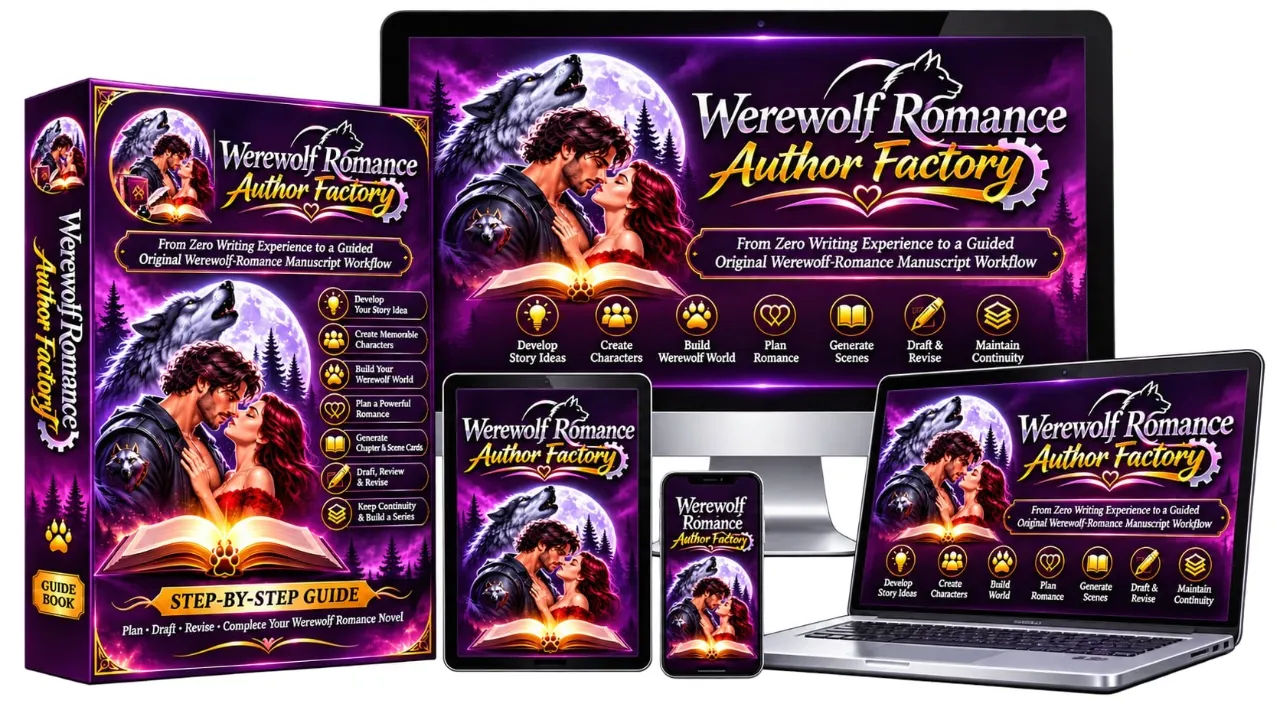
I bought Werewolf Romance Author Factory at 11pm on a Tuesday, mostly out of irritation. A friend had spent three weeks on a rejected-mate story and had nothing but a notes app full of half-scenes, two characters with the same voice, and a Google Doc called "shifting rules FINAL v4". I told her to try a Claude Skill and she asked which one. I didn't have an answer, so I went looking.
The sales page for Werewolf Romance Author Factory was the first one that didn't promise me a finished novel in one click. It described a chapter-by-chapter process where the author approves each step. That was the honest bit I was after, so I paid the $17 and opened the files.
What I found is a niche-specific Claude Skill package with True Private Label Rights, aimed at people who want to sell a rebrandable writing product to aspiring romance authors. It is also, if you run it on your own project first, a decent guide for a novel you're actually writing. Both uses are in the box. Neither one is magic.
Our Verdict
Werewolf Romance Author Factory
A solid $17 Claude Skill for werewolf romance planning and drafting, with real PLR resale rights. Worth it if you'll sell it or write with it. Skip it if you want push-button output.
One-time $17, instant download, True PLR license included
What You Actually Get
The package is a set of files, not a web app. Once you pay the $17 you download a ZIP and work inside Claude with it. The contents:
- Claude Skill source files, the core guided fiction-writing workflow that runs the whole process
- A Claude.ai upload ZIP, packaged so you can add it through the Claude.ai upload workflow
- A Claude Code folder, for people who'd rather run it in Claude Code
- Quick-start and installation guides, the setup and onboarding instructions
- References and templates, the planning and writing materials the workflow pulls from
- Examples and tests, sample resources so you can see what output should look like
- The True PLR license, your rights to rebrand and resell within the terms
- Rebranding instructions, guidance for preparing your own branded offer
- Reseller marketing assets, materials you adapt for your own promotion
- Original seller launch materials, launch resources included with the package
That's ten items, and the source files are the part that matters. The rest is scaffolding: how to load it, how to make it yours, how to sell it on. If you've bought PLR before you know the pattern. The unusual part here is that the product is built around one narrow audience instead of "content creation" generally.
Key Features
The workflow is broken into stages, and each stage has a job. Here's what each one does for you as the buyer, rather than a spec dump.
Story foundation
You start with a one-line premise, something like a rejected mate discovering a new bond, and the skill helps you turn it into a premise, tone, reader promise, romantic stakes and story constraints. You approve the story brief before it moves on. That approval step is the whole trick. It keeps the process from running away from you.
Character design
It builds a cast with distinct voices and motivations, plus at least three functional supporting roles. That phrase, "functional", is doing work. It means the side characters have jobs in the plot, not just names in a character sheet.
Werewolf worldbuilding
Pack hierarchy, shifting, mate bonds, magic costs, supernatural limits and consequences. If you've read much in this genre you know what goes wrong when an author doesn't lock these down by chapter three. The skill builds a framework you can stick to, so the rules don't shift under your own plot later.
Romance architecture
This one connects the external plot, the internal character growth and the central relationship. For werewolf romance specifically, that's the hard part. The trope supplies the setup, and the romance has to carry the middle. The workflow plans the two together rather than treating romance as a subplot bolted on.
Chapter and scene planning
Scene cards covering POV, goal, obstacle, turn, hook, sensory anchor, voice line, memorable image and continuity dependency. That's nine fields per card. It sounds like a lot. It's the difference between a chapter plan and a wish list.
Batched drafting
Drafting happens in sections, using canon-first context, with a story bible updated after each batch. You're not asking for chapter 19 when you can't remember how chapter 3 ended. The bible carries it.
Review and continuity
Adversarial review, targeted revision, final continuity checks and an optional series blueprint mode. The adversarial bit means the skill pushes back on the draft instead of telling you it's good. That's useful. It's also the feature that will make you flinch the first time it finds a hole in chapter six.
Actually Using It
Setup took me about twelve minutes. I'm on the Claude.ai side, so I followed the upload ZIP path and the quick-start guide, which is a plain document rather than a video. That suits me. I'd rather read. The guide is short enough that I read it once and didn't open it again.
I gave it a premise I'd been sitting on for a while: a woman rejected by her pack's alpha at eighteen, now twenty-six and called back because a new alpha has claimed her territory, and the bond she was told was severed has apparently not been. Classic. Slightly embarrassing. It's a real test, because it's the kind of setup an AI could either handle well or flatten into a trope checklist.
Step one produced a story brief in two passes. The first pass gave me a premise, tone and romantic stakes. The second tightened it after I said "make the rejected-alpha side more sympathetic, he's not a villain, he's weak." The revision was specific. It changed his stated motivations and gave the pack a reason to have protected him from a stronger claimant. I approved it and moved on.
Character design took longer, maybe forty minutes across the better part of an evening. It built the female lead, the new alpha, the old alpha and three supporting roles. One of them, a beta who had quietly kept the lead's mother alive while she was in exile, did more for my plot than anything I'd planned. I hadn't asked for that. The skill generated it because the structure wanted a character with that function. That's the value of the "three functional supporting roles" rule. It fills holes you didn't know were there.
Worldbuilding was where I nearly quit. Pack hierarchy, shifting, mate bonds, magic costs, supernatural limits, consequences: the skill wanted a decision on each one and checked whether they contradicted each other. My mate bond rule, as I'd sketched it, was incompatible with the shifting rule I'd also sketched. It told me. I had to change something. I chose to make the bond dormant rather than severed, which pulled the whole premise forward and made the "new bond" actually new rather than a reissue of an old one.
Chapter planning produced nineteen chapter cards for a standalone novel. Each card carried the nine fields, and I filled in the voice line and sensory anchor myself for maybe six of them before I got bored and let the skill draft suggestions for the rest. It accepted edits without protest and flagged two cards where the POV switched within the scene in a way that would confuse a reader. It was right.
Drafting in batches is where the process slows down, in a good way. I drafted three chapters in one session, then updated the story bible. The update is a manual approval step: you check that the canon hasn't drifted. I found one drift already, in my own writing rather than the skill's output, where I'd had a character react to a detail she couldn't have known. I fixed it in the draft and updated the bible. That's ten minutes I'd normally have skipped and paid for at the end of the manuscript.
Adversarial review is the part I'd keep paying for. It read a draft batch and came back with questions: why does the pack accept the new alpha's claim without a challenge, why does the mother not mention the bond's dormancy earlier, why does chapter eleven resolve the immediate threat if the threat was supposed to span the arc. I didn't answer all of them. I answered five and the draft got better. The two I ignored are still on my list of things to fix and probably will be for weeks.
What it won't do: it won't write the book for you. It will produce plausible prose if you ask, but you still have to read it, approve it, and make the creative calls. The sales page says it's not a one-click novel generator. I tested that by asking for a full chapter without a scene card. I got a chapter. It was fine. It also contradicted the voice line in the plan, and the skill flagged it. So the output is procedural, and pulling the procedural scaffolding out gets you something you could have gotten from a plain prompt. The workflow is the point. It's the reason to buy this rather than spend an afternoon writing a long prompt.
I also ran the reseller path, because that's half the offer. The rebranding instructions are practical: change the product name, change the branding, keep the end-user license terms intact. The reseller marketing assets are a starting point, not a finished campaign. I'll be honest, I don't know how well this rebrands at a higher price in a crowded PLR market, because I haven't tried to sell it yet. But the license is clear about what you can and cannot do, and there's a sales page structure obvious enough to follow.
One thing to check carefully before you sell it. The original PLR rights do not transfer downstream. Your customers get the end-user product and end-user license, not the right to rebrand and resell. The page states this clearly, and it would be easy to accidentally imply otherwise in your own copy. Read the license page twice. That's the one mistake here I can see being expensive.
Want to look at the file list first?
One-time payment, delivered instantly through WarriorPlus
Pricing and Value Analysis
The price is $17, one time. The page calls it a special WarriorPlus offer at that price, and I saw $17 mentioned twice. I paid $17. No upsell was required for the core standalone-novel workflow. The page states that outright: "no additional OTO is required for that core task." I'll take it at its word, because I went through the purchase and got everything in the file list without buying anything else.
Is $17 good value? For me, yes, but for reasons that are specific. If you write werewolf romance, a $17 workflow that stops you from contradicting your own pack rules in chapter fifteen is worth more than the amount you'd pay a developmental editor to find the contradiction later. The planning stage alone saved my friend a rewrite of her first three chapters.
If you intend to sell it, the maths is different. You don't have a certified launch or a proven audience attached to the rebrand. You need to bring the audience. The reseller marketing assets help, but they don't create demand. Compare that with what you'd otherwise spend on a PLR product:
| Option | What it costs | What you get |
|---|---|---|
| Werewolf Romance Author Factory | $17 | Claude Skill source files, guides, templates, examples, True PLR license, rebranding and marketing assets |
| Generic PLR writing pack | Typically around the same range, varies | Broader PLR rights, but usually no defined audience and no workflow built around one genre |
| Custom prompt pack written by a freelancer | Often thirty to over a hundred dollars | No resale rights, no rebranding guidance, quality depends on the freelancer |
| Writing a full workflow yourself | Your time, measured in weeks | Total control, no PLR rights to resell |
I can't verify the generic PLR or freelance prompt numbers as they apply to your market, and I'd be suspicious of anyone who quotes them precisely. The point is that $17 is the bottom of that table. You're buying a niche product at a mass-market price. The trade-off is that nothing about it is custom to you until you do the rebranding work yourself.
At only $17, the main risk is that the skill doesn't fit your workflow, or that you'd rather use a prompt you write yourself. If it's the first, the files are what they said they were and you can adapt them. If it's the second, you'll know within an hour of installing it. Either way you're not out much.
Pros and Cons
Pros
- Built for one niche instead of generic content creation
- Multi-session workflow with author approvals keeps you in control
- Scene cards and continuity ledger catch contradictions early
- True PLR license and rebranding guidance are included
Cons
- Not a one-click novel generator, drafting still takes real writing sessions
- Setup requires reading and following the upload or Claude Code instructions
- Marketing assets are a starting point, they don't bring an audience
- PLR rights cannot pass to your own customers
Who This Is For
PLR sellers and digital product entrepreneurs who want a niche-specific product they can rebrand, put in front of an audience that already exists, and sell under their own brand. If you've been waiting to build a writing product and want the workflow, license and marketing assets already laid out, this is the shortest path I've seen at $17.
Werewolf and paranormal romance writers who plan before they draft and want a repeatable process rather than a prompt to type once. The canon-first drafting and the continuity ledger are the parts that separate this from a prompt pack. It's a real workflow with checkpoints, and it's built for the specific things that go wrong in this genre.
Who Should Skip It
Skip it if you want to type one line and get a finished book. You won't. The workflow asks you to approve premises, characters, world rules, scene cards and canon updates, and you have to show up for all of them. If you're looking for a push-button product, you'll resent the process by hour two.
Skip it if you write contemporary or any romance that isn't werewolf or paranormal. The examples, references and structure are built around pack hierarchy and mate bonds. Strip that out and you're doing more work than if you started from a generic template. And skip it if you need the marketing done for you; the assets are there to adapt, not to run a campaign.
Frequently Asked Questions
Is Werewolf Romance Author Factory worth it?
At $17, yes, if you'll either write with the workflow or resell it to an audience you already have. The niche focus, scene planning and continuity tools are worth more than the price for anyone writing werewolf romance. If you want a finished novel from one prompt, it isn't worth it.
Who is Werewolf Romance Author Factory for?
It's built for PLR entrepreneurs looking for a niche writing product to rebrand and sell, and for aspiring werewolf and paranormal romance authors who want a structured planning and drafting workflow. It's not aimed at people writing outside the genre or expecting automatic output.
What does Werewolf Romance Author Factory cost?
It costs $17, one time, through WarriorPlus. The core standalone-novel workflow does not require an additional OTO according to the sales page. You get the Claude Skill source files, upload ZIP, Claude Code folder, guides, templates, examples, the True PLR license, rebranding instructions and reseller marketing assets.
What are the alternatives to Werewolf Romance Author Factory?
You could write your own Claude workflow from scratch, buy a generic PLR writing pack, or hire a freelancer to build a prompt pack. None of those give you a niche-specific werewolf romance workflow with True PLR rights at this price, and most involve more of your own time or money.
Is there a refund policy on Werewolf Romance Author Factory?
The sales page text I read does not state a refund window or policy. That doesn't mean there isn't one; it means I couldn't verify it either way. Check the WarriorPlus checkout page and the license documentation before you buy, so you know the terms you're agreeing to.
Can I resell Werewolf Romance Author Factory?
Yes, within the True PLR license. You can rebrand the product and sell it under your own brand to end users. You cannot transfer the PLR rights to your customers, though. They receive the end-user product and end-user license, not the right to rebrand and resell it themselves.
Do I need Claude to use it?
The package is a Claude Skill, and it ships with both a Claude.ai upload ZIP and a Claude Code folder plus installation guides. You'll need a suitable Claude setup to run the workflow. The guides cover the setup steps, but they don't cover what happens if you're using different AI software entirely.
Final Verdict
I bought Werewolf Romance Author Factory to solve one friend's half-written rejected-mate problem, and it did that. It also did more than I expected at the worldbuilding stage, where it caught a contradiction I'd written into the premise and made me fix it before I'd drafted a word. At $17 with a True PLR license and a defined audience, the value is honest. The workflow holds up, the approval steps keep you in control, and the limitations are the ones the sales page already admits.
Buy it if you're going to plan a werewolf romance with it, or sell it to writers who will. Skip it if you want a finished book from one prompt or you write romance that has nothing to do with packs. And if you do buy it to resell, read the license distinction carefully. Your customers don't get PLR rights, and your own copy needs to say so.
Start with the workflow, sell it later
Instant download, one-time $17, True PLR license included
Related Posts
StoryStream Review: My Tiny AI Video Agency
StoryStream is a $17 Windows and Mac app where a nine-member AI "office" turns your book chapters into narrated YouTube videos, Shorts and thumbnails. It's genuinely fun to watch and works, with limits.
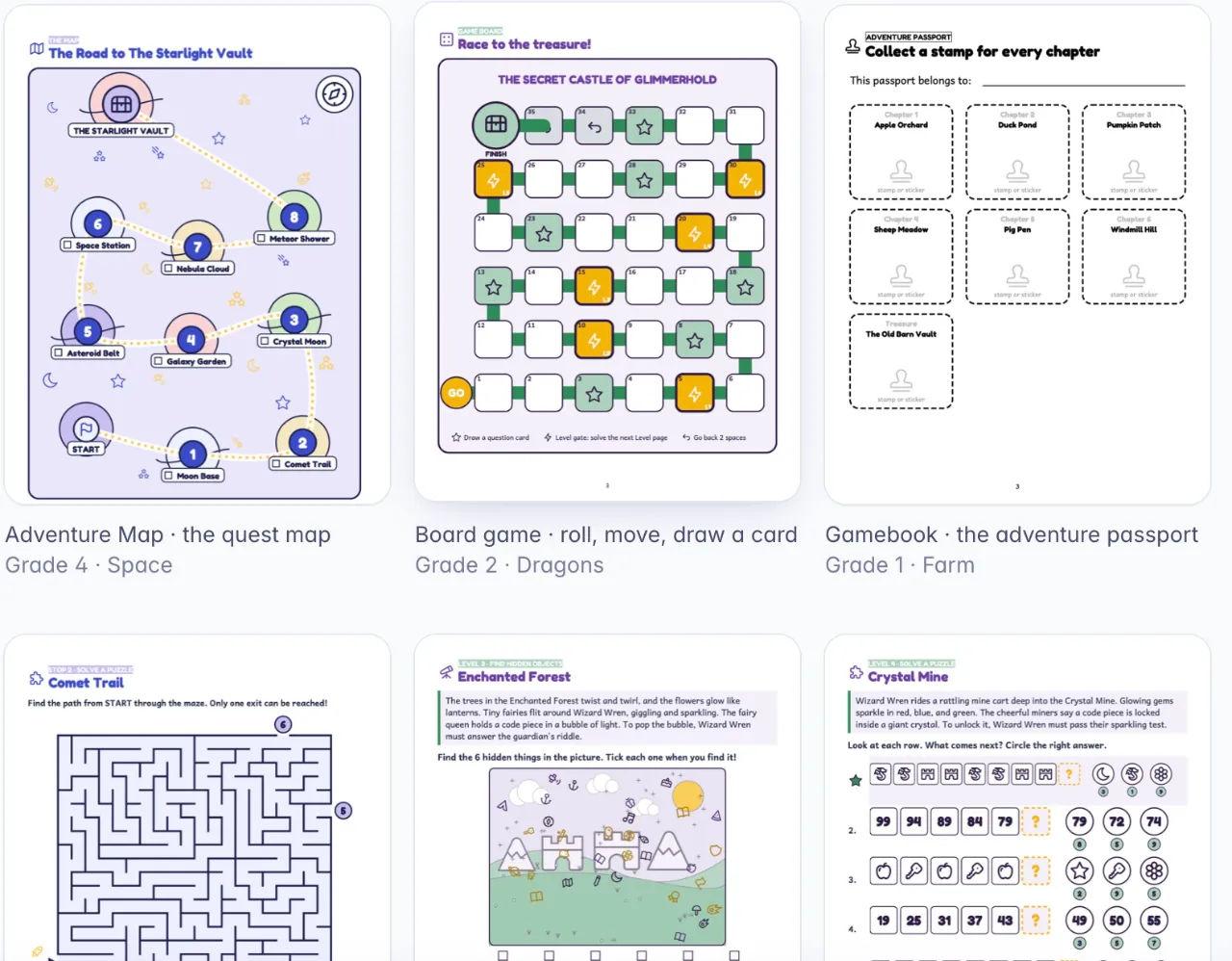
QuestPrint Review: Printable Quest Books in Minutes
I built three printable quest books in QuestPrint and printed them at home. Here is what the $17 tool actually does, and the one thing that annoyed me.
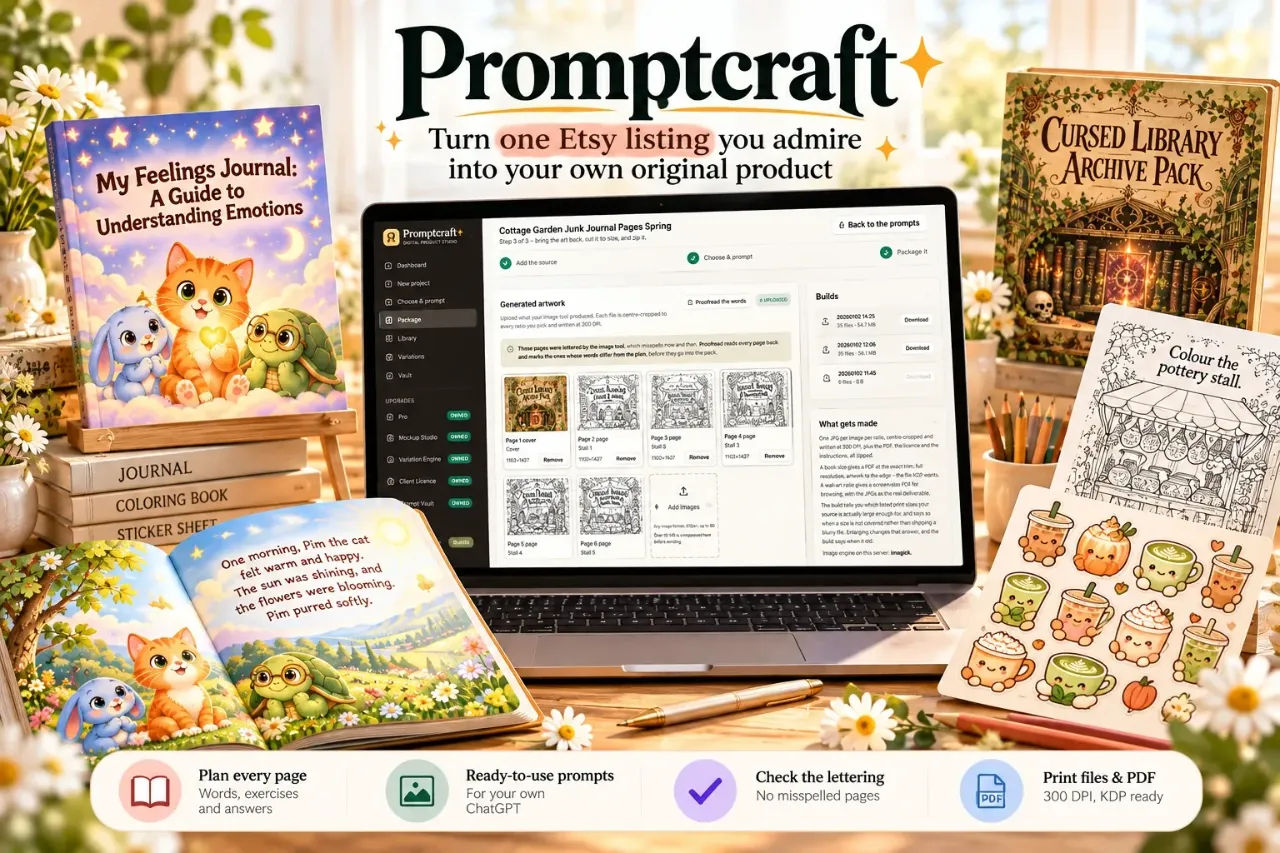
Promptcraft Review: I Turned One Etsy Listing Into a Printable
I fed Promptcraft one Etsy listing and let it plan a whole workbook with the words written in. Here is what the app does, what it does not, and whether $17 is fair.
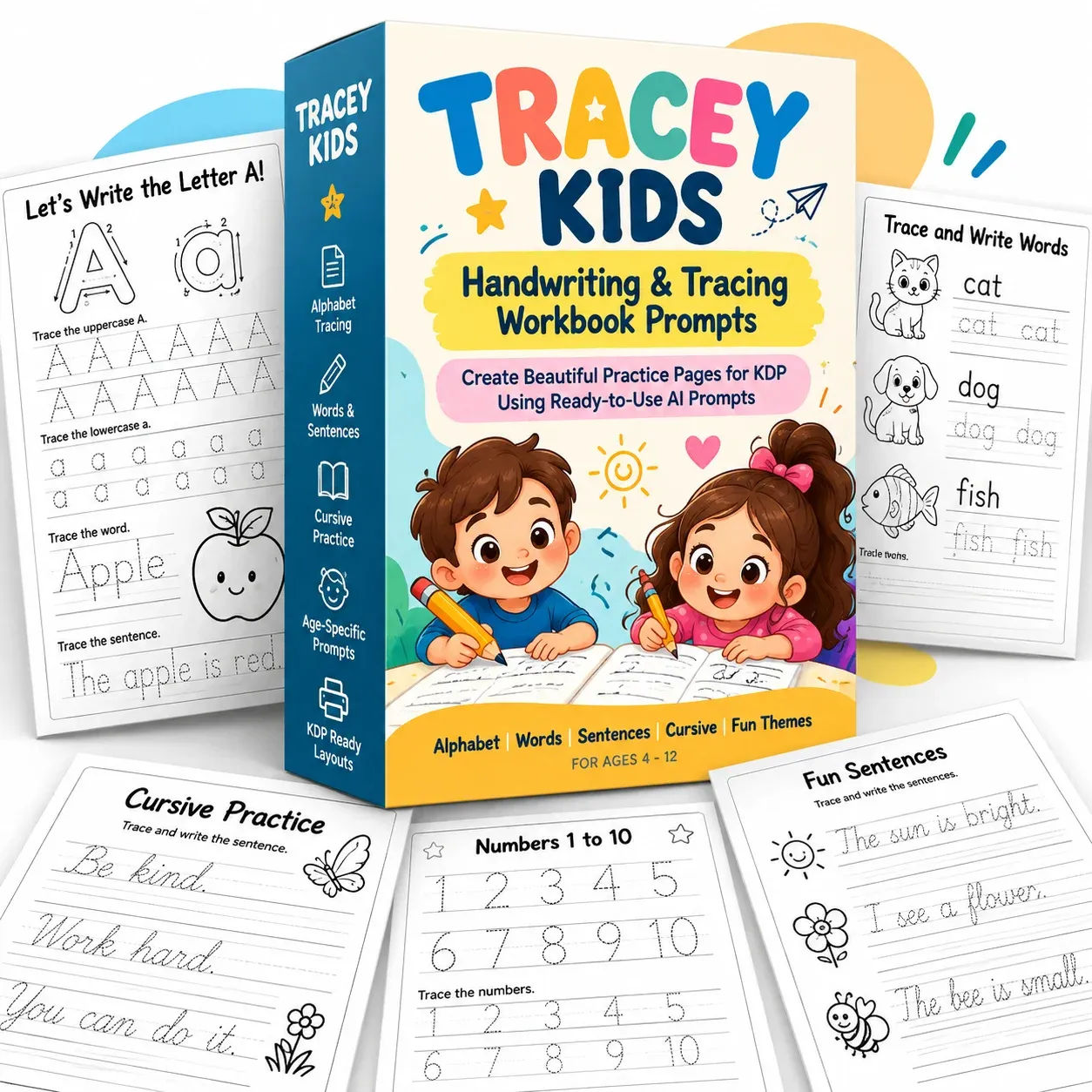
Tracey Kids Review: 310 ChatGPT Handwriting Prompts
I printed twelve Tracey Kids worksheets in one sitting. Here is what the prompts actually produce, what annoyed me, and whether the $9.95 is worth it.
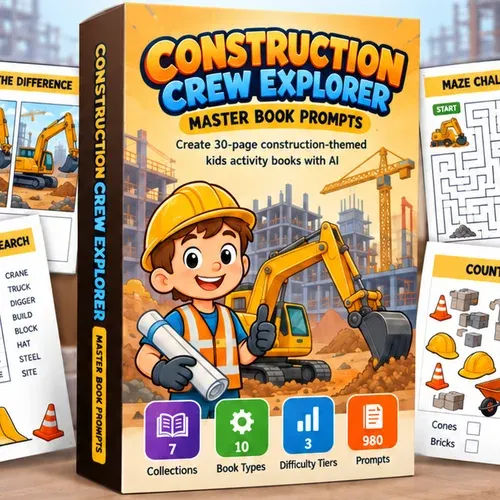
Construction Crew Explorer Prompts Review
I bought Construction Crew Explorer Master Book Prompts for $17 to see if the pack could carry a whole kids' construction book. Here is what worked and what did not.

Are We There Yet PLR Review: 512 Prompts for $17
I pasted the first Are We There Yet PLR prompt into a free ChatGPT account to see if one paste really produces a book plan. Here is what came back, and what it costs.