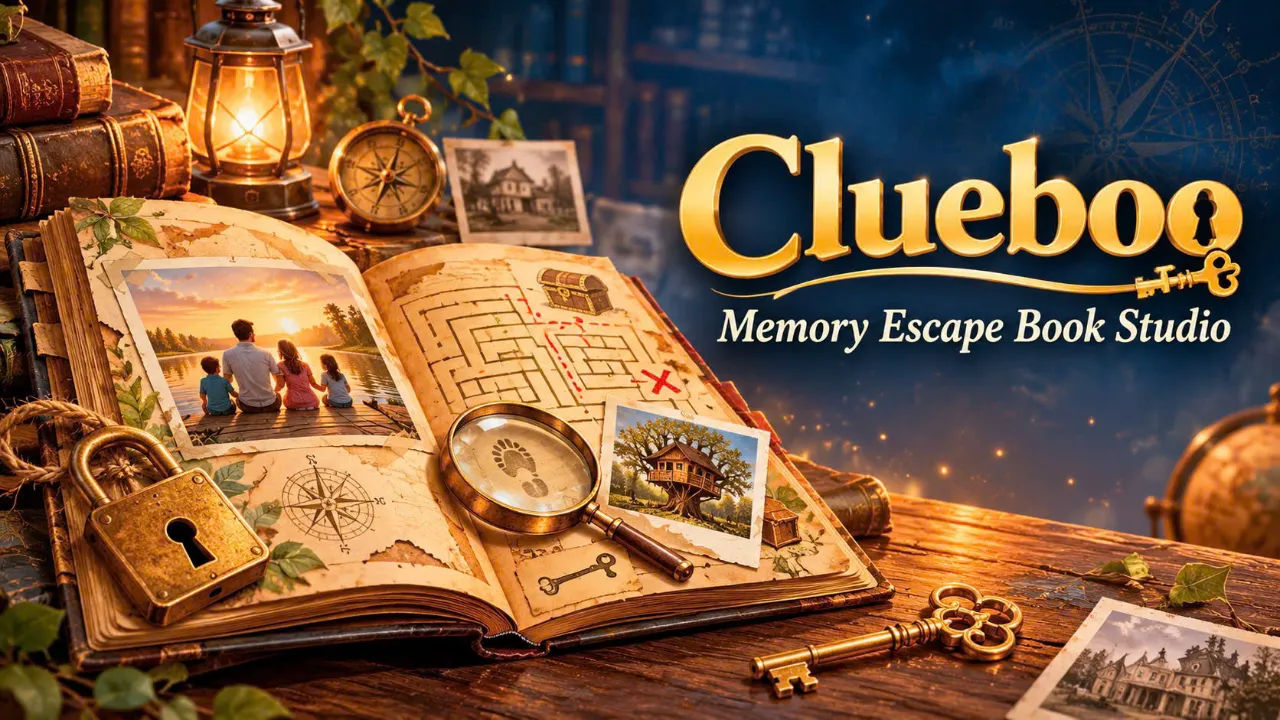
Clueboo Review: Memory Escape Books for KDP
Clueboo builds family keepsake puzzle books where each chapter is locked behind a puzzle. Here is what the $17 launch actually gives you, and where it stumbles.
I have a folder on my desktop called "journal books" and it is full of the same product. Question lists for Mom, for Dad, for Grandma, each one a different cover with the same two hundred prompts underneath. I put three of them up on KDP last spring. Two sold a handful of copies to people I know. The third has not moved since June, and I know exactly why: type "Grandma's memory journal" into Amazon and you are looking at a shelf of near-identical books, several with ratings counts in the thousands. Mine was number four hundred and something in that line.
So when I opened Clueboo and read the pitch about a "Memory Escape Book", the part that made me sit up was not the puzzle angle. It was the line about the tool refusing to ship two books that share the same puzzles, questions or story wording. I have built enough of these to know what a template looks like from the inside. I wanted to see whether this thing actually generates something different every time, or whether it is a question list with a puzzle graphic pasted on top.
I spent an evening in it. I built a book for a made-up grandmother called Nana, played through a couple of the locks, and hit the download button more than once with a deliberately broken chapter just to see what would happen. Here is what I found, including the bits that annoyed me.
Our Verdict
Clueboo
A genuinely different book type for KDP sellers who are tired of the crowded memory journal shelf, provided you accept that all sales are final and test the sample book first.
One payment, unlimited books. Try the free sample book before you buy, because refunds are not offered.
What You Actually Get
The core product is a browser tool that builds a Memory Escape Book: a guided life-story journal where each chapter of a person's life sits behind a puzzle. Solve the puzzle, turn to the right page, and you get a story time to fill in. Six golden letters collected along the way open the final lock.
When you log in you are getting the builder, and inside it a set of dials that determine what comes out. The numbers the sales page quotes, which I checked against the interface, are: five storyteller sets (each with its own chapters and questions), a list of twenty family names you can pick from or type your own, three ways to play, and eight memory keepers. On top of that come more than 400 memory questions, twelve life chapters to choose six from, twenty puzzle types in three difficulty levels, and a cover studio with a stated 15,360 starting combinations.
There is also a Story and Question Editor, which is the part I did not expect to care about and ended up using most. Every paragraph and every question is editable, and the page links rebuild themselves when you change something. And there is what they call the Adventure Shelf: ten story worlds, each of which is a three-book escape room series, so if the family book line does not take off you have a second product line in the same tool.
The commercial licence is included and covers unlimited books, whether you publish them on Amazon KDP or sell them as printables on Etsy. That distinction matters more than it sounds, and I will come back to it in the pricing section.
Key Features
The page-turn lock. This is the mechanic the whole book rests on. A puzzle's answer is not a word, it is a page number. You solve the clues, arrive at a number, turn to that page, and if the page carries the stamp the puzzle promised, you are through. Get it wrong and you land on a dead end. The tool generates the whole chain of links, which is the bit that would take a human weeks to get right by hand, and then plays the finished book back to itself before letting you download.
The solved-before-you-sell check. I tested this deliberately. I opened a chapter, broke a link on purpose by changing an answer, and hit download. The button stayed locked and the tool told me which page had the problem. Fix it, and it unlocks. For anyone planning to upload to KDP where a broken puzzle book means one-star reviews and possibly a takedown complaint, this is the feature that earns the price on its own.
Your family in the puzzles. Ten of the twenty puzzle types pull from information you type in about the real family. Names go into the family tree and the logic grid. Photo years become a photo timeline. A family recipe becomes a recipe card where the puzzle sets the amounts. Home-town landmarks go on a map, and a message you write is what the codes spell out. Every entry is checked and the whole book re-solved afterwards, so a typo in a name cannot quietly break a puzzle three chapters later.
Three ways to play. "Kids" is built for a child of roughly eight to twelve solving while a grown-up tells the story. "Grown-ups" is for an adult son or daughter playing with a parent. "Solo" is a gift the storyteller fills in alone, with gentler puzzles and large print. That third mode matters if you are selling to people buying for an older relative, because it changes the reading size on the memory pages to 16 point or larger.
Book lengths and large print. You pick 48, 80 or 120 pages. The sample builds shown on the sales page run the full range: a 48-page kids' book for a grandma, an 80-page large-print solo book for a mom, a 120-page large-print solo book for an uncle. That spread gives you three different products from one tool, which is useful when you are testing what sells.
The cover studio. Twelve layouts, sixteen palettes, ten patterns and eight letterings, and then your own colours, title, tagline and back-cover words on top. Front, spine and back export as one PDF sized to the page count you chose. The tool claims it keeps the text readable whatever colour you pick, and in the covers I generated the contrast held up. It is not a design tool, but it produces something that would not embarrass you next to the other books on the shelf.
Actually Using It
The first thing I noticed is that the six dials do what they say. I picked Grandma as the storyteller set, typed "Nana" as the family name, chose Kids as the way to play, and picked the wooden chest as the keeper. Then it asked me which six of the twelve life chapters to include. I picked Childhood, School Days, Twenty Years Old, The Wedding, Becoming a Mother and Becoming Grandma, mostly because those were the six on the sales page and I wanted to see whether my build matched theirs.
It took about four minutes from login to a finished book in front of me. That is the honest version. Four minutes, and the result was not a question list. Each chapter opened behind a lock, and the lock was drawn around the Nana I had typed in. The family tree had her name in it. The logic grid used the names I had entered. That is the moment I stopped being sceptical about the "one of one" claim, because a template cannot do that. A template can only print the name you typed on the cover.
The puzzle pages themselves are the part I spent longest on. The number maze only counts the numbers on the true path, which means a wrong turn leads somewhere that looks plausible and is not. The shape code gives you a symbol for every letter and then writes a door in shapes. The logic grid hands you four clues and one possible answer. The number dials have each row following its own rule. The number lock treats every number as a letter with the key printed on the page. The leftover-letter word hunt has you circle letters in a block of text until the ones nobody circled spell the way through.
My favourite of the lot was the leftover-letter hunt, because it looks like a word search and is not one. You circle the words you find, and what is left over is the answer. A kid will find three words, declare victory, and then have to be talked through the fact that the point is the letters they did not use. That is a good puzzle. It generates a conversation, which is the entire point of the book.
Where it got fiddly was the Story and Question Editor. Every paragraph is open to you, which is what you want, but the interface for it is a plain text box and nothing more. I rewrote a question about dancing and it worked fine. I tried to restructure a chapter, moving a memory question from the wedding section to the twenty-years-old section, and could not find a way to do that without deleting and retyping it in the new place. The links repaired themselves, which is the hard part and it works, but the editing experience feels like a first version rather than a finished one.
The other thing that slowed me down is the choice overload. Twelve chapters and you pick six, and there are 924 ways to do that by the tool's own count. The sales page says you can press one button and let Clueboo choose, and you can, and honestly for a first book you should. I spent twenty minutes cycling through chapter combinations trying to find the "best" one before I remembered that the reader is a grandmother and she will not be comparing my chapter selection to anyone else's.
I did try to break it. I typed a nonsense name into the family field, something with an apostrophe and a number in it, and the puzzles regenerated around it without complaining. I broke a page link on purpose. The download locked and told me which page. I fixed it and the download unlocked. I built three books in a row with the same dials and diffed the output: different puzzle order, different question wording, different cover layout. Not dramatically different, but not identical either, and for KDP purposes not identical is the only thing that matters.
Build your first Memory Escape Book tonight
Launch week price. One payment, unlimited books, and the sample book is free to try before you commit.
Pricing and Value Analysis
Clueboo is $17 during launch week. The regular price is $47, and the price was scheduled to rise to that on Sunday, November 29 at 11:59 PM Central. If you are reading this after that date, assume $47 and check the page before you buy, because I have no way of knowing whether another launch window has opened since.
The $17 buys a single payment with unlimited books on the commercial licence. That is the number that matters. A single puzzle book template on a marketplace runs anywhere from a few dollars to thirty, and it gives you one book. Here you get as many builds as you want, each one different, and you can sell them as paperbacks on KDP or as printables on Etsy.
The sales page makes a useful point about which format to start with, and it matches my own experience. A printable sells and prints the same day. A paperback needs review, printing and shipping, so if you are building for a specific gift date you have to publish early. If you are testing whether the concept sells at all, start with printables.
| Option | Typical cost | What you get | Repeatable? |
|---|---|---|---|
| Clueboo at launch | $17 one payment | Unlimited Memory Escape Books, 20 puzzle types, cover studio, commercial licence | Yes, every build differs |
| Clueboo at full price | $47 one payment | Same as above | Yes |
| Single KDP puzzle book template | Varies by marketplace | One book, one cover, fixed puzzles | No |
| Traditional memory journal | List prices seen on Amazon ranged from $5.99 to $42.61 across the family searches | A question list | No, this is the competing product |
Zoom out and the comparison is not against other tools. It is against the shelf. The sales page reports that one guided journal for mothers has 21,970 ratings on Amazon, and the same series sells in 21 versions. That is the market you would be entering with a plain question list, and you would be entering it as book number four hundred. The question Clueboo answers is whether a book that works differently can find buyers in the same category. The launch page is where the current price sits.
One thing I have to flag hard: all sales are final. There is no refund window on this. The operator's own advice is to play the free sample book first, and I would treat that as a requirement rather than a suggestion. If you cannot get the sample, or you play it and do not enjoy the puzzle format yourself, do not buy. Seventeen dollars is not a lot, but it is not nothing, and you should not be spending it on a format you have not tried.
Pros and Cons
Pros
- A genuinely different book type in a very crowded category
- The solved-before-you-sell checker caught a broken link I planted on purpose
- Family names, photo years and recipes go inside the puzzles, which no template can do
- One payment for unlimited books on a commercial licence
- 48, 80 and 120 page lengths plus large print gives you three products in one tool
Cons
- All sales are final, so there is no safety net if it is not for you
- The Story and Question Editor is a plain text box and moving questions between chapters is awkward
- Twelve chapters with 924 combinations is paralysing if you do not let the tool choose
- Four minutes from login to finished book is almost too fast to feel like you made something
Who This Is For
You should look at Clueboo if you already sell on KDP or Etsy and you are tired of competing on price with look-alike journals. You should look at it if you have ever wanted to build a puzzle book but bounced off the page-link maths, because that maths is exactly what this automates. And you should look at it if you have a specific gift date coming: Mother's Day, Father's Day, Grandparents Day, an eightieth birthday, a golden anniversary. The sales page lists those dates and it is right that they are when gift books get searched for. There is no promise of sales attached to any of them, but they are the obvious windows.
Who Should Skip It
Skip it if you want a done-for-you book you can upload without touching anything. Clueboo gives you a structure and a set of puzzles, and it does the hard technical part for you, but the difference between a book that sells and one that sits is still going to be your cover, your description and your willingness to edit the story wording. Skip it if you cannot try the sample first, because the no-refund policy means you are buying blind. And skip it if you only publish novels, as one of the publishers quoted on the page points out. This is a different shelf.
Frequently Asked Questions
Is Clueboo worth it?
At $17 during launch week, yes, if you already sell books and want a product that does not look like the other hundred on the shelf. The solved-before-you-sell checker alone saves you from the worst outcome, which is uploading a broken puzzle book. At the $47 full price it is a harder call and depends on whether you will actually build more than two or three books.
What does Clueboo cost?
Clueboo is $17 during launch week and $47 at full price. It is one payment, not a subscription, and it covers unlimited books under the commercial licence. All sales are final, so there is no refund window. The operator recommends playing the free sample book before you buy, and I would take that seriously.
Can I sell Clueboo books on Amazon KDP?
Yes. The commercial licence covers publishing on Amazon KDP and selling printables on Etsy, and you can build as many books as you want. The tool also runs a release test that builds 1,000 books and compares them, refusing to ship a version where two share the same puzzles, questions or story wording. Nobody can promise what Amazon's review will decide, though.
Do I need to be able to write or design puzzles?
No. You turn six dials: who tells the story, what the family calls them, who plays, where the memories are kept, which life chapters to include, and how long the book is. Or you press one button and let Clueboo choose. There are over 400 memory questions pre-written, in wording built for both a child to ask and a grown-up to ask.
How is this different from a normal memory journal?
A normal memory journal is a list of questions. In Clueboo, each chapter sits behind a puzzle whose answer is a page number. The reader solves it, turns to the right page, and the story time opens. The puzzles are built from the real family's names, photo years and recipe, so the book belongs to one family rather than being a template.
What are the alternatives to Clueboo?
A single KDP puzzle book template, which gives you one fixed book with no variability. Or a standard memory journal, which is the crowded shelf you would be competing against. The Clueboo launch page has the current price and a free sample chapter you can play through before deciding.
Can I try it before buying?
The sales page offers a free sample book, and it includes the first drawer puzzle so you can walk the true path yourself. Given that all sales are final, that sample is the only way to know whether the format works for you. Play it before you spend anything.
Final Verdict
I went in expecting a question list with a puzzle graphic on the cover, and it is not that. The page-turn lock is a real mechanic, the family details go inside the puzzles rather than on the front, and the checker that plays the whole book and refuses to let a broken one download is the kind of thing I wish every KDP tool had. My complaints are real ones: the editor is clunky, the chapter combinatorics are paralysing, and the no-refund policy means you are buying on faith. But at $17 for unlimited books on a commercial licence, this is the first journal-adjacent tool I have used in two years that I would actually build a product line on.
Ready to build a book nobody else has?
One payment, unlimited books. Play the free sample first, because all sales are final.
Related Posts
Public Domain Empire 9 Review: A Web App for Free Content
I paid $17 for Public Domain Empire 9 and spent an evening inside the web app. Here is what the 258 resource list, the 10 methods and the AI poster prompts actually give you.
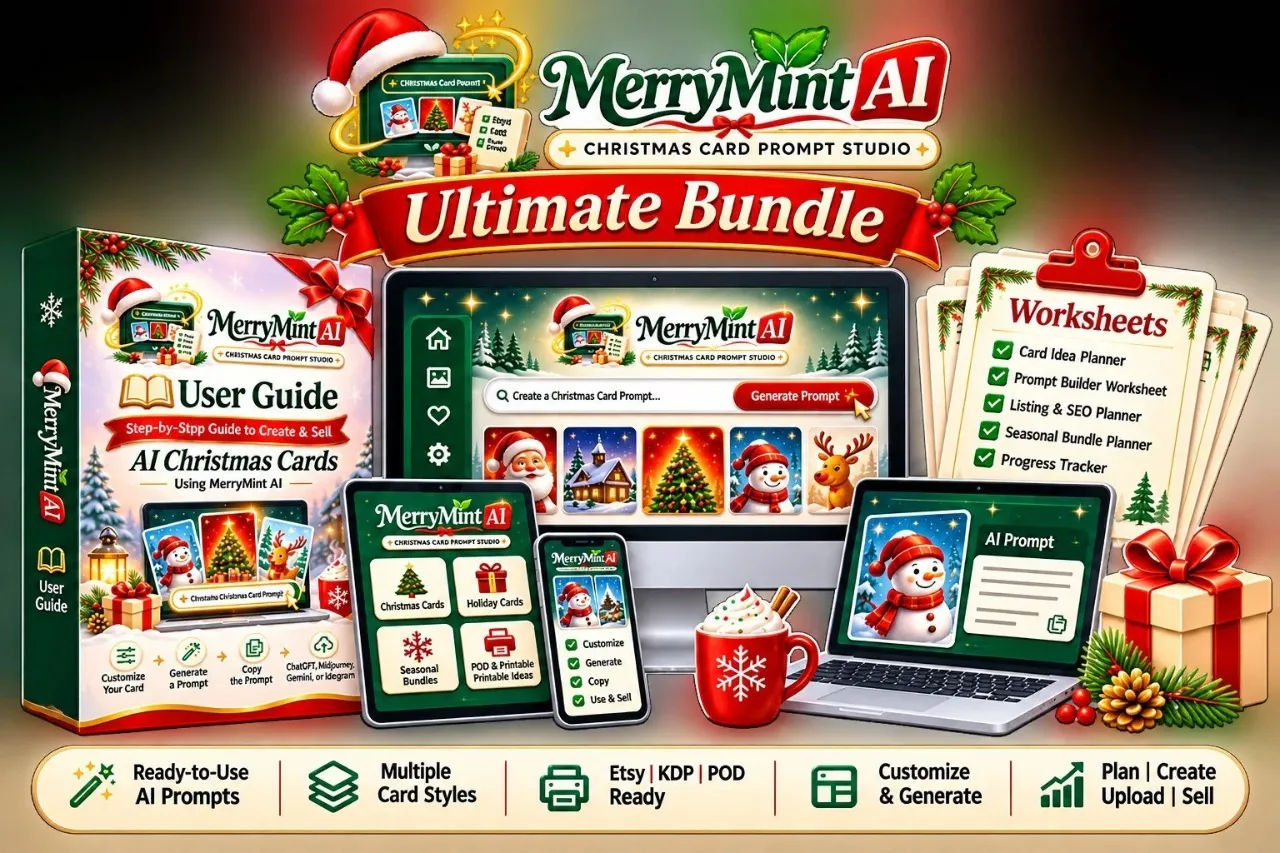
MerryMint AI Review: Christmas Card Prompts That Match
MerryMint AI builds matching Front, Inside and Back prompts for Christmas cards. I paid $17 and ran a card set through it. Good for the structure, not for the art.
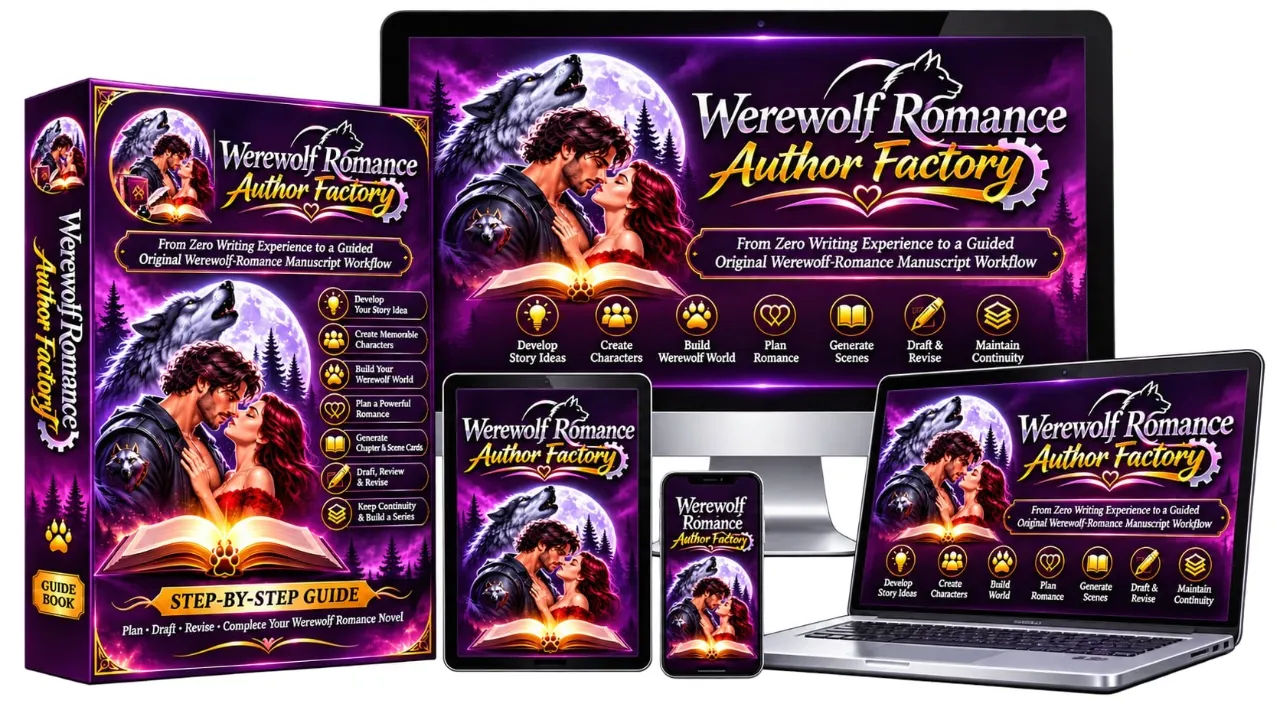
Werewolf Romance Author Factory Review
I bought Werewolf Romance Author Factory to see if a $17 Claude Skill could really carry a werewolf romance from idea to draft. It's a structured workflow, not a novel machine, and that's the point.

StoryStream Review: My Tiny AI Video Agency
StoryStream is a $17 Windows and Mac app where a nine-member AI "office" turns your book chapters into narrated YouTube videos, Shorts and thumbnails. It's genuinely fun to watch and works, with limits.
QuestPrint Review: Printable Quest Books in Minutes
I built three printable quest books in QuestPrint and printed them at home. Here is what the $17 tool actually does, and the one thing that annoyed me.
Promptcraft Review: I Turned One Etsy Listing Into a Printable
I fed Promptcraft one Etsy listing and let it plan a whole workbook with the words written in. Here is what the app does, what it does not, and whether $17 is fair.